


Understanding pharmacology requires more than just memorizing a list of names; it requires understanding the functional relationship between a drug class and its physiological target. In clinical practice, medications are grouped into classes based on their mechanism of action—how they interact with receptors, enzymes, or ion channels to produce a therapeutic effect. This article provides a structured overview of key medication classes used in respiratory care, hypertension management, and anticoagulation therapy.
Respiratory Medications: Bronchodilators and Anti-inflammatories
Respiratory pharmacology often focuses on managing airway constriction and inflammation. The primary goal is to facilitate airflow by either relaxing the smooth muscles of the bronchi (bronchodilation) or reducing the inflammatory response.
Bronchodilators
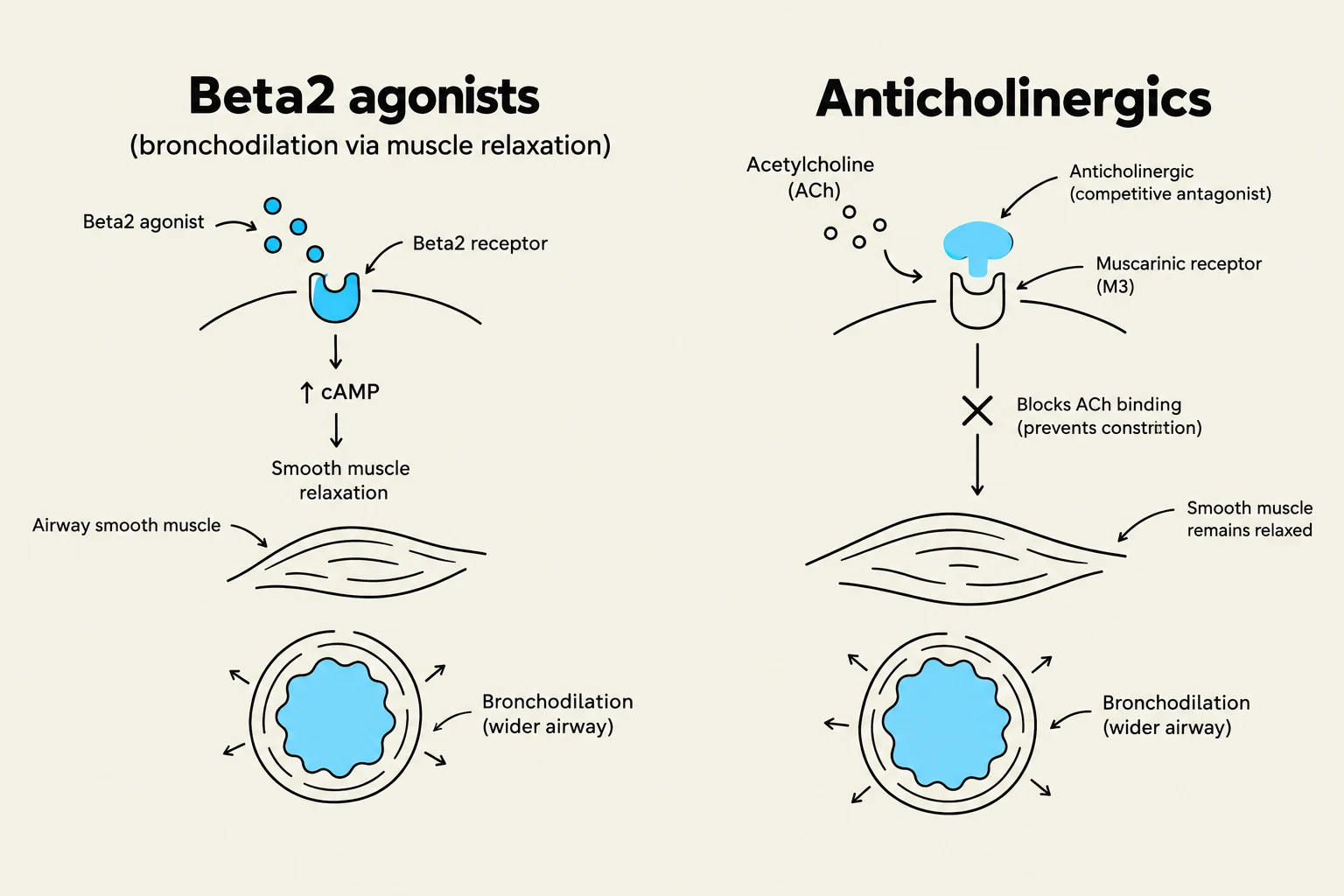
Bronchodilators are categorized by the receptors they target. Beta-adrenergic agonists work by stimulating beta receptors to relax airway smooth muscle. Specifically, Beta2 agonists like Albuterol are used for rapid relief.
Anticholinergics take a different approach by blocking acetylcholine, a neurotransmitter that causes bronchoconstriction. Examples include Tiotropium and Ipratropium Bromide. In some clinical scenarios, a combination of both a Beta-adrenergic agonist and an anticholinergic (such as Ipratropium and Albuterol) is used to provide a synergistic effect.
Exam Tip: When distinguishing between "rescue" and "maintenance" inhalers, remember that short-acting Beta2 agonists (like Albuterol) are for acute symptoms, while long-acting combinations (like Fluticasone and Salmeterol) are for long-term control.
Anti-inflammatory and Stabilizing Agents
To manage chronic inflammation, clinicians use Glucocorticoids (such as Fluticasone) often in combination with long-acting Beta2 agonists. Other specialized agents include:

Keep reading for free.
Create an account to finish this reading and make it part of your study routine.
Continue reading freeAlready have an account? Log in
Updated