This guide explains the core principles of pharmacokinetics (how the body affects a drug) and pharmacodynamics (how a drug affects the body) from a nursing perspective. It covers drug absorption, distribution, metabolism, elimination, therapeutic ranges, drug interactions, and strategies for promoting patient adherence
In the complex field of pharmacology, nurses serve as the primary line of defense for patient safety. While physicians often prescribe medications, it is the nurse who monitors how those medications interact with the unique physiological environment of the patient. To provide safe and effective care, a nurse must master two fundamental concepts: pharmacokinetics, which describes how the body acts upon a drug, and pharmacodynamics, which describes how the drug acts upon the body. Understanding these processes allows nurses to anticipate side effects, prevent toxicity, and ensure that therapeutic goals are met through precise assessment and patient education.
Understanding Pharmacokinetics: The Body's Journey with a Drug
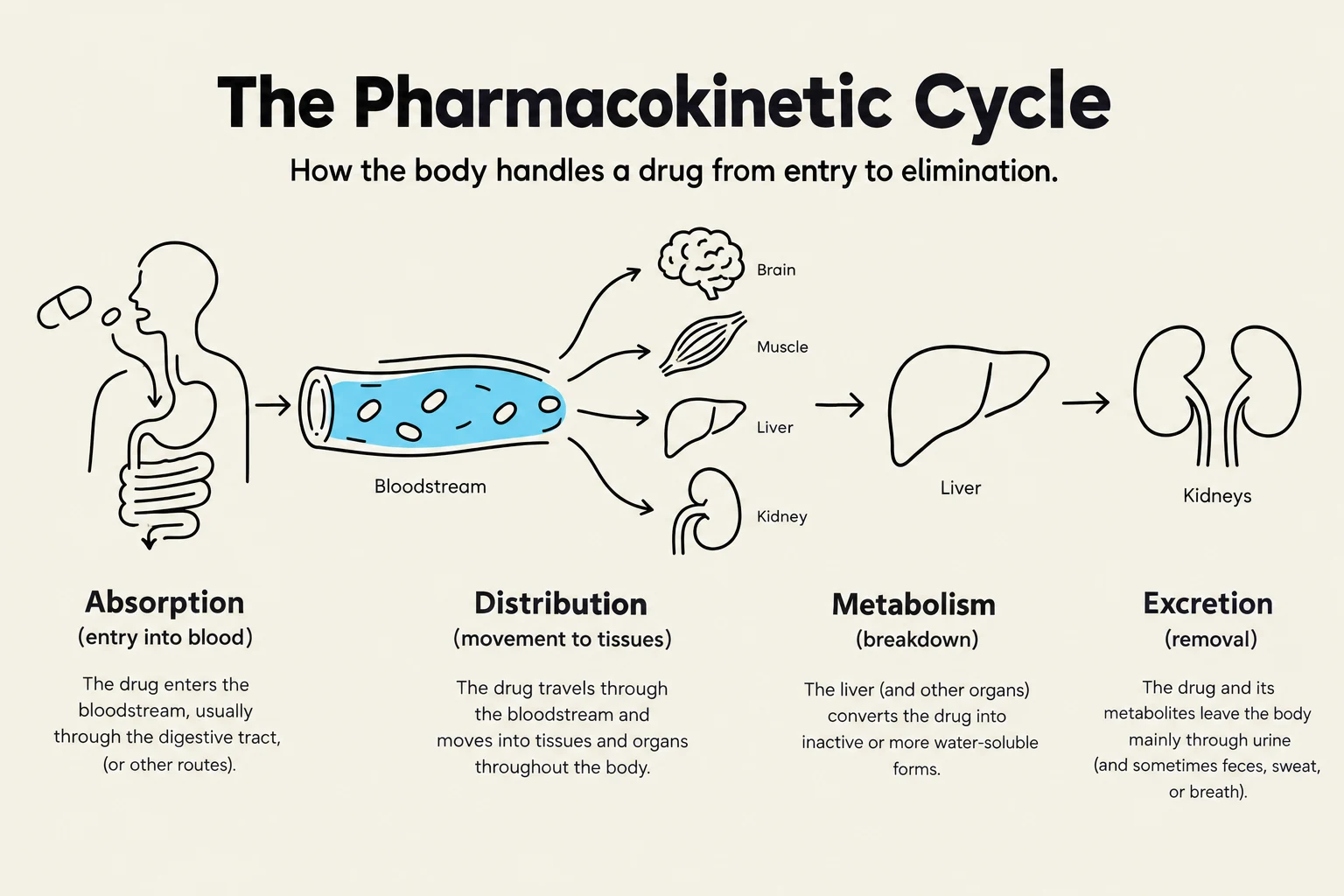
Pharmacokinetics is the study of the movement of a drug through the body. This process is typically broken down into four stages: absorption, distribution, biotransformation (metabolism), and elimination.
Drug Absorption and Distribution
Drug absorption is the process by which a drug moves from its site of administration into the bloodstream. Several factors can influence this rate. For example, the presence of food can significantly alter absorption. Nurses must be particularly careful with enteric-coated tablets; these are designed to dissolve in the small intestine rather than the stomach. Advise patients to avoid high-fat foods before taking these medications, as fat can decrease the absorption rate.
Once absorbed, the drug is distributed throughout the body. A critical factor in distribution is protein binding. Many drugs travel through the bloodstream bound to plasma proteins (like albumin). Only the "free" or unbound portion of the drug is pharmacologically active and able to reach its target tissue. If a patient has protein-energy malnutrition, they may have lower levels of albumin, leading to more "free" drug in the system and an increased risk of toxicity.
Biotransformation and Elimination
Biotransformation, or metabolism, is the chemical alteration of a drug, primarily occurring in the liver. The goal is usually to make the drug more water-soluble so it can be excreted. Drug elimination is the removal of the drug from the body, primarily through the kidneys.
Because the kidneys are the main exit route, nurses must prioritize assessing renal function. Key objective data to collect include:
Urine output: For adults, the target should be ≥30 mL/h.
Estimated Glomerular Filtration Rate (eGFR): A normal range is typically 90–120 mL/min.
Proteinuria: The presence of protein in the urine may indicate kidney damage that could impair drug elimination.
The Pharmacokinetic Cycle illustrates how the body processes a drug from its entry to its elimination, involving absorption, distribution, metabolism, and excretion.
Understanding Pharmacodynamics: The Drug's Effect on the Body
Pharmacodynamics refers to the biochemical and physiological effects of drugs and their mechanisms of action. This is where the nurse observes the "response" to the medication.
The Therapeutic Range and Monitoring
Every drug has a therapeutic range—the concentration range in which the drug is effective without being toxic. If the drug level falls below this range, it is subtherapeutic (ineffective); if it rises above, it becomes toxic.
For drugs with a "narrow therapeutic index" (where the difference between a healing dose and a toxic dose is very small), nurses must perform rigorous therapeutic monitoring. This involves checking:
Peak levels: The highest concentration of the drug in the blood after administration.
Trough levels: The lowest concentration of the drug in the blood, measured just before the next dose is given.
Exam Tip: When a question asks about the "trough" level, remember it is the most critical measurement for preventing cumulative toxicity, as it ensures the drug hasn't reached dangerous levels during the "low" period of the dosing cycle.
Managing Interactions and Adverse Reactions
One of the most critical nursing responsibilities is identifying and managing interactions that can compromise patient safety.
Drug-Drug and Drug-Laboratory Interactions
Drug-drug interactions occur when one medication alters the effect of another. These can be:
Additive effects: Two drugs of the same category increase the physiological response (e.g., taking two different sedatives).
Antagonistic effects: One drug opposes the action of another (e.g., a stimulant and a depressant).
Nurses should use drug interaction checkers and perform "medication reconciliation" to compare new orders with what the patient is taking at home to avoid omissions or duplications.
Furthermore, nurses must be vigilant for drug-laboratory interactions. This occurs when a medication interferes with the chemical reaction or antibody used in a lab test, leading to erroneous diagnostic results. For example, a drug might cause a false high reading in a glucose test, leading to incorrect treatment decisions.
Photosensitivity: Phototoxic vs. Photoallergic
Some medications cause skin sensitivity to light. It is vital to distinguish between these two types of reactions when educating patients:
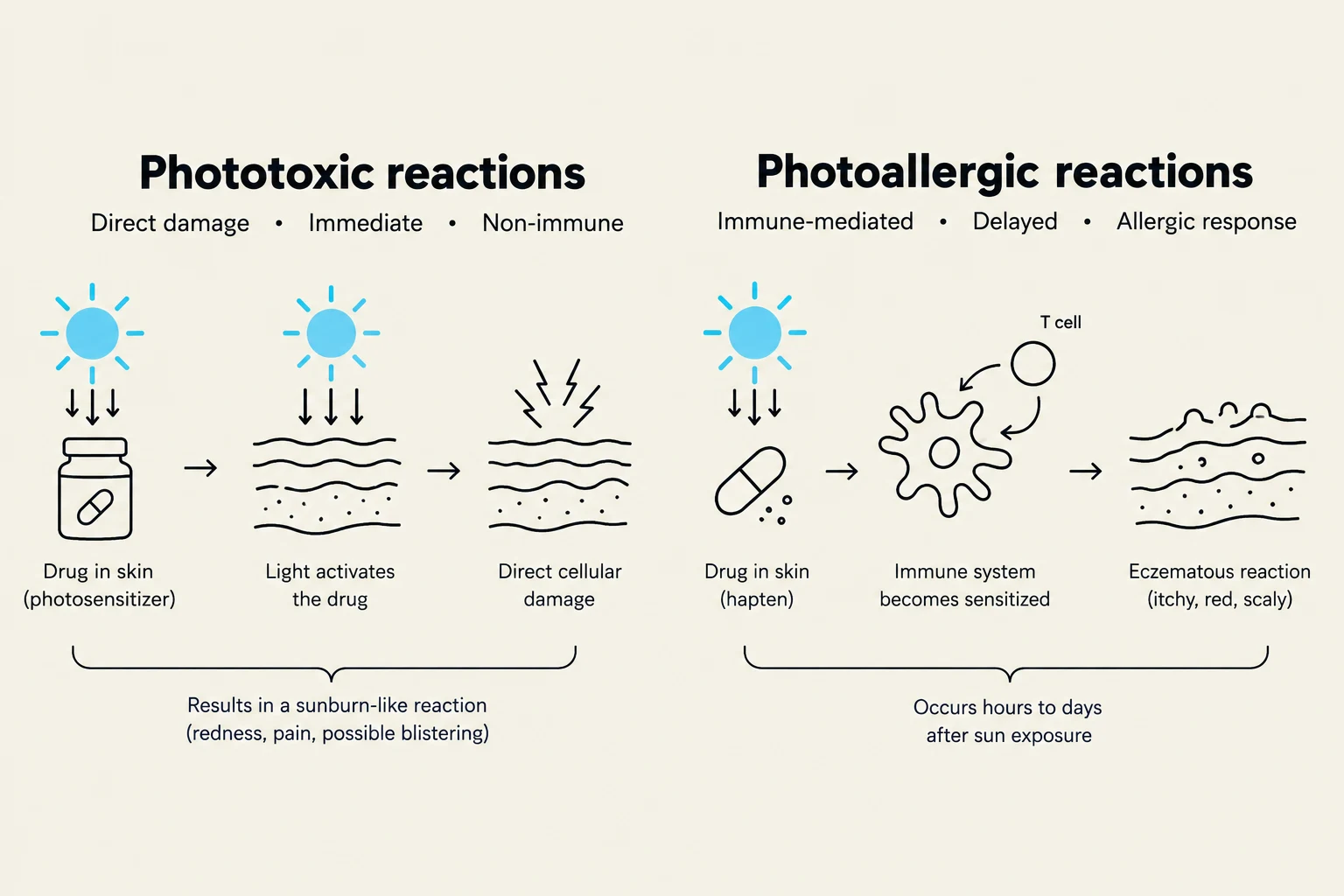
Phototoxic reactions: A non-immune-mediated reaction where the drug itself reacts with UV light to cause damage (similar to a severe sunburn).
Photoallergic reactions: A delayed hypersensitivity (immune) reaction where the body's immune system reacts to the drug-light complex.
Nursing Intervention: Educate patients on using SPF >15 and avoiding excessive sunlight when taking photosensitizing medications.
Diagrams illustrating the mechanisms of phototoxic and photoallergic reactions to drugs upon sun exposure.
Promoting Patient Adherence
Even the most perfectly prescribed regimen will fail if the patient does not take the medication as intended. Patient adherence (or compliance) is the extent to which a patient follows the prescribed therapeutic regimen.
Assessing Barriers to Adherence
Nurses must look beyond the medical diagnosis to the "concept" of the patient's life. Barriers to adherence include:
Social/Cultural Factors: Language barriers, literacy levels, and traditional health practices.
Economic Concerns: The cost of medications can prevent patients from filling prescriptions.
Cognitive/Physical Barriers: Difficulty swallowing (dysphagia) or cognitive decline.
Implementation Strategies
To improve adherence, nurses should:
Tailor Education: Use the patient's primary language and provide simple, written instructions.
Use Tools: Suggest pill organizers (drug boxes) or multi-dose pill packets from the pharmacy to simplify complex schedules.
Teach-Back Method: Always ask the patient to demonstrate a skill (like insulin administration) or explain the medication's purpose to confirm learning.
Involve Support Systems: With patient consent, include family members who can provide reminders and monitor for side effects.
Evaluation of Outcomes
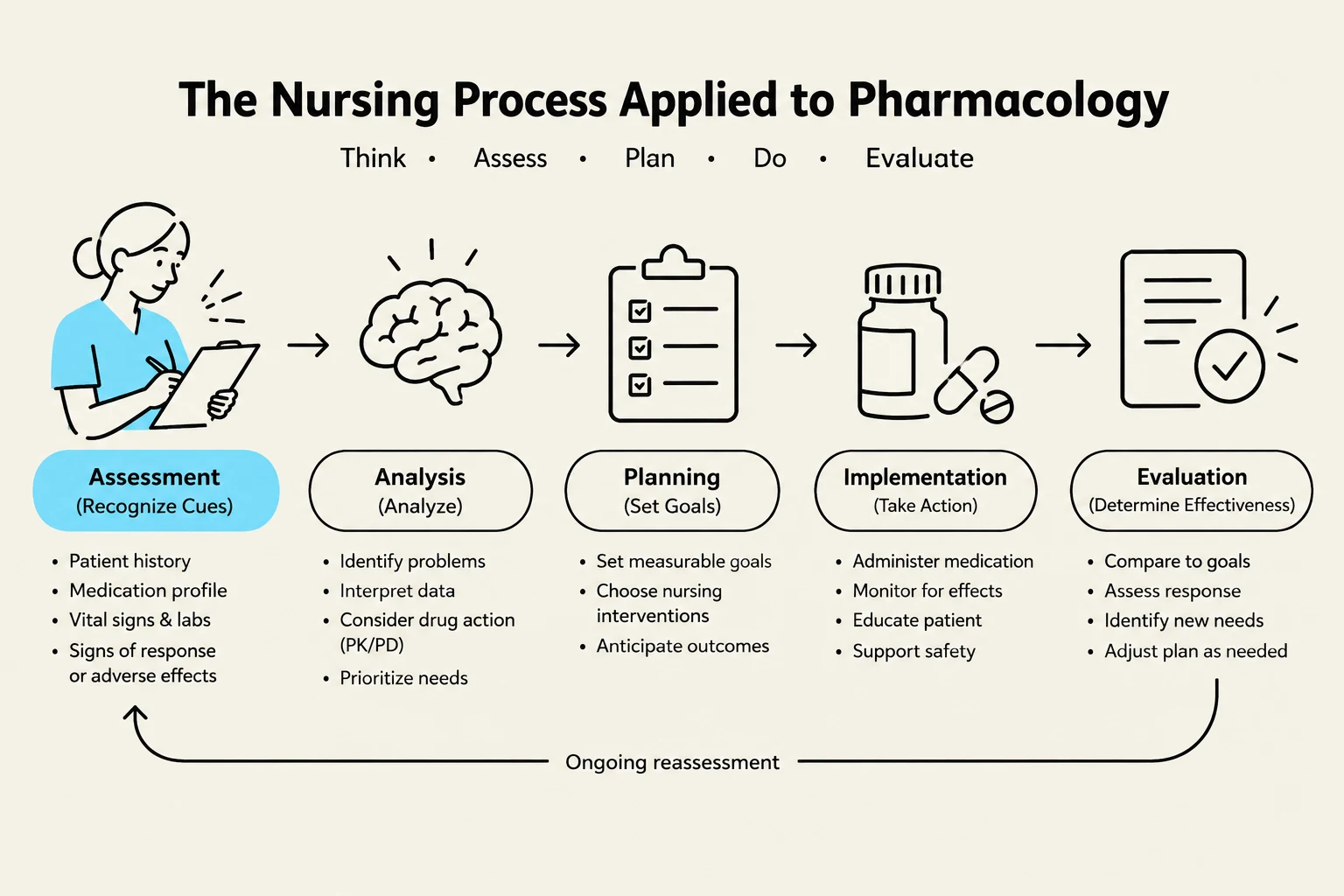
The nursing process concludes with evaluation. The nurse must determine if the interventions were effective by comparing the patient's current status to the expected outcomes.
When evaluating, ask:
Is the drug achieving its intended effect (e.g., is the blood pressure dropping)?
Are there signs of toxicity (e.g., confusion, nausea, or abnormal lab values)?
Is the patient adhering to the regimen?
If the outcomes are not met, the nurse must analyze the cues again—perhaps the dose was too low, the patient is not absorbing it due to diet, or the patient is not taking it due to cost—and revise the plan of care accordingly.
The nursing process applied to pharmacology outlines five key steps: Assessment, Analysis, Planning, Implementation, and Evaluation, with ongoing reassessment.
Keep reading for free.
Create an account to finish this reading and make it part of your study routine.