


Peripheral intravenous (IV) therapy is one of the most common clinical procedures performed in healthcare settings. While it may seem routine, the successful insertion of a peripheral IV catheter requires a precise combination of anatomical knowledge, aseptic technique, and strict adherence to safety protocols. A well-placed catheter ensures the efficient delivery of fluids, electrolytes, and medications while minimizing patient discomfort and the risk of complications such as phlebitis or infiltration.
Preparation and Site Selection
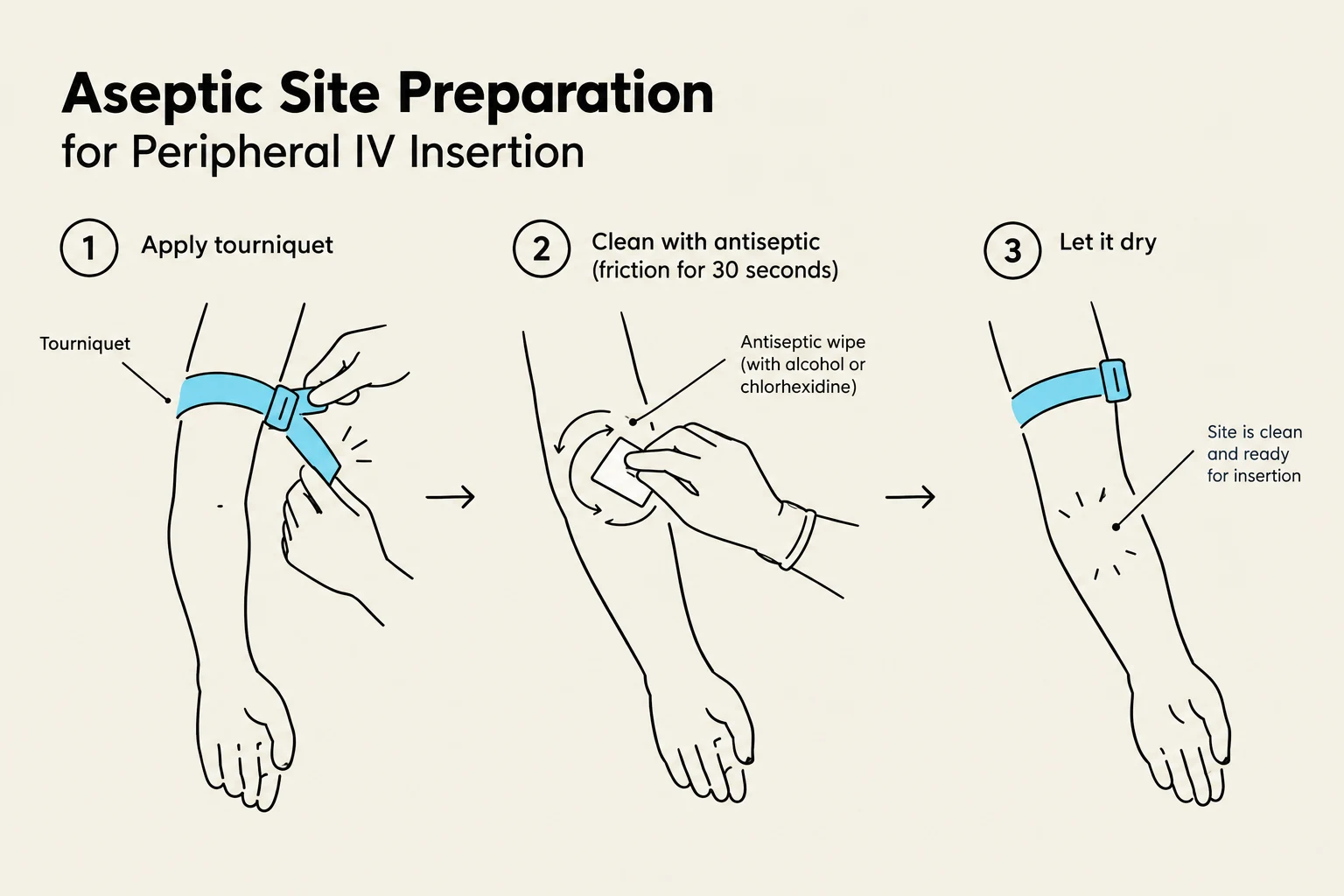
Before approaching the patient, the clinician must gather all necessary supplies, including the appropriate gauge catheter, tourniquet, antiseptic swabs, transparent dressing, and saline flush. Selecting the correct site is critical for the longevity of the IV therapy.
Ideally, clinicians should start distally (further down the limb) and move proximally (up the arm) if multiple attempts are needed. This preserves proximal veins for future use. Common sites include the cephalic, basilic, and median cubital veins. Avoid areas of flexion, such as the antecubital fossa, if the IV is intended for long-term use, as movement can cause mechanical irritation to the vessel wall.
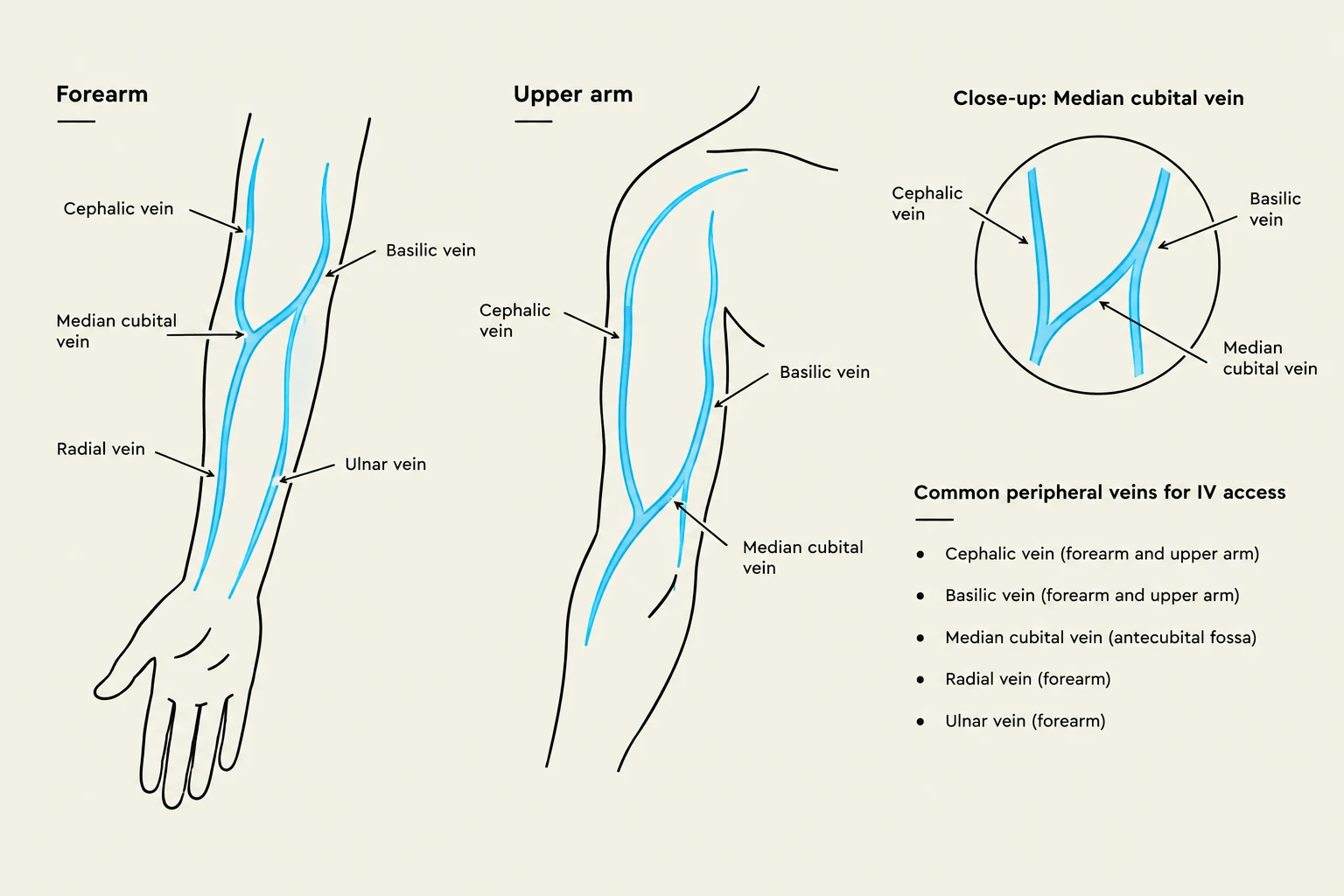
Clinical Tip: Always assess the patient's skin integrity and check for any signs of edema or existing infection before selecting a site. If a patient has a history of mastectomy or a dialysis shunt on one side, avoid using that limb for IV access.
Keep reading for free.
Create an account to finish this reading and make it part of your study routine.
Continue reading freeAlready have an account? Log in
Updated