


The perioperative period is a critical window in surgical care, encompassing everything from the initial decision to undergo surgery through the patient's complete recovery. Because surgical interventions involve significant physiological stressors and the administration of potent anesthetic agents, nursing care must be highly structured. This article explores the essential safety protocols used to prevent surgical errors and the systematic assessment techniques required to monitor a patient's recovery in the postoperative phase.
Preventing Surgical Errors: The TJC Protocol
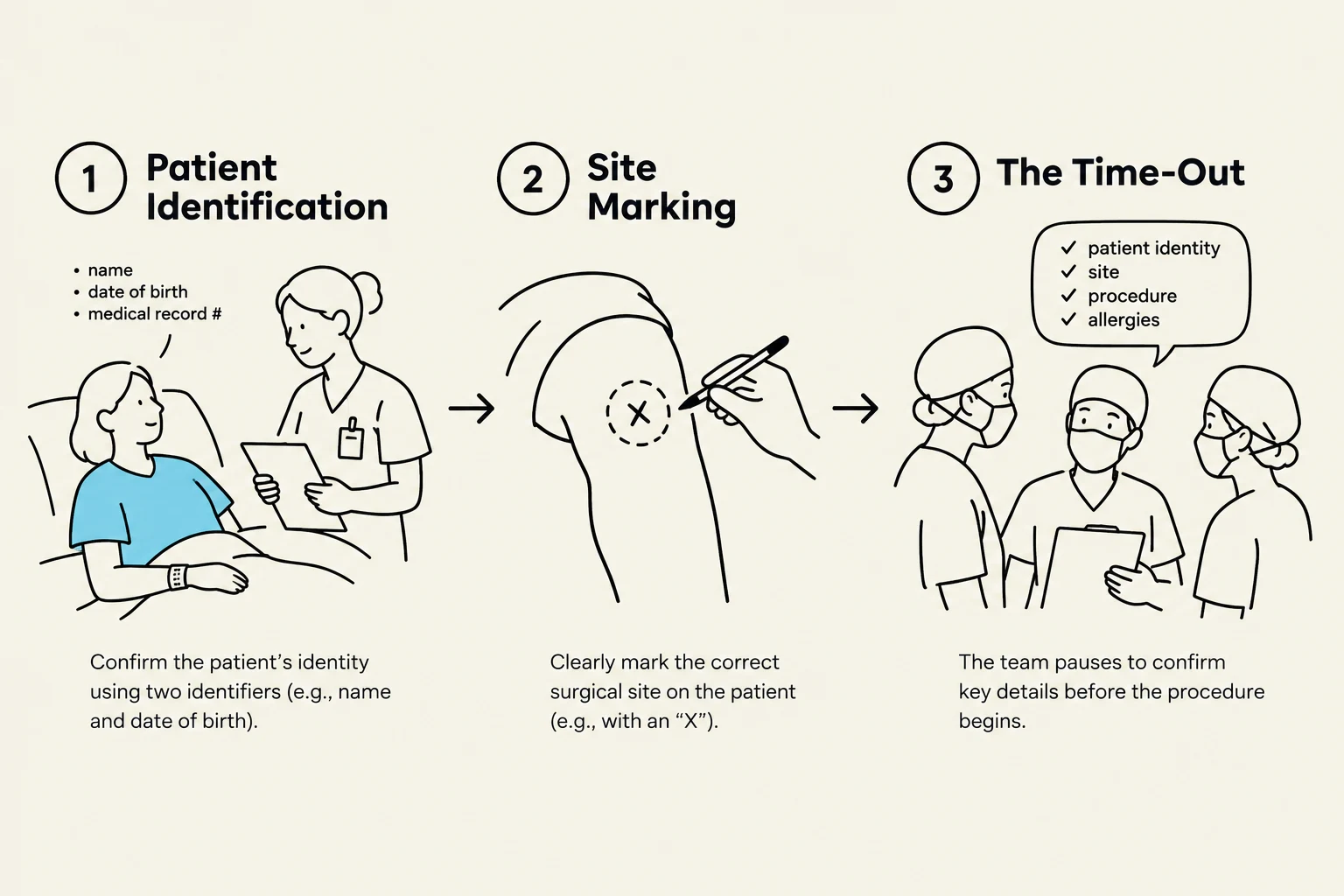
Patient safety is the highest priority in the operating suite. To mitigate the risk of catastrophic errors, The Joint Commission (TJC) has established strict protocols designed to prevent "wrong site, wrong procedure, and wrong person" surgery. These safeguards are not merely administrative tasks but are integrated into the clinical workflow to create multiple layers of defense.
Preoperative Identification and Site Marking
The first line of defense is a rigorous preoperative patient identification verification process. This involves confirming the patient's identity using at least two unique identifiers (such as name and date of birth) and ensuring that the surgical consent matches the scheduled procedure.
Once identity is confirmed, the surgical site must be clearly marked. Marking the operative site is a collaborative process, typically involving the surgeon, ensuring that both the patient and the surgical team are in agreement regarding the exact location of the intervention.
The Surgical "Time-Out"
The final, and perhaps most critical, safety step is the "time-out". This is a final verification performed by the entire surgical team immediately prior to beginning the procedure. During a time-out, all activity in the operating room ceases so that every team member can verbally confirm the patient's identity, the surgical site, and the specific procedure to be performed.
Keep reading for free.
Create an account to finish this reading and make it part of your study routine.
Continue reading freeAlready have an account? Log in
Updated