


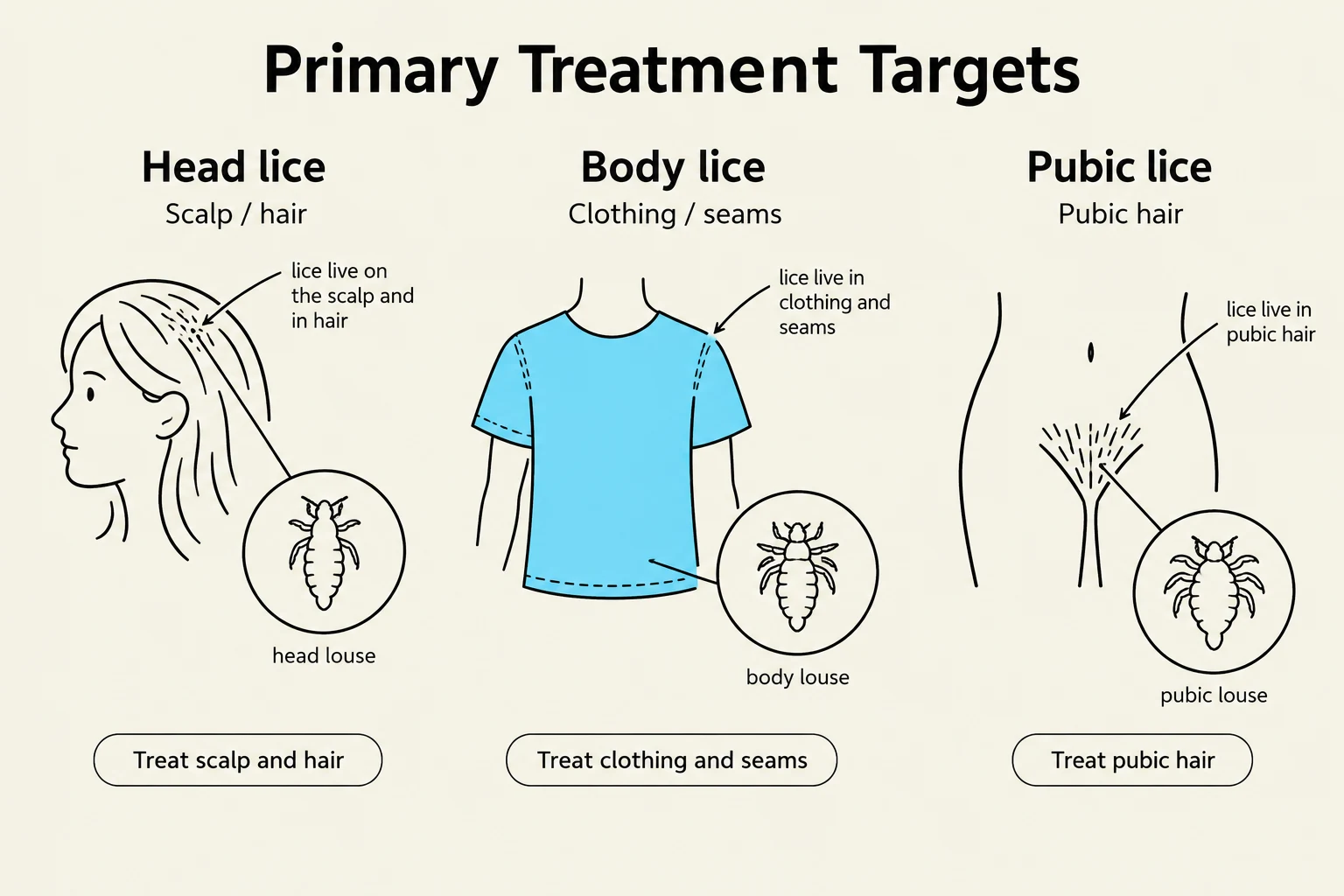
Pediculosis is a common dermatologic condition caused by infestation with parasitic insects known as lice. While often viewed as a minor nuisance, these infestations can cause significant pruritus (itching), secondary bacterial skin infections due to scratching, and considerable psychosocial distress. For clinicians and students, the key to effective management lies in the ability to differentiate between the three primary types of lice and implementing a dual-track treatment strategy that addresses both the host and the environment.
Understanding the Three Types of Pediculosis
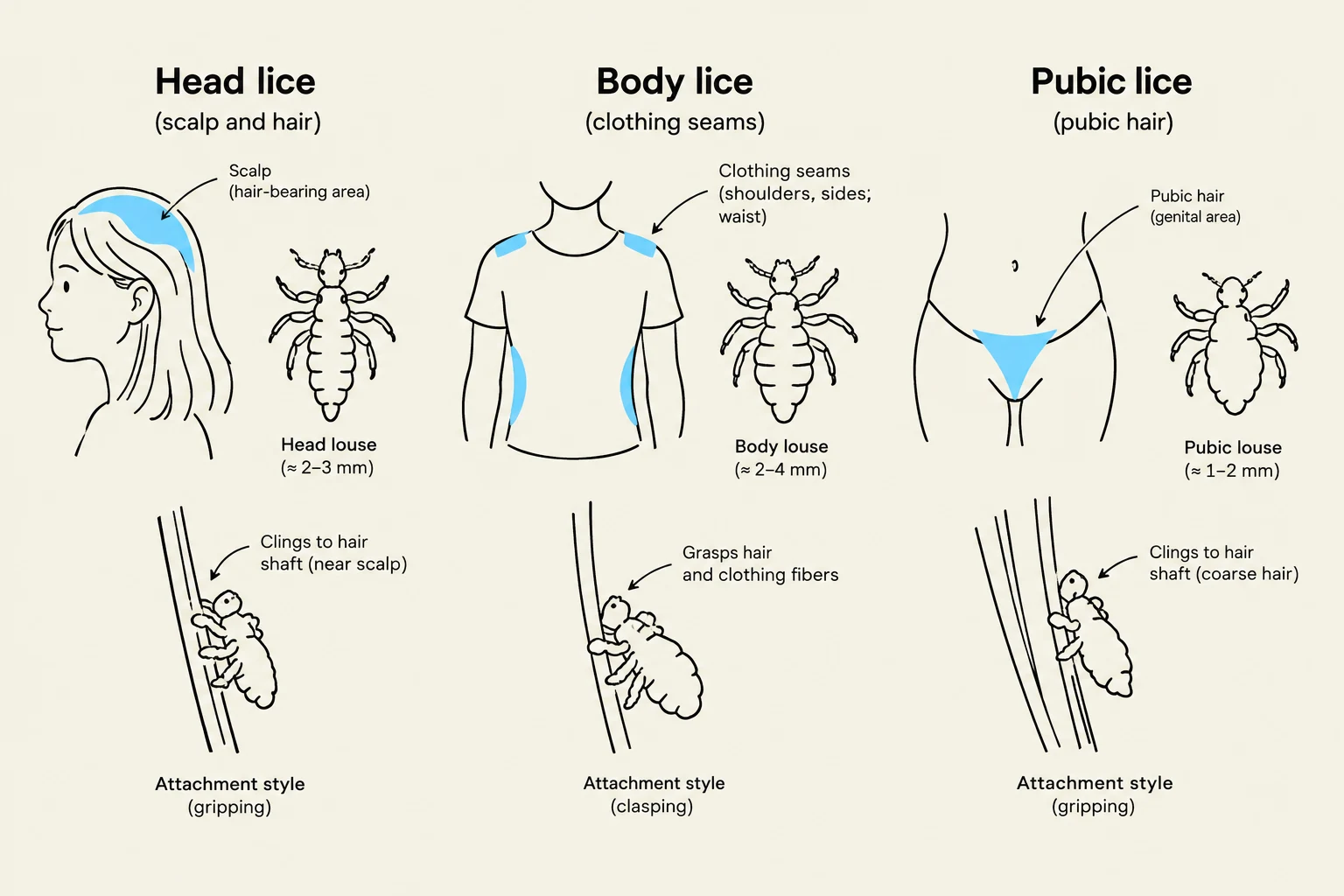
Lice are highly specialized parasites, meaning each species has adapted to live on a specific part of the human body and feed on specific hair types. Misidentifying the type of lice can lead to ineffective treatment and failure to address the underlying source of infestation.
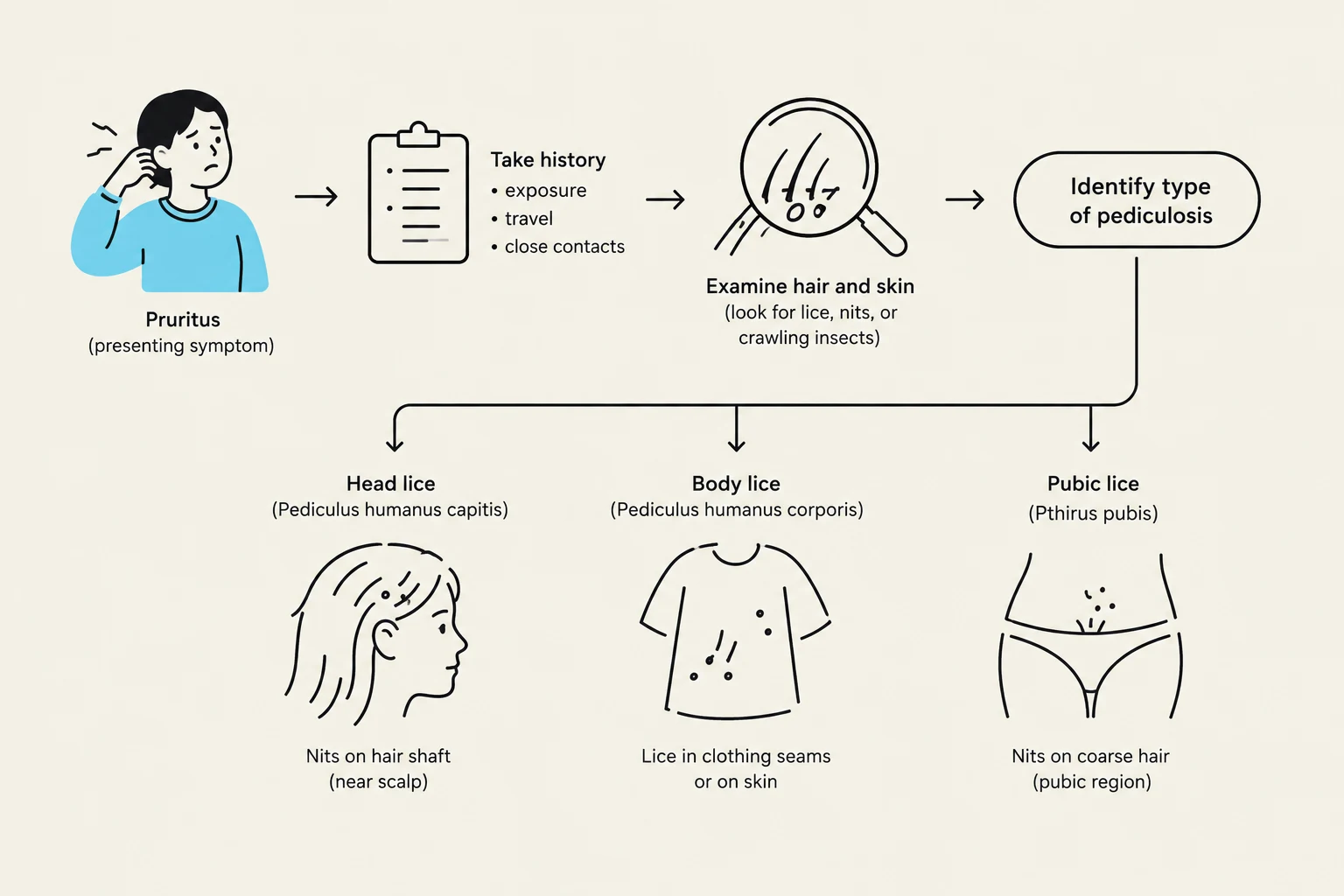
1. Head Lice (Pediculus humanus capitis)
Head lice are the most common form of pediculosis, primarily affecting children in school settings. They live on the scalp and attach their eggs, known as nits, to the base of the hair shaft. The primary symptom is intense itching of the scalp, often exacerbated by warmth.
2. Body Lice (Pediculus humanus corporis)
Unlike head or pubic lice, body lice do not live on the skin itself. Instead, they reside in the seams of clothing and only move onto the skin to feed. This distinction is critical: treating the skin alone will not resolve a body lice infestation; the clothing must be addressed.
3. Pubic Lice (Pthirus pubis)
Commonly referred to as "crabs," these lice are found in the pubic region but can also inhabit coarse hair on the chest, armpits, eyebrows, or eyelashes. They are characterized by their larger, crab-like appearance and their tendency to cling tightly to hair shafts.
Keep reading for free.
Create an account to finish this reading and make it part of your study routine.
Continue reading freeAlready have an account? Log in
Updated