An overview of pediatric skin characteristics, differences from adult skin, assessment of lesions, and common conditions such as dermatitis, infestations, and jaundice, along with nursing management strategies.
Assessing the skin of a pediatric patient requires a specialized approach that differs significantly from adult care. Because children are in a constant state of physiological development, their skin characteristics, thermoregulation abilities, and susceptibility to certain conditions are unique. Understanding these differences is essential for accurate assessment and effective management of both congenital and acquired skin issues.
Pediatric Skin Characteristics and Differences
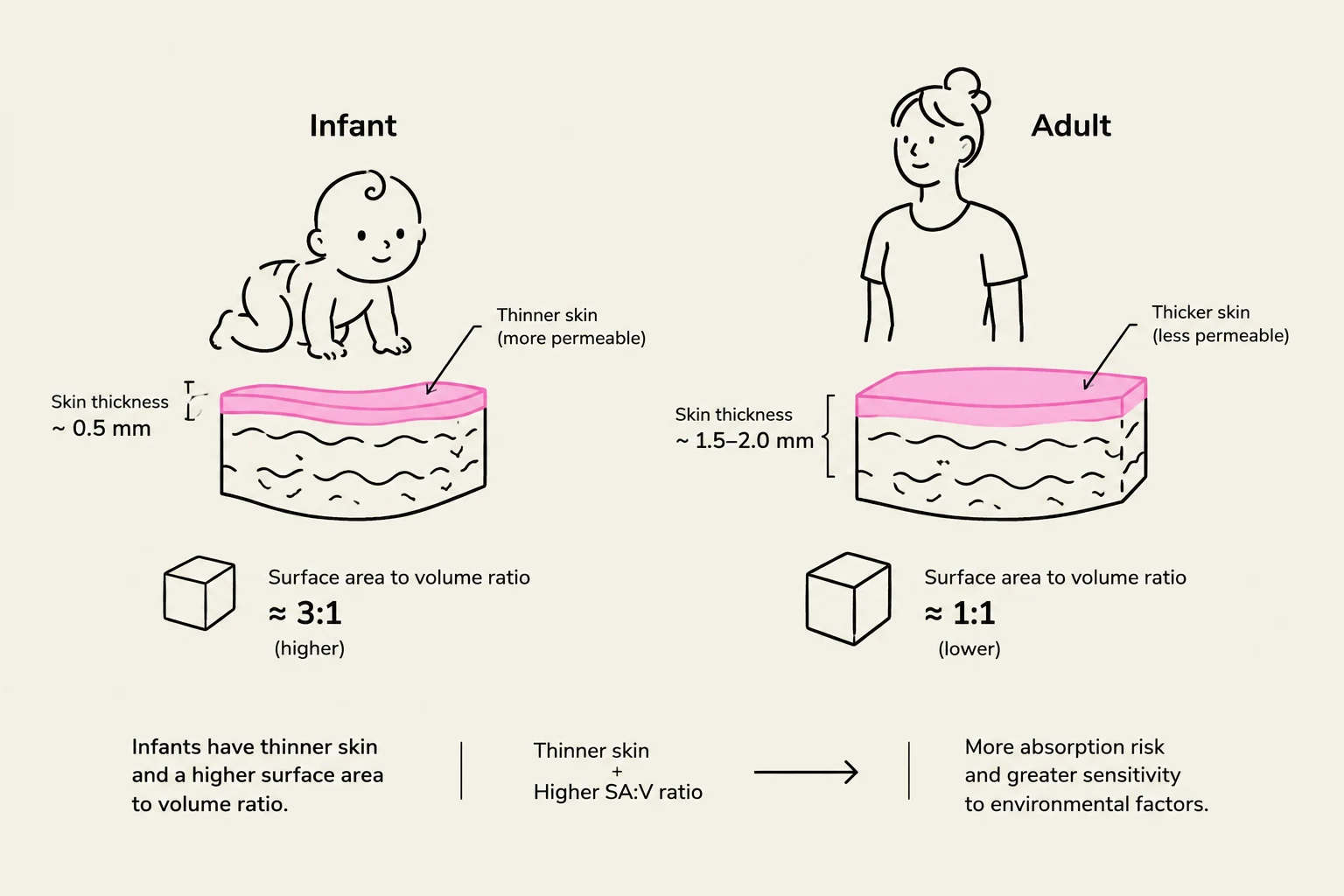
The pediatric skin is not merely a smaller version of adult skin; it is physiologically distinct. One of the primary differences is skin thickness; infant skin is much thinner than adult skin, which affects its barrier function and vulnerability to injury.
Several specific characteristics define the pediatric integumentary system:
Lanugo: Fine, soft hair that may be present on newborns.
Sebaceous Glands: These glands are highly active in newborns, which can lead to certain skin presentations.
Sweat Glands: The development and efficiency of sweat glands in children differ from adults, impacting how they manage body temperature.
Stratum Corneum: The outermost layer of the skin is less developed in infants, contributing to a more fragile skin barrier.
Thermoregulation in Infants
Thermoregulation is a critical concern in pediatric nursing. Infants have a much harder time maintaining a stable body temperature compared to adults. Because of their high surface-area-to-mass ratio and thinner skin, they are at a higher risk for both heat loss and overheating. Nurses must monitor environmental temperatures and clothing closely to ensure the infant remains in a thermoneutral zone.
Comparison of infant and adult skin properties, including thickness, permeability, and surface area to volume ratio, and their implications for absorption risk and environmental sensitivity.
Assessment of Skin Lesions
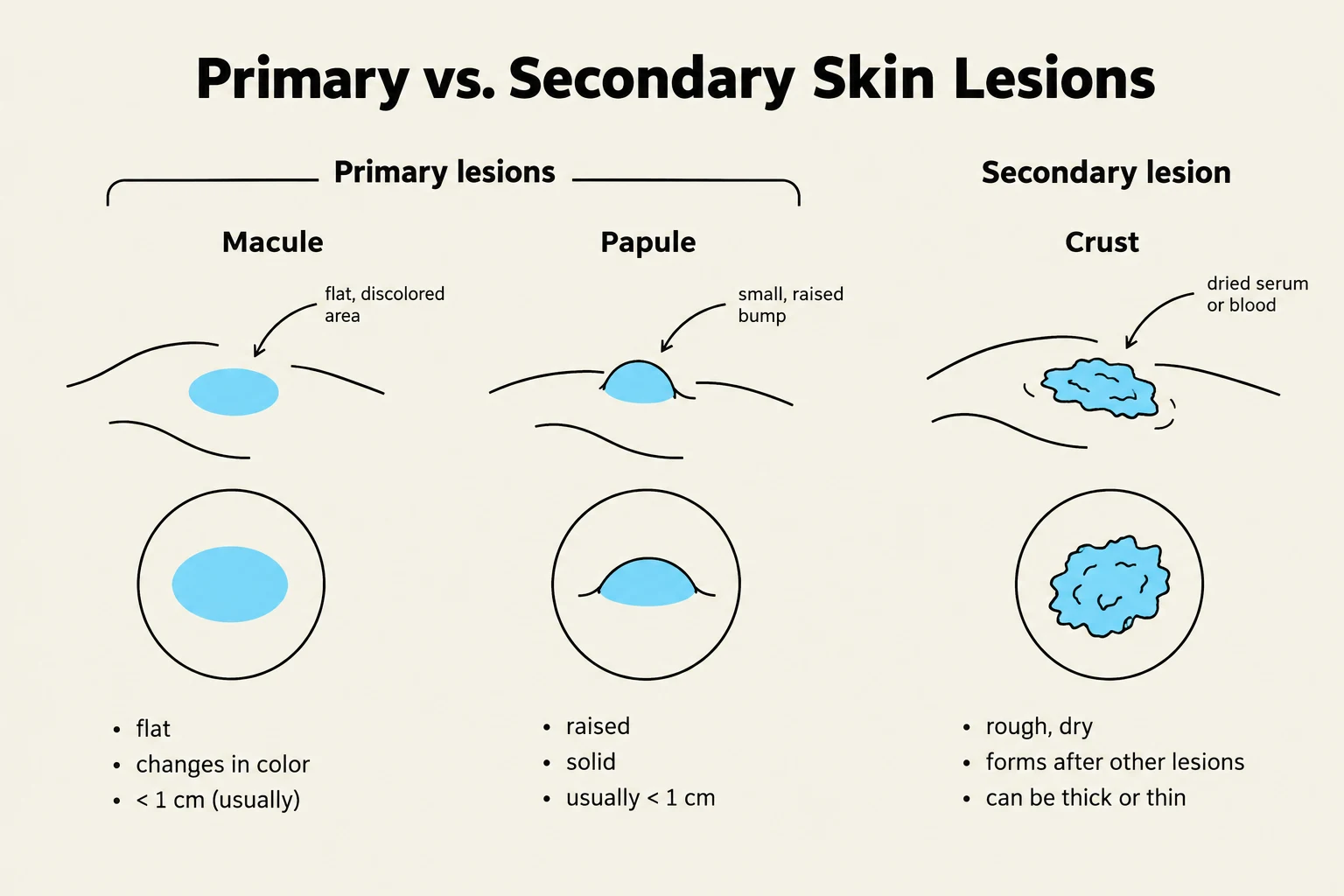
When performing a skin assessment, clinicians must distinguish between primary skin lesions (the initial physical change) and secondary skin lesions (changes that occur as a result of the primary lesion, such as scratching or infection).
Congenital Lesions
Many skin markings are present at birth. These are categorized as congenital lesions and include:
Hemangiomas: Benign vascular growths that may grow rapidly in early infancy.
Salmon Patches: Also known as "stork bites," these are flat, pinkish patches often found on the nape of the neck or eyelids.
Mongolian Spots: Flat, bluish-gray pigmented areas, typically found on the sacral area, which are common in certain ethnic groups and usually fade over time.
Clinical Indicators: Jaundice and Cyanosis
Skin color is a vital diagnostic tool.
Jaundice: A yellowish discoloration of the skin and sclera caused by elevated bilirubin levels. This is a common finding in newborns and requires monitoring to ensure it does not reach neurotoxic levels.
Cyanosis: A bluish discoloration of the skin or mucous membranes, which may indicate hypoxia or circulatory issues.
Common Pediatric Skin Conditions
Dermatitis and Inflammatory Conditions
Dermatitis is a broad term for skin inflammation. Common pediatric presentations include:
Atopic Dermatitis (Eczema): An allergic reaction often associated with other allergies. It presents as dry, scaly skin, typically in the creases of the elbows or behind the knees. Management involves daily lukewarm baths, patting the skin dry (never rubbing), and applying thick emollient creams to maintain hydration.
Seborrheic Dermatitis: Often presenting as cradle cap in infants, this involves greasy, yellowish scales on the scalp.
Contact Diaper Dermatitis: Irritation caused by prolonged contact with urine or feces.
Exam Tip: When managing atopic dermatitis, remember that heat exacerbates symptoms. Always recommend lukewarm water for baths rather than hot water to prevent further irritation.
Infestations and Fungal Infections
Pediculosis (Lice): An infestation of the hair/scalp.
Scabies: A skin infestation caused by mites that results in intense itching.
Fungal Infections (Dermatosis): The name often depends on the location. For example, Tinea corporis (ringworm) presents as a scaly ring with central clearing, while Tinea capitis affects the scalp and may require oral antifungals.
Oral Candida (Thrush): A fungal infection in the mouth appearing as white, "cottage cheese-like" plaques that are painful and adhere to the mucous membranes.
This diagram illustrates the differences between primary and secondary skin lesions, specifically macules, papules, and crusts, with descriptive text and visual representations.
Other Common Conditions
Acne: Driven by hormonal fluctuations during puberty, acne can impact a child's self-image. Treatment ranges from topical benzoyl peroxide to oral isotretinoin (Accutane) for severe cases.
Urticaria (Hives): An allergic reaction characterized by transient, erythematous wheals that blanch with pressure. It is important to distinguish this from anaphylaxis, which involves respiratory distress.
Nursing Management and Skin Integrity
Maintaining skin integrity is a primary nursing responsibility, especially when a patient is immobilized. For example, when a child is in a cast or traction, the risk of skin breakdown increases significantly.
Cast and Traction Care
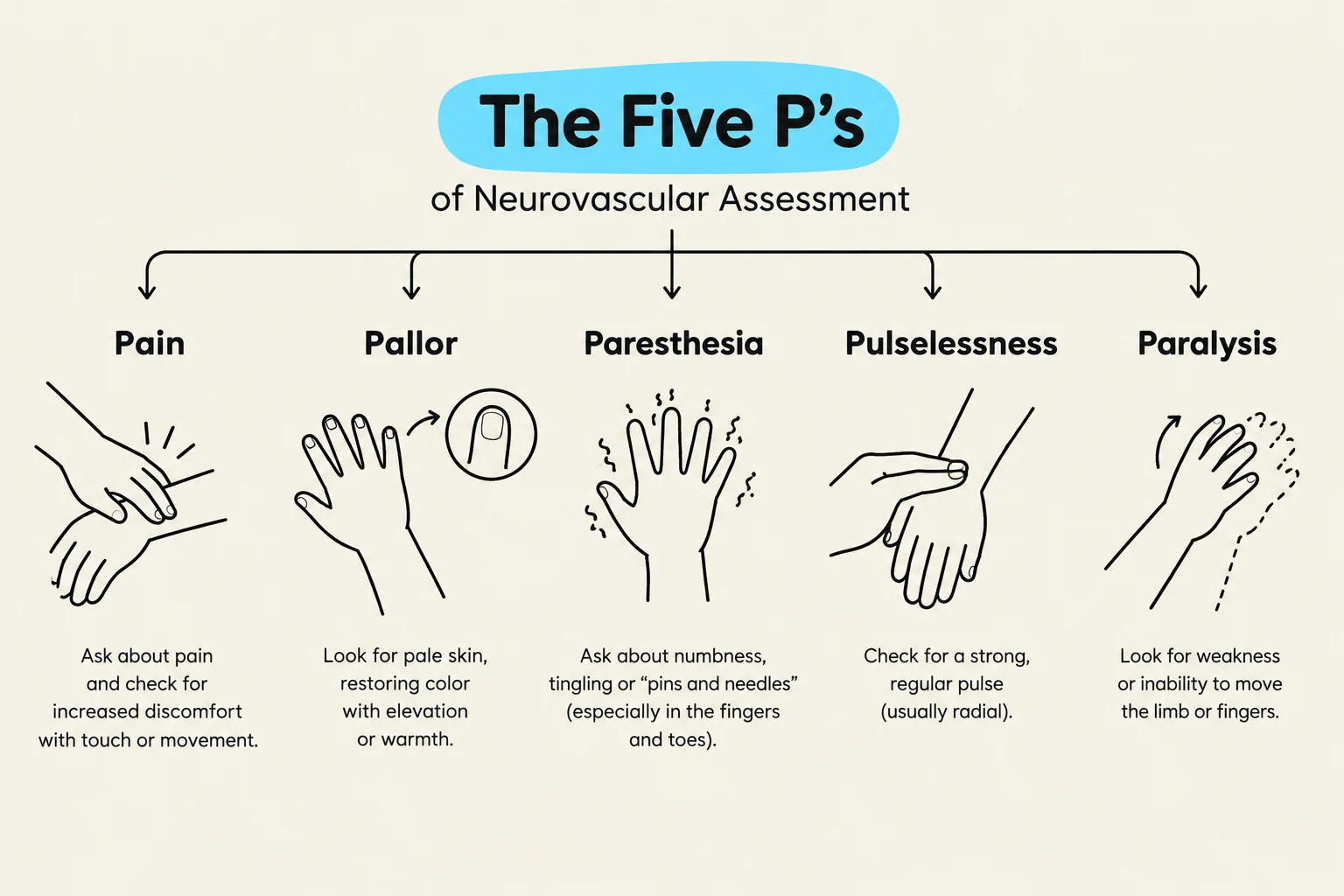
When a patient has a cast, nurses must perform frequent neurovascular checks using the "Five P's":
Pain
Pallor
Paresthesia (numbness/tingling)
Pulses
Paralysis
Clinical Alert: If a child is in a cast, never allow them to stick objects down the cast to scratch an itch. This can cause skin breakdown and lead to a secondary infection.
In traction, ensure that weights are hanging freely and not touching the floor, and monitor the skin at all pressure points to prevent breakdown.
The Five P's of Neurovascular Assessment: Pain, Pallor, Paresthesia, Pulselessness, and Paralysis.
Keep reading for free.
Create an account to finish this reading and make it part of your study routine.