


Pediatric respiratory medicine requires a keen understanding of how anatomical differences and developmental stages influence disease progression. Unlike adults, children have smaller airways and less physiological reserve, meaning a minor inflammatory process can rapidly escalate into a life-threatening emergency. This article explores the pathophysiology, clinical manifestations, and critical emergencies associated with the most common pediatric respiratory disorders, ranging from neonatal surfactant issues to viral infections of the lower airways.
Respiratory Distress Syndrome (RDS)
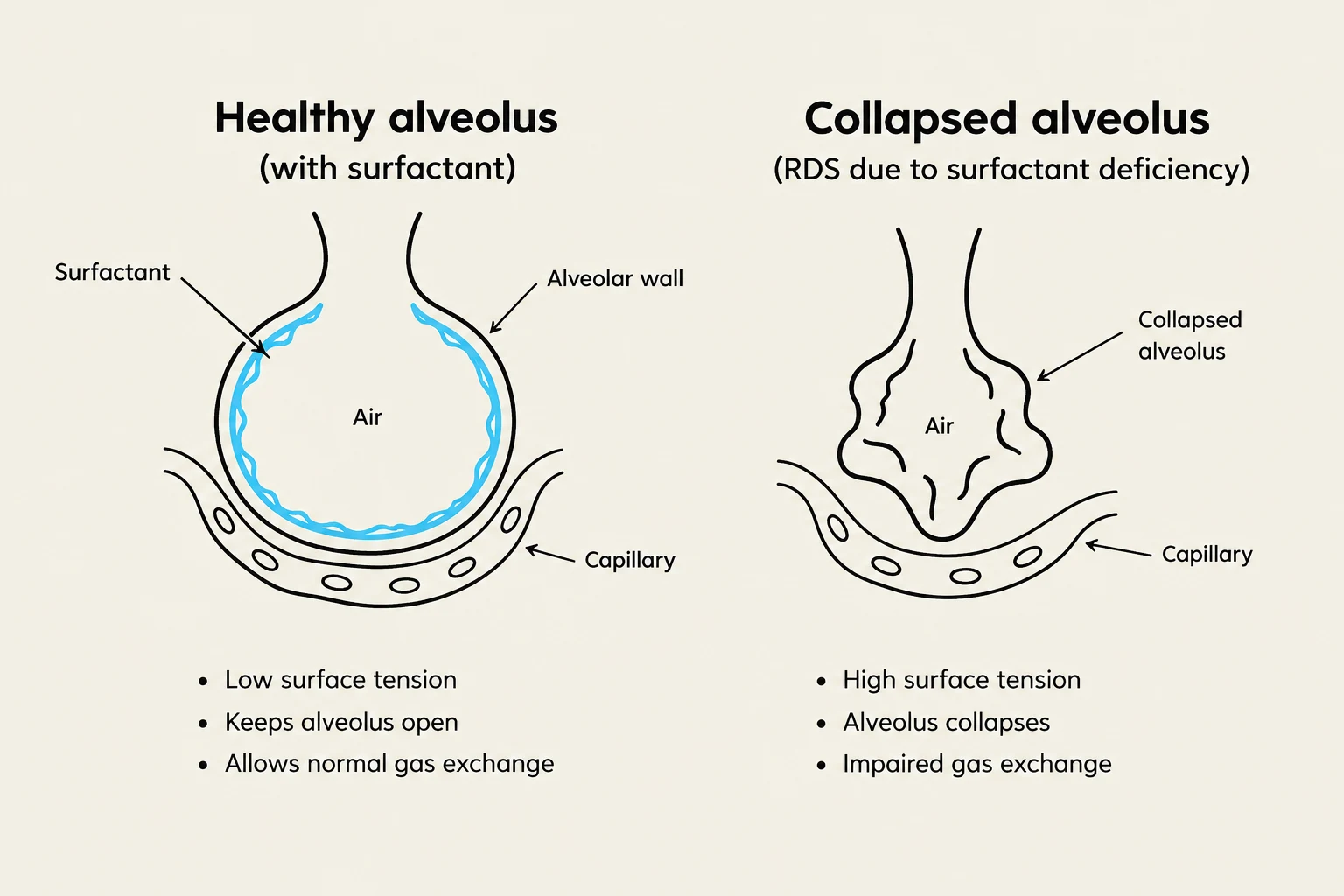
Respiratory Distress Syndrome (RDS) is a critical condition primarily affecting premature infants. The underlying pathophysiology is rooted in a surfactant deficiency. Surfactant is a lipoprotein complex that reduces surface tension within the alveoli; without sufficient amounts, the surface tension becomes too high, leading to widespread alveolar collapse.
This collapse impairs gas exchange, preventing oxygen from entering the bloodstream and carbon dioxide from leaving it, which results in profound hypoxemia and potentially fatal respiratory failure.
Clinically, healthcare providers look for signs of increased work of breathing. Common manifestations include:
- Tachypnea (rapid breathing)
- Nasal flaring and grunting
- Intercostal retractions (the skin pulling in between the ribs during inhalation)
- Cyanosis (bluish discoloration) and decreased breath sounds
Exam Tip: In a neonatal setting, if you observe grunting and retractions, immediately consider surfactant deficiency and the risk of severe hypoxemia.
Upper Airway Obstructions: Croup and Epiglottis
Upper airway disorders are often categorized by the speed of onset and the specific anatomical location of the inflammation.


Keep reading for free.
Create an account to finish this reading and make it part of your study routine.
Continue reading freeAlready have an account? Log in
Updated