Nursing Care of Pediatric Hematological, Immunologic, and Oncology Disorders
This guide provides an overview of nursing care for children with hematological, immunologic, and oncological disorders. It covers common conditions such as anemia, sickle cell anemia, hemophilia, HIV/AIDS, SCID, leukemia, lymphoma, and various solid tumors. The content also addresses the management of chemotherapy sid
Pediatric nursing requires a specialized approach when managing hematological, immunologic, and oncological disorders. These conditions often impact a child's growth, development, and family dynamics, necessitating a holistic, family-centered approach. Nurses must be proficient in analyzing complex diagnostic data, managing intensive medication regimens, and providing emotional support to both the child and their caregivers during acute illness or end-of-life transitions.
Hematological Disorders
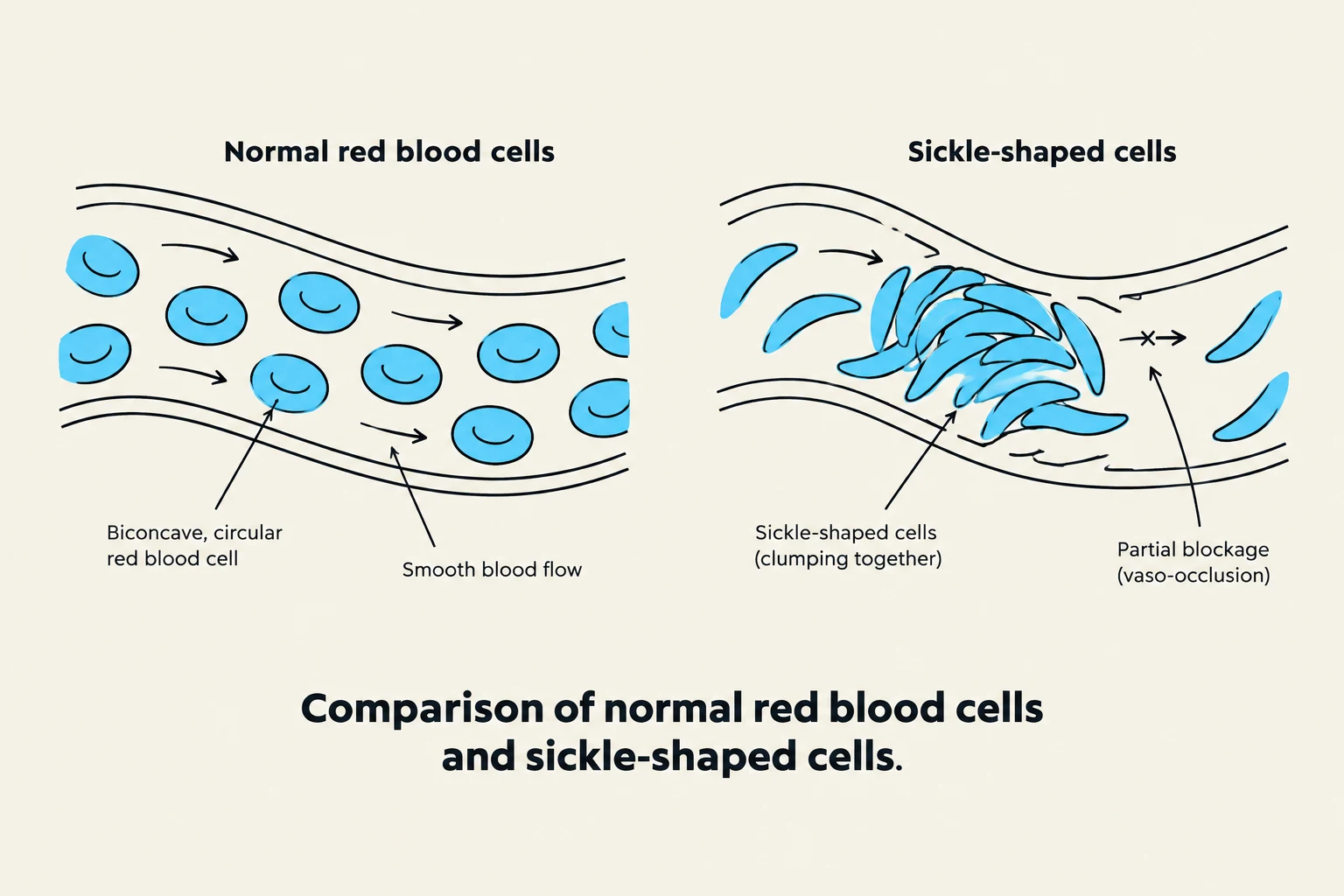
Comparison of normal red blood cells and sickle-shaped cells, illustrating smooth blood flow versus clumping and partial blockage.
Hematological disorders involve dysfunction in the blood components, including red blood cells (RBCs), white blood cells (WBCs), and platelets.
Anemia
Anemia is a reduction in RBC mass or hemoglobin (Hgb) concentration, which diminishes the oxygen-carrying capacity of the blood. While many anemias are manifestations of underlying processes, the most common is Iron Deficiency Anemia.
Risk Factors: Preterm infants, toddlers (12–36 months) with excessive cow's milk intake, and adolescents with rapid growth or poor nutrition.
Clinical Findings: Fatigue, pallor, easy fatigability, and in severe cases, growth retardation or cardiac murmurs due to increased circulation.
Nursing Care: Minimize tissue oxygen needs by assessing energy levels and adjusting activities.
Clinical Tip: Iron Administration
When administering oral iron supplements, instruct parents to give the medication with Vitamin C (e.g., orange juice) to facilitate absorption. Avoid giving iron with milk, as calcium can interfere with absorption. Note that iron can cause dark-colored stools, which is a normal finding.
Sickle Cell Anemia (SCA) and Hemophilia
Sickle Cell Anemia: A genetic disorder where RBCs take on a sickle shape, leading to vaso-occlusive crises. Assessment focuses on risk factors, laboratory findings, and managing acute crises.
Hemophilia: A clotting disorder requiring careful assessment of bleeding tendencies and laboratory monitoring to guide medication and client education.
Diagnostic Evaluation: The CBC
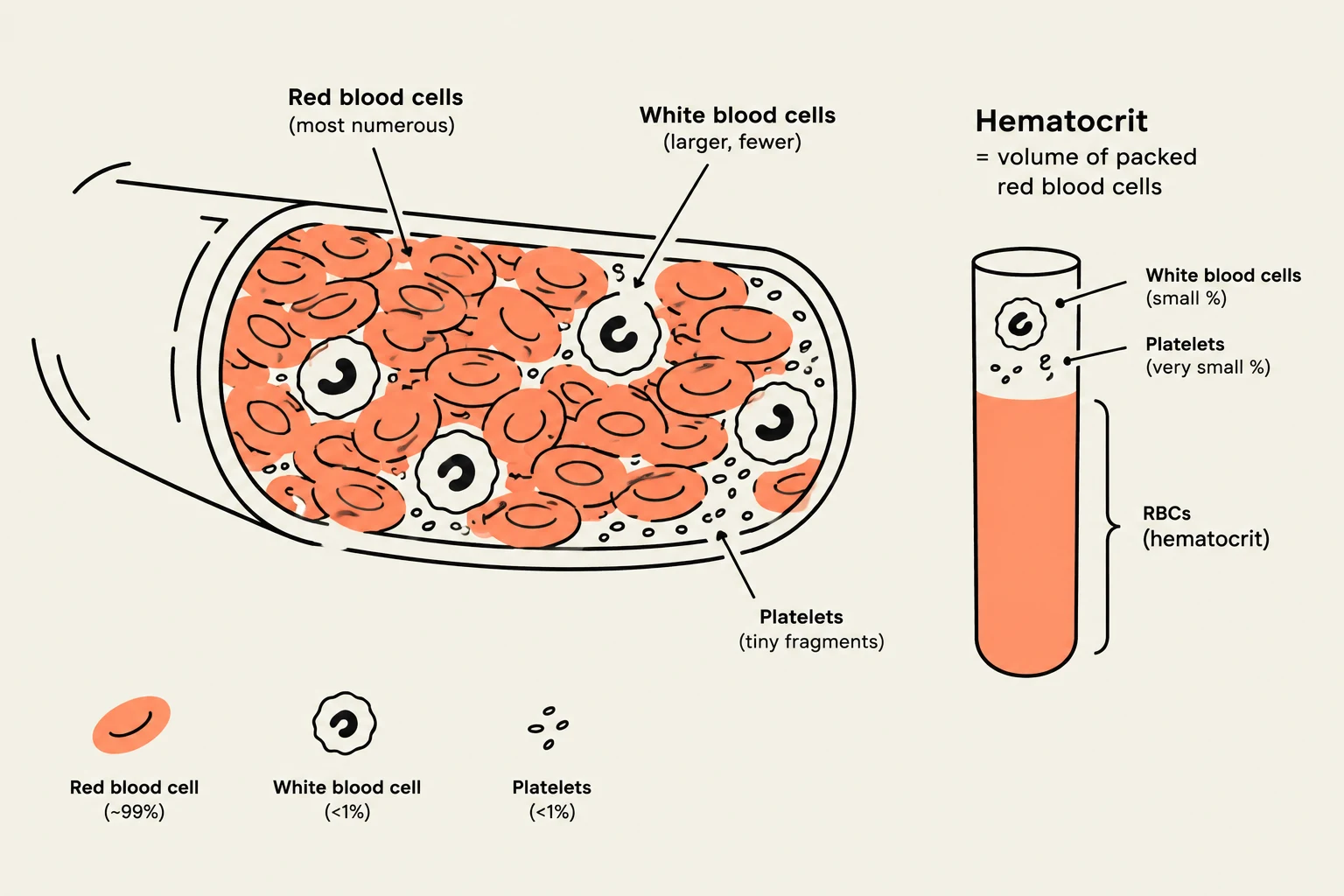
This illustration depicts the components of blood, including red blood cells, white blood cells, and platelets, and explains the concept of hematocrit as the volume of packed red blood cells.
The Complete Blood Count (CBC) is a vital tool for assessing hematologic function. Key indices include:
Hematocrit (Hct): The percent volume of packed RBCs in whole blood.
MCV (Mean Corpuscular Volume): Measures the average size of an RBC.
Reticulocyte Count: An index of bone marrow production of mature RBCs.
WBC Count & Differential: Assesses immune status. A "shift to the left" indicates an increase in immature neutrophils, often seen during bacterial infection.
Immunologic Dysfunction
Immunologic disorders impair the body's ability to defend against pathogens.
HIV/AIDS: Requires comprehensive assessment of risk factors, laboratory testing, and management of complications through specific medications and client education.
Severe Combined Immunodeficiency Disease (SCID): A critical condition requiring intensive nursing care, specialized treatment, and vigilant infection prevention.
Oncology Disorders
Pediatric cancer includes "liquid tumors" (Leukemia, Lymphoma) and "solid tumors" (Wilms tumor, Neuroblastoma, Osteosarcoma, etc.).
Common Pediatric Cancers
Leukemia (ALL & AML): Often presents with early findings such as fatigue, pallor, fever, recurrent infections, petechiae, easy bruising, and bone or joint pain.
Lymphoma: Includes Hodgkin and Non-Hodgkin types, often involving specific areas of lymphadenopathy.
Solid Tumors: Includes Wilms tumor, Neuroblastoma, Rhabdomyosarcoma, Osteosarcoma, Retinoblastoma, and Brain tumors.
Management of Chemotherapy Side Effects
Chemotherapy and radiation cause significant side effects that require proactive nursing intervention:
Side Effect
Nursing Management
Nausea/Vomiting
Avoid strong odors; offer small, frequent meals; administer antiemetics.
Mucosal Irritation
Use soft toothbrushes/swabs; provide lip lubricants; use soft, bland, non-acidic foods.
Alopecia
Assess emotional impact; encourage wig selection; use gentle hair care.
Steroid Effects
Avoid salty foods; provide loose-fitting clothes; educate on mood changes.
Bone Marrow Depression
Critical: Monitor for fever/infection; practice strict hand hygiene; avoid crowds and invasive procedures; avoid aspirin/NSAIDs.
Knowledge Check: Mucositis
When caring for a child with oral mucositis, which intervention is appropriate?
Correct: Using soft foods and gentle oral care (e.g., warm saline mouthwash).
Incorrect: Using harsh mouthwashes or acidic substances like lemon glycerin swabs.
End-of-Life Care and Grief
When a child faces a terminal diagnosis, nursing care shifts toward palliative principles and supporting the family through the dying process.
Understanding Death by Age
A child's understanding of death evolves with development:
Infants/Toddlers: Limited understanding; fear of separation.
Preschoolers: May view death as reversible or believe their thoughts caused it (magical thinking).
School-Age: Understand death is permanent but may feel guilt or fear of bodily mutilation.
Adolescents: Have a mature understanding but struggle significantly with identity and social implications.
Supporting the Family and Grieving
Grief is a highly individualized, non-linear process. Nurses must support different family members:
Parental Grief: Often the most intense and complex; involves secondary losses like lost dreams for the child.
Sibling Grief: Children grieve in "spurts," appearing fine one moment and deeply sad the next; they often express grief through play and behavior.
Nursing Guidelines for Bereavement:
At the time of death: Ensure comfort, provide honest information, and allow parents to stay with the child as long as they wish.
Post-death: Refer to the child by name, attend the funeral if appropriate, and offer follow-up contact (e.g., phone calls or cards).
Self-Care: Nurses should utilize professional support systems and healthy coping mechanisms to manage the high stress of pediatric end-of-life care.
Keep reading for free.
Create an account to finish this reading and make it part of your study routine.