


The nervous system is a complex, continuous loop of sensory input, integration, and motor output. To understand neurological disorders, one must first distinguish between the Central Nervous System (CNS)—the brain and spinal cord—and the Peripheral Nervous System (PNS), which connects the CNS to the rest of the body. Pathophysiology in these systems generally falls into two categories: failures of "insulation" (myelin) or failures of "chemical messengers" (neurotransmitters).
Central Nervous System Disorders: Insulation and Chemical Failures
Multiple Sclerosis (MS)
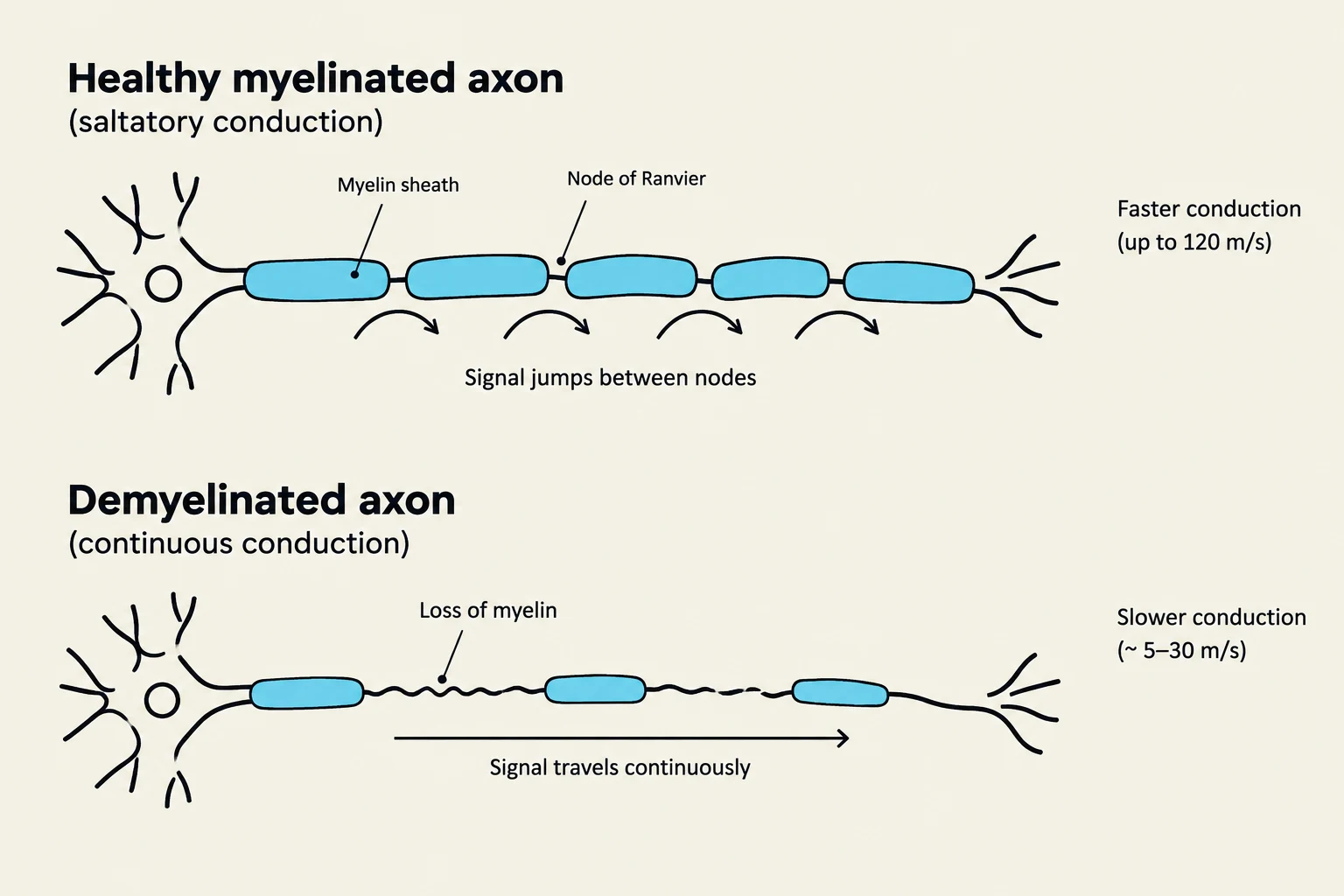
Multiple Sclerosis is a quintessential "insulation failure" of the CNS. It is an immune-mediated disease where autoreactive T and B cells cross the blood-brain barrier to attack the myelin sheath and the oligodendrocytes responsible for producing it. This inflammatory attack results in the formation of demyelinated, scarred lesions known as "plaques".
When myelin is lost, the process of saltatory conduction—where electrical impulses "jump" between Nodes of Ranvier—is disrupted, leading to slowed or blocked signals. Clinical manifestations vary based on plaque location but commonly include fatigue, optic neuritis, and the Uhthoff phenomenon, where symptoms temporarily worsen due to increased core body temperature.
Parkinson’s Disease (PD)
In contrast to MS, Parkinson’s Disease is a "chemical messenger" problem. It involves the progressive neurodegeneration of dopaminergic neurons within the substantia nigra. As dopamine levels fall, a relative excess of Acetylcholine occurs, disrupting the balance required for smooth, voluntary movement.
The hallmark of PD is the presence of Lewy bodies (aggregates of alpha-synuclein protein). Clinically, symptoms are often remembered by the acronym TRAP:
Keep reading for free.
Create an account to finish this reading and make it part of your study routine.
Continue reading freeAlready have an account? Log in
Updated