Pathophysiology of Inflammatory and Degenerative Joint Diseases
An overview of the pathophysiology, clinical presentations, diagnostics, and pharmacological treatments for common joint and soft tissue conditions including Rheumatoid Arthritis, Ankylosing Spondylitis, Gout, Osteoarthritis, and Fibromyalgia.
The human musculoskeletal system is a complex network of bones, joints, and soft tissues designed for stability and movement. When this system is compromised, the resulting pathophysiology can range from localized mechanical wear to systemic autoimmune attacks. Understanding these processes is essential for differentiating between inflammatory, degenerative, and metabolic conditions that impact patient mobility and quality of life.
Rheumatoid Arthritis (RA): Systemic Autoimmunity
Rheumatoid Arthritis is a chronic, systemic autoimmune disease where the body's immune system mistakenly attacks its own healthy tissues. The primary target is the synovium, the lining of the joints.
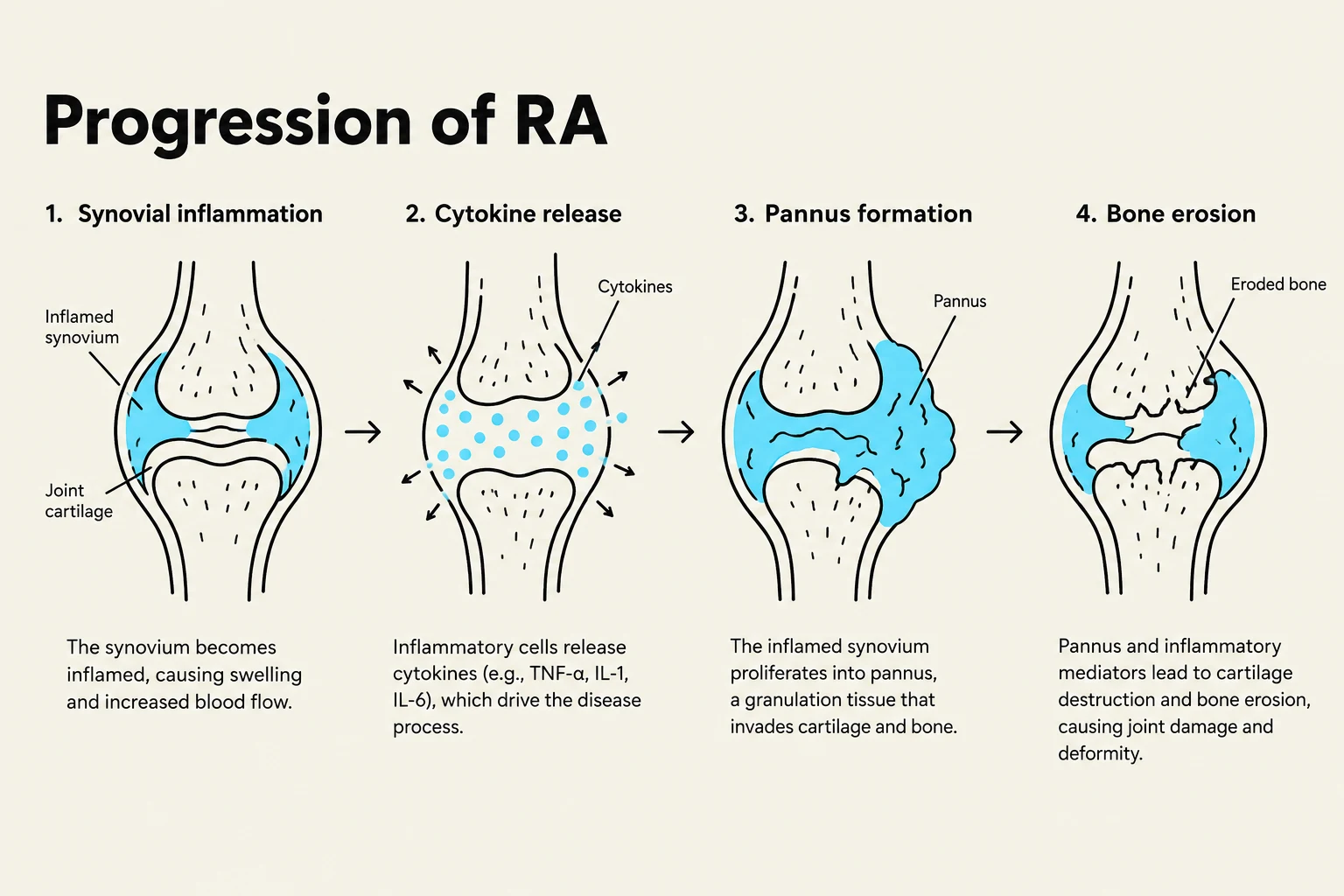
The process begins with an abnormal immune response involving T and B cells. These cells release pro-inflammatory cytokines, most notably TNF-alpha and IL-6. This cytokine storm causes intense synovium inflammation, leading to the formation of pannus—a thickened, abnormal layer of granulation tissue. As the pannus grows, it acts like a destructive film, eroding the underlying articular cartilage and eventually the bone itself.
Clinical presentation is often characterized by:
Symmetric involvement (if the left wrist is affected, the right usually is too).
Swelling of small joints (hands, wrists, feet).
Morning stiffness that lasts over 1 hour.
Systemic symptoms such as fatigue, fever, and weight loss.
Diagnostics typically reveal elevated inflammatory markers like ESR and CRP, along with specific antibodies such as rheumatoid factor and anti-CCP.
Diagram illustrating the four stages of Rheumatoid Arthritis (RA) progression: synovial inflammation, cytokine release, pannus formation, and bone erosion.
Exam Tip: RA is systemic and symmetric. If a patient has morning stiffness lasting more than an hour and elevated inflammatory markers, think Rheumatoid Arthritis.
Ankylosing Spondylitis: The "Bamboo Spine"
Ankylosing Spondylitis is a chronic inflammatory arthritis that primarily targets the spine and sacroiliac joints. This condition has a very strong genetic association with the HLA-B27 gene.
The pathophysiology begins with enthesitis, which is inflammation at the sites where ligaments and tendons attach to the bone. As the body attempts to heal this chronic inflammation, it undergoes a process of ossification. New bone forms across the joints and between the vertebrae, effectively "bridging" them together. This results in a rigid, fused spine often referred to as a "bamboo spine".
Gout: Metabolic Crystal Deposition
Unlike the autoimmune nature of RA, Gout is a metabolic inflammatory arthritis. It is caused by hyperuricemia, a state where there is an overproduction or inadequate excretion of uric acid.
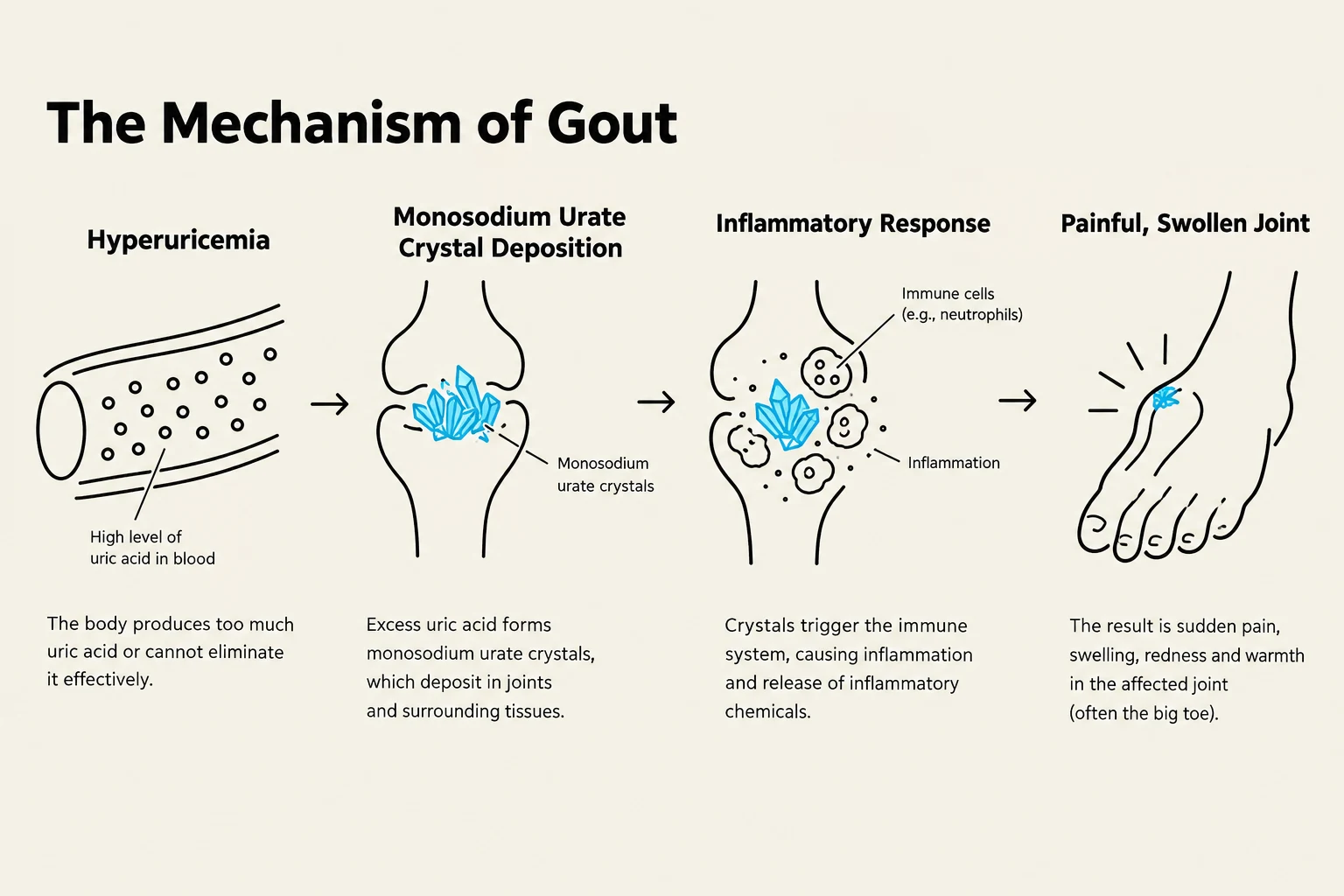
When uric acid levels in the blood become too high, it precipitates out of solution, forming monosodium urate crystals. These sharp crystals deposit within the joint spaces and soft tissues. The immune system recognizes these crystals as foreign invaders, triggering an intense white blood cell response that results in excruciating pain, redness, and swelling.
Common triggers include:
High-purine foods (red meat, shellfish).
Alcohol consumption.
Diuretics (thiazides and loops).
The classic presentation is podagra—sudden, severe pain in the big toe. Diagnosis is confirmed by identifying needle-shaped, negatively birefringent urate crystals in the synovial fluid.
This diagram illustrates the mechanism of gout, starting with hyperuricemia (high uric acid levels in the blood), followed by monosodium urate crystal deposition in joints, an inflammatory response triggered by these crystals, and finally resulting in a painful, swollen joint, often the big toe.
Osteoarthritis (OA): Degenerative Wear and Tear
Osteoarthritis is often mischaracterized as inflammatory, but it is fundamentally a degenerative joint disease. The primary mechanism is the mechanical wear and thinning of the articular cartilage.
As the cartilage loses its integrity, the underlying bone is exposed to increased stress. This leads to:
Osteophytes: The formation of bony spurs at the joint margins.
Increased bone density: Subchondral sclerosis as the bone reacts to the loss of cushioning.
Key Distinctions from RA:
Asymmetric: It often affects one side or specific joints more than others.
Pain Pattern: Pain is typically worse with activity and better with rest.
Stiffness: Morning stiffness is brief, usually less than 30 minutes.
Physical Signs: Presence of Heberden nodes (distal interphalangeal joints) and Bouchard nodes (proximal interphalangeal joints).
Fibromyalgia: Central Sensitization
Fibromyalgia stands apart from the previous conditions because it involves no visible tissue inflammation, structural damage, or joint destruction. Instead, it is a disorder of pain processing.
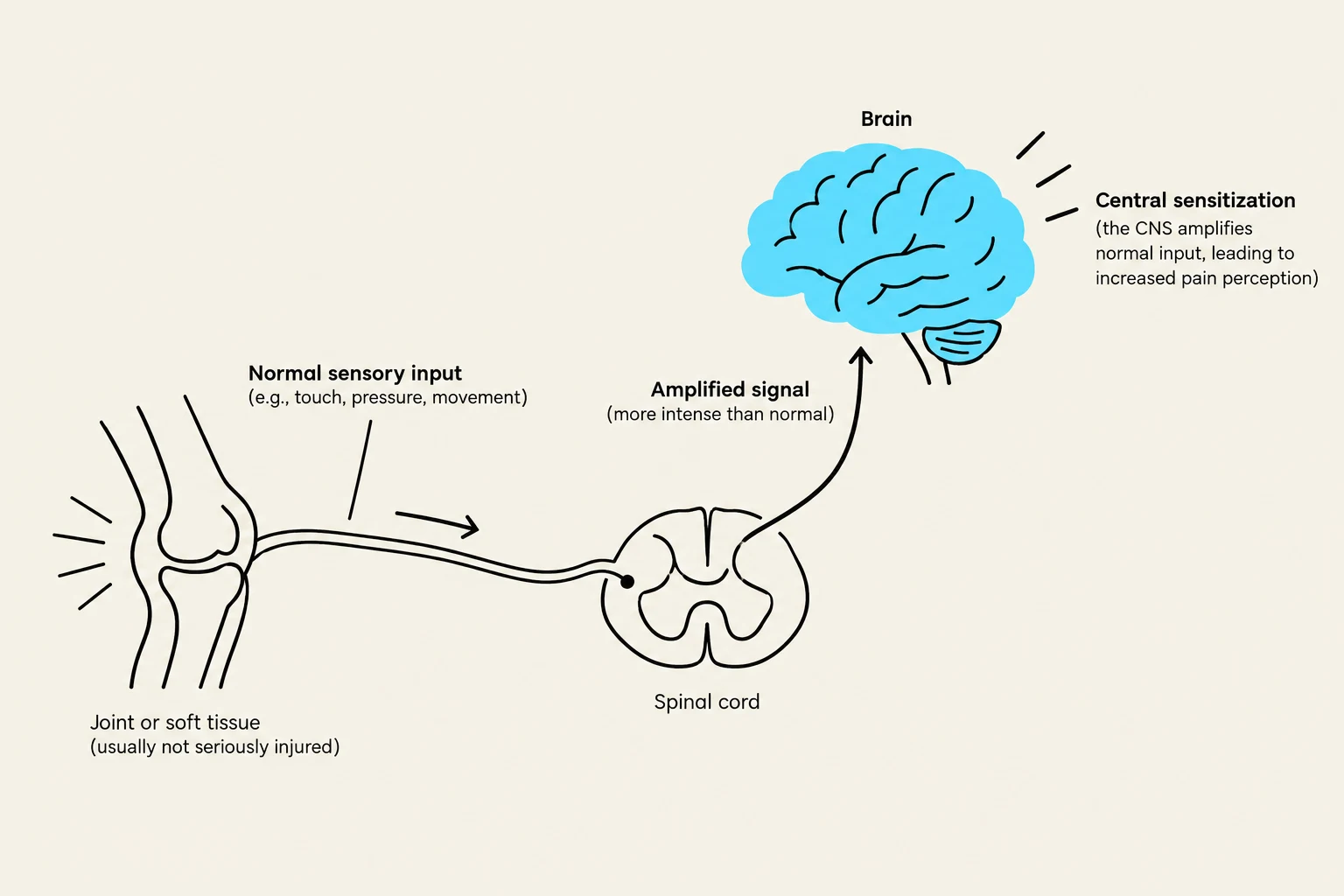
The pathophysiology is centered on central sensitization, a process where the central nervous system (the brain and spinal cord) amplifies incoming sensory signals. In patients with fibromyalgia, the "volume" of the pain pathways is turned up so high that normal sensations are perceived as painful, and even minor stimuli can trigger widespread discomfort.
Symptoms include widespread pain lasting at least three months, fatigue, "fibro fog" (cognitive difficulties), and sleep disturbances.
This diagram illustrates central sensitization, where the central nervous system amplifies normal sensory input, resulting in increased pain perception, even from non-seriously injured tissues.
Summary of Pharmacological Treatments
Management of these disorders requires a multi-faceted approach depending on whether the goal is to reduce inflammation, slow degeneration, or manage pain.
Condition
Primary Pharmacological Targets
Examples
Rheumatoid Arthritis
Disease-modifying (DMARDs), Biologics, NSAIDs
Methotrexate, TNF inhibitors
Ankylosing Spondylitis
Inflammation reduction
NSAIDs, TNF inhibitors
Gout (Acute)
Inflammation/Pain
NSAIDs, Colchicine, Corticosteroids
Gout (Prevention)
Uric acid reduction
Allopurinol, Febuxostat
Osteoarthritis
Pain and inflammation
Acetaminophen, NSAIDs
Fibromyalgia
Neuromodulation
Duloxetine, Pregabalin, Amitriptyline
Exam Tip: If a patient has widespread pain but all laboratory tests (ESR, CRP, X-ray) are completely normal, the most likely diagnosis is Fibromyalgia.
Keep reading for free.
Create an account to finish this reading and make it part of your study routine.