An in-depth guide to the pathophysiology, clinical presentations, and diagnostic markers of major bone and muscle disorders, including osteoporosis, osteomalacia, Paget disease, osteomyelitis, bone tumors, rhabdomyolysis, and metabolic myopathies.
Understanding the mechanics of the musculoskeletal system requires a deep dive into the delicate balance between bone formation and resorption, as well as the metabolic pathways that fuel muscle contraction. When this balance is disrupted—whether by hormonal changes, nutritional deficiencies, infection, or genetic mutations—the results can range from silent bone thinning to life-threatening systemic crises like kidney failure. This guide explores the pathophysiology, clinical presentations, and diagnostic markers of major bone and muscle disorders.
Bone Density and Mineralization Disorders
Bone health relies on the continuous activity of two primary cell types: osteoblasts, which build bone, and osteoclasts, which resorb (break down) bone.
Osteoporosis
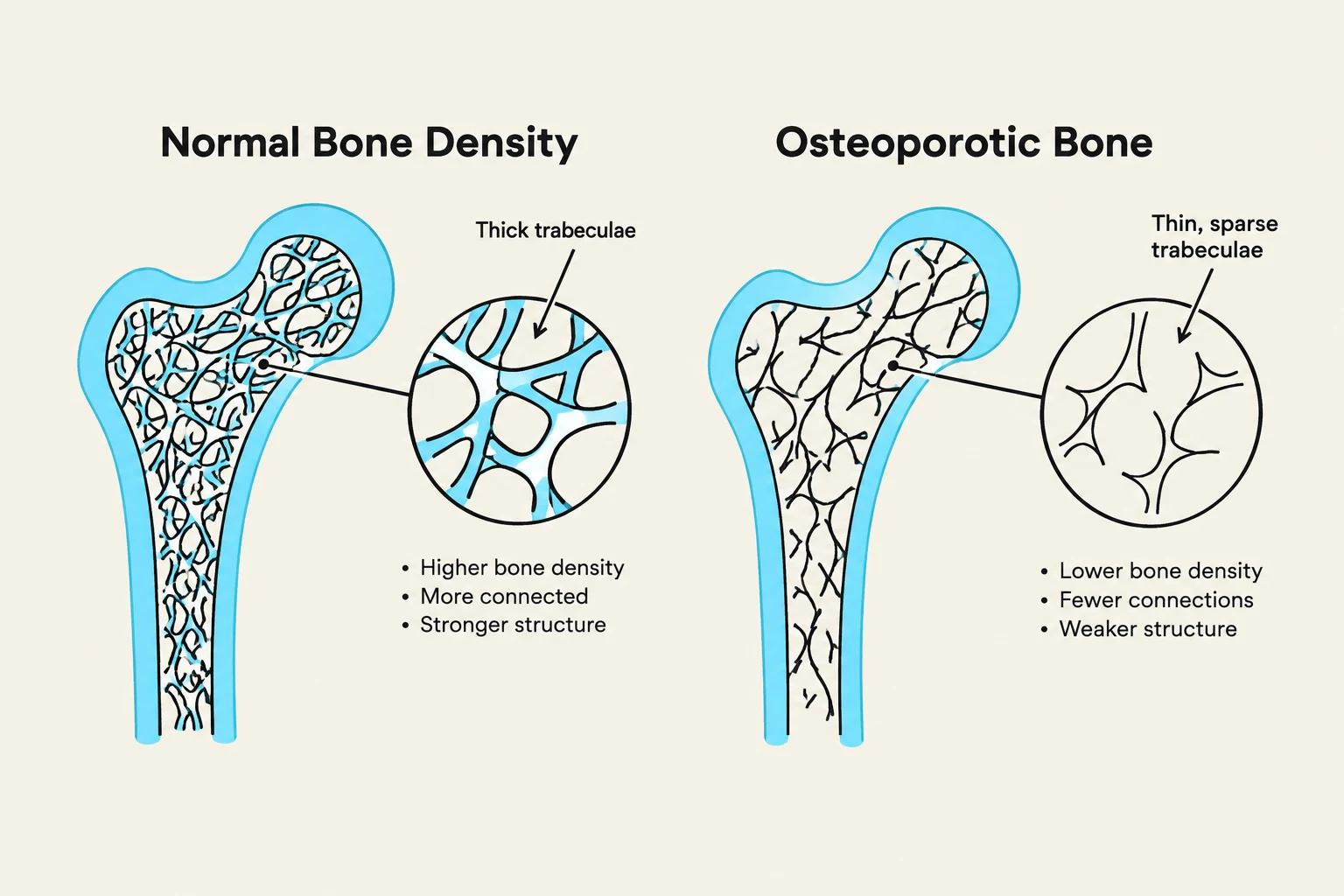
Osteoporosis is a condition characterized by a decrease in total bone mass and a deterioration of the bone's microarchitecture. The fundamental pathophysiology is an imbalance where osteoclast activity outpaces osteoblast formation. This often occurs due to estrogen loss during menopause, aging, or prolonged steroid use. Because the bone remains chemically normal but structurally sparse, patients are often asymptomatic until a fracture occurs, typically in the spine, hip, or wrist.
Diagnosis is confirmed via a DXA scan, where a T-score of ≤−2.5 indicates osteoporosis. Notably, serum calcium and alkaline phosphatase (ALP) levels typically remain within normal limits.
Comparison of normal bone density with osteoporotic bone, illustrating differences in trabeculae structure and density.
Osteomalacia
While osteoporosis is a loss of bone quantity, osteomalacia is a problem of bone quality. It is characterized by "soft bones" resulting from poor mineralization of the osteoid (the organic bone matrix). This is most commonly caused by a deficiency in Vitamin D, which is essential for the absorption of calcium and phosphate.
Unlike osteoporosis, osteomalacia presents with distinct laboratory findings: low calcium, low phosphate, and high alkaline phosphatase (ALP). Patients may present with diffuse bone pain, proximal muscle weakness, and a waddling gait.
Paget Disease of Bone
Paget disease is a disorder of disorganized bone remodeling, primarily affecting older adults. The process begins with excessive, localized osteoclast resorption, which triggers a frantic, compensatory response from osteoblasts. This results in the creation of bone that is large, structurally weak, and highly vascularized.
Clinical signs may include bone pain, warmth over the affected area, or even hearing loss if the skull is involved. The hallmark diagnostic finding is a markedly high ALP level, while calcium and phosphate levels typically remain normal.
Bone Infections and Malignancies
Osteomyelitis
Osteomyelitis is an infection within the bone, most frequently caused by Staphylococcus aureus. It can be categorized by its route of entry:
Endogenous (Hematogenous): Bacteria travel through the bloodstream from a distant site, such as a UTI or dental infection, to settle in the bone.
Exogenous: Bacteria enter the bone directly through trauma, surgery, or an open fracture.
The resulting inflammation increases pressure within the bone, which can compromise blood flow and lead to the formation of a sequestrum (a piece of dead bone).
Malignant Bone Tumors
Bone cancers are classified by the type of cell they originate from.
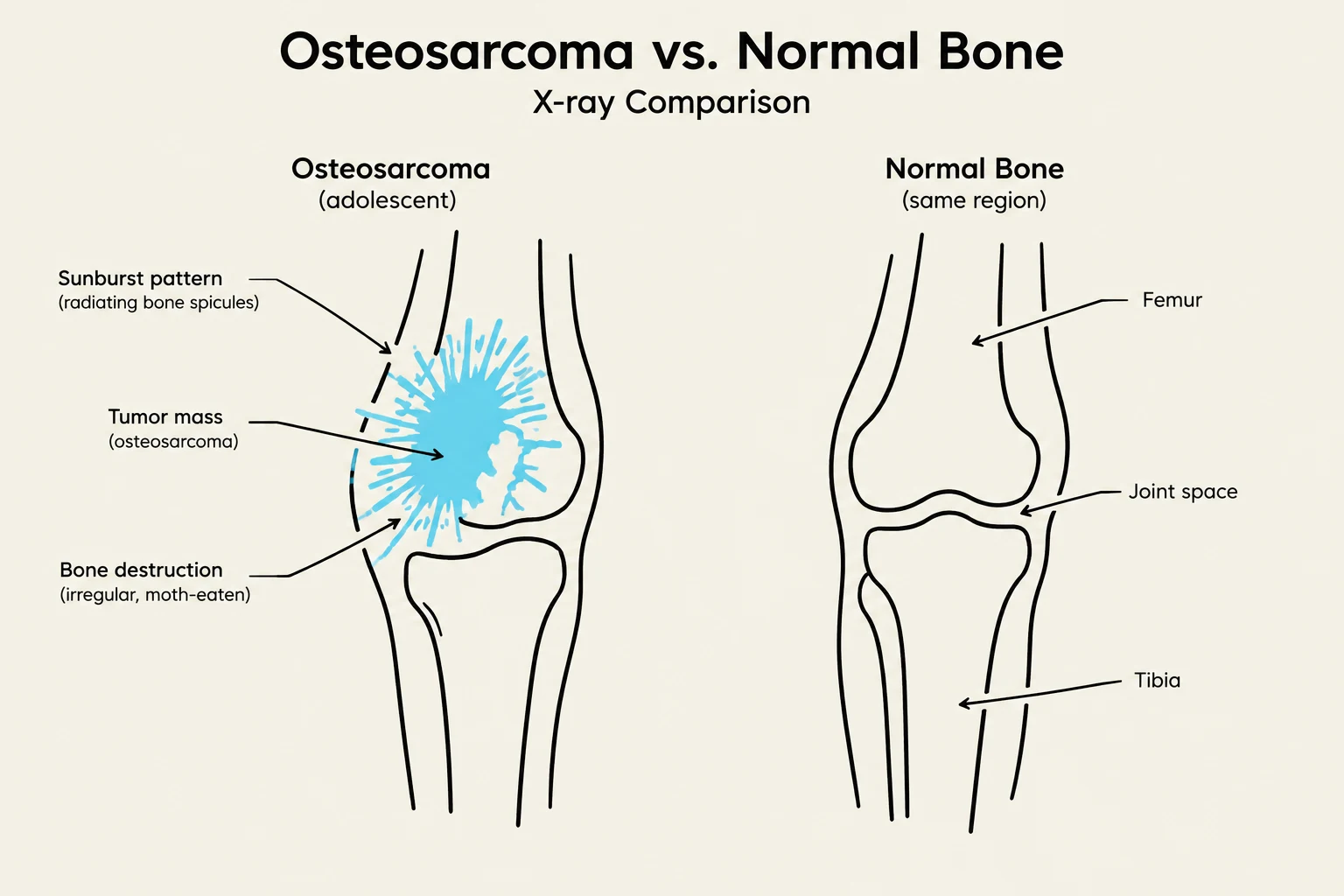
Osteosarcoma is the most common primary malignant bone tumor, typically affecting adolescents (ages 10–25). It usually arises at the metaphysis of long bones, such as the distal femur. On an X-ray, it often presents with a characteristic sunburst pattern or a Codman triangle.
Chondrosarcoma is the second most common primary bone cancer and arises from malignant cartilage cells. It tends to grow more slowly than osteosarcoma and is more common in older adults. Because these tumors are often resistant to chemotherapy and radiation, surgical removal is the primary treatment modality.
Comparison of an osteosarcoma in an adolescent bone with a normal bone, highlighting features like sunburst pattern, tumor mass, and bone destruction.
Muscle and Metabolic Disorders
Rhabdomyolysis
Rhabdomyolysis is a critical condition involving the rapid breakdown of skeletal muscle tissue. Whether caused by extreme exertion, crush injuries, or certain medications (like statins), the muscle cell membranes rupture, releasing intracellular contents into the bloodstream.
The release of myoglobin is the most dangerous aspect of this process. As the kidneys attempt to filter myoglobin, it can block and damage the renal tubules, leading to acute kidney injury (AKI). Other released substances include potassium (leading to hyperkalemia) and creatine kinase (CK).
Exam Tip: If a patient presents with muscle pain, weakness, and dark, tea-colored urine, think Rhabdomyolysis. The priority is aggressive IV hydration to protect the kidneys.
Metabolic Myopathies
Metabolic myopathies are inherited enzyme deficiencies that prevent muscles from producing sufficient ATP (energy). This leads to exercise intolerance and a risk of rhabdomyolysis during physical exertion.
McArdle Disease: A deficiency in muscle glycogen phosphorylase prevents the breakdown of glycogen into glucose. Patients often experience early fatigue and cramps, but may experience a "second wind" phenomenon after a brief period of rest.
Pompe Disease: This is caused by an acid maltase deficiency, which leads to the abnormal buildup of glycogen in the muscles, the heart, and the respiratory muscles.
Lipid Storage Myopathies: These involve deficiencies in fatty acid utilization (such as carnitine deficiency). Because these patients cannot use fat for fuel, they are at high risk for muscle breakdown during periods of fasting or prolonged exercise.
Summary Table of Key Lab Markers
Disorder
Calcium
Phosphate
Alkaline Phosphatase (ALP)
Osteoporosis
Normal
Normal
Normal
Osteomalacia
Low/Normal
Low
High
Paget Disease
Normal
Normal
Markedly High
Rhabdomyolysis
Low (early)
High
Variable
Keep reading for free.
Create an account to finish this reading and make it part of your study routine.