Pathophysiology and Management of Sickle Cell Anemia
An overview of sickle cell anemia, including its pathophysiology, the distinction between trait and disease, clinical complications, and current pharmacological and advanced management strategies.
Sickle cell anemia is a complex, inherited hematologic disorder that fundamentally alters the way red blood cells function. Unlike other forms of anemia, such as iron deficiency or vitamin deficiency, sickle cell anemia is driven by a genetic mutation that changes the structure of hemoglobin. This structural change leads to a cascade of physiological complications, ranging from localized pain to life-threatening organ damage. Understanding the distinction between the disease and the trait, as well as the various pharmacological and surgical interventions, is essential for effective clinical management.
Pathophysiology of Sickle Cell Anemia
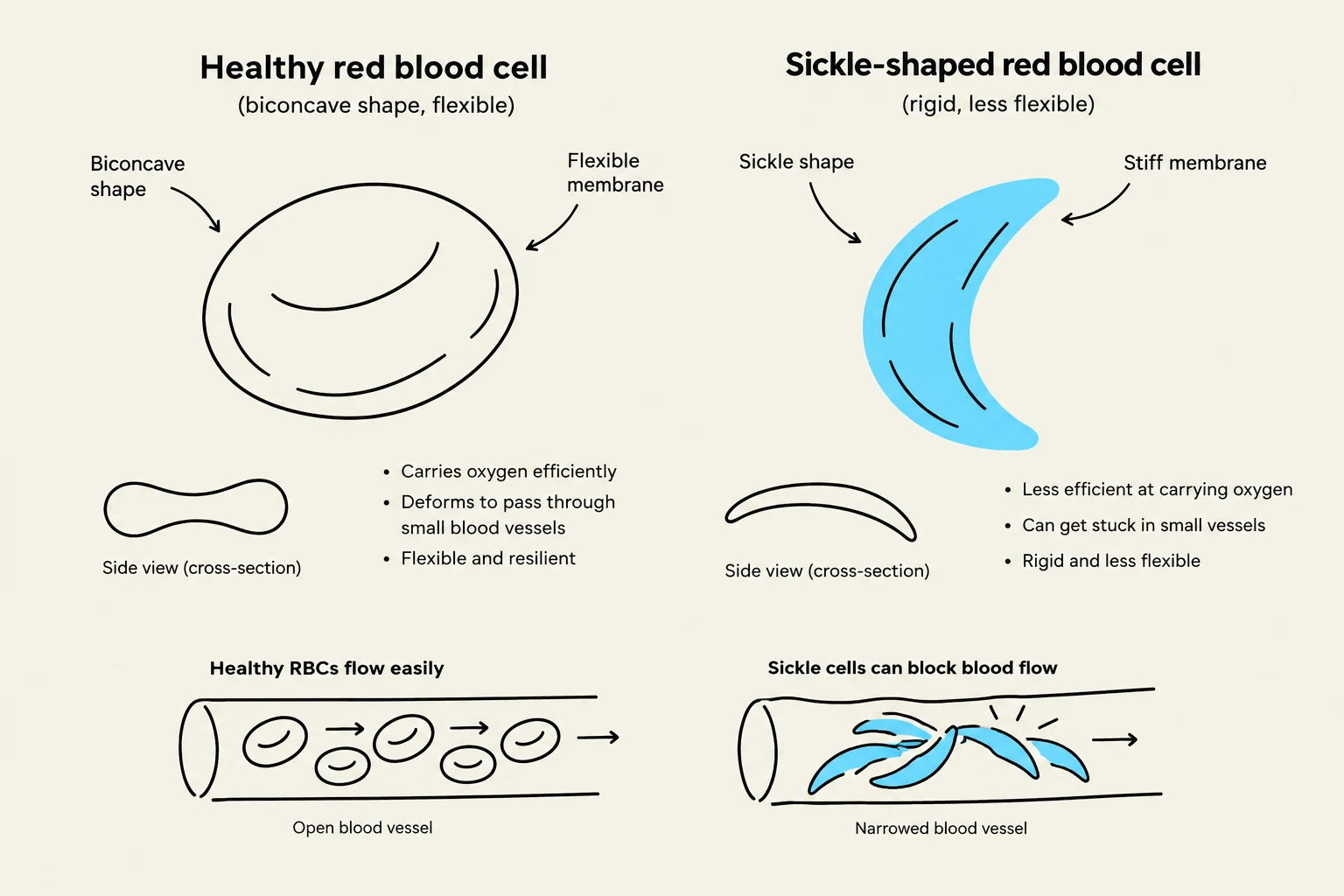
The core of sickle cell anemia lies in the production of abnormal, "sticky" hemoglobin. In a healthy individual, red blood cells (RBCs) are flexible, biconcave discs that easily navigate through the narrow capillaries of the circulatory system to deliver oxygen to tissues. In patients with sickle cell anemia, the abnormal hemoglobin causes these cells to become rigid and assume a crescent or "sickle" shape when oxygen levels are low.
These sickled cells are not only inflexible but also prone to clumping together. This leads to two primary physiological problems: the cells are destroyed more rapidly than the body can replace them (leading to chronic anemia), and they physically obstruct blood flow through the vascular system.
Comparison of healthy red blood cells and sickle-shaped red blood cells, illustrating their shapes, properties, and effects on blood flow.
Sickle Cell Trait vs. Sickle Cell Disease
It is clinically vital to differentiate between having the sickle cell trait and having sickle cell disease.
Sickle Cell Trait: This occurs when an individual inherits only one sickle cell gene from one parent. These individuals are typically asymptomatic carriers and do not experience the clinical manifestations of the disease.
Sickle Cell Disease: This is an inherited recessive disorder where the individual inherits two sickle cell genes (one from each parent). This results in the full manifestation of the disease, including the characteristic sickling of cells and subsequent complications.
Clinical Complications and Crises
The rigid nature of sickled cells leads to several acute and chronic complications that can severely impact a client's overall health.
Vaso-occlusive Crisis (VOC)
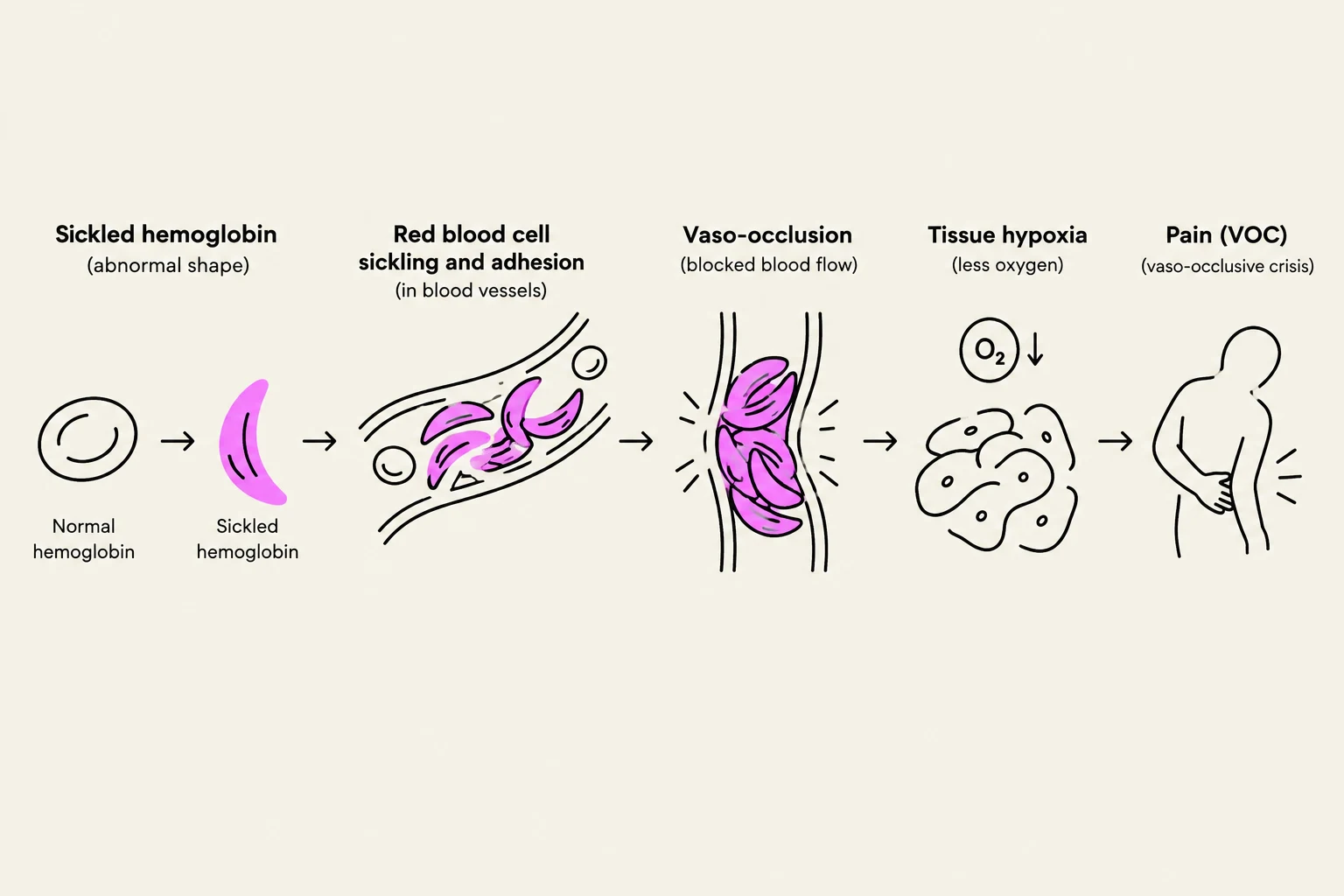
A vaso-occlusive crisis is one of the most common and painful manifestations of the disease. It occurs when the sickled cells block blood flow in the capillaries and small vessels, leading to tissue ischemia (lack of oxygen) and intense pain.
Acute Chest Syndrome
This is a life-threatening complication characterized by chest pain, fever, and respiratory distress. It often results from infection or pulmonary infarction (tissue death in the lungs) due to the occlusion of blood vessels in the pulmonary circulation.
Stroke, Anemia, and Infection
Stroke: If sickled cells or resulting clots block the blood supply to the brain, an ischemic stroke can occur, potentially leading to paralysis or neurological deficits.
Anemia: Because sickled cells have a significantly shortened lifespan compared to the normal 120 days of a healthy RBC, patients suffer from chronic anemia.
Infection: Patients are at a higher risk for infections, which can further trigger inflammatory responses and subsequent sickling events.
This diagram illustrates the process of vaso-occlusion in sickle cell disease, starting from normal hemoglobin, progressing to sickled hemoglobin, red blood cell sickling and adhesion in blood vessels, leading to vaso-occlusion, tissue hypoxia, and ultimately pain from a vaso-occlusive crisis.
Pharmacological Management
Modern medicine offers several targeted therapies to manage the symptoms and slow the progression of sickle cell anemia.
Hydroxyurea: This medication is frequently used to increase the production of fetal hemoglobin, which helps prevent the sickling process.
L-glutamine: This therapy aims to reduce oxidative stress in red blood cells, thereby decreasing the frequency of pain crises.
Voxelotor: This drug works by increasing the affinity of hemoglobin for oxygen, helping the cells stay in a more flexible state.
Crizanlizumab: This is a monoclonal antibody that targets adhesion molecules on the surface of blood vessels, helping to prevent sickled cells from sticking to the vessel walls and causing occlusion.
Exam Tip: When reviewing medications for sickle cell, remember that the goal of most disease-modifying therapies (like Hydroxyurea or Voxelotor) is to prevent the occurrence of a crisis, whereas treatments like blood transfusions are used to manage the consequences of the disease, such as severe anemia.
While most treatments are focused on management, an allogeneic hematopoietic stem cell transplant remains the only potentially curative treatment for sickle cell disease. However, this procedure is high-risk and its availability is strictly limited by the ability to find a compatible donor.
Iron Overload and Chelation Therapy
Because patients with sickle cell anemia often require frequent blood transfusions to manage anemia, they are at high risk for iron overload. Excess iron can accumulate in organs like the heart and liver, causing damage. To manage this, patients may require chelation therapy, which uses medications to bind to excess iron and facilitate its excretion from the body.
Nursing Assessment and Interventions
Nurses play a critical role in the continuous monitoring and acute management of clients with sickle cell anemia.
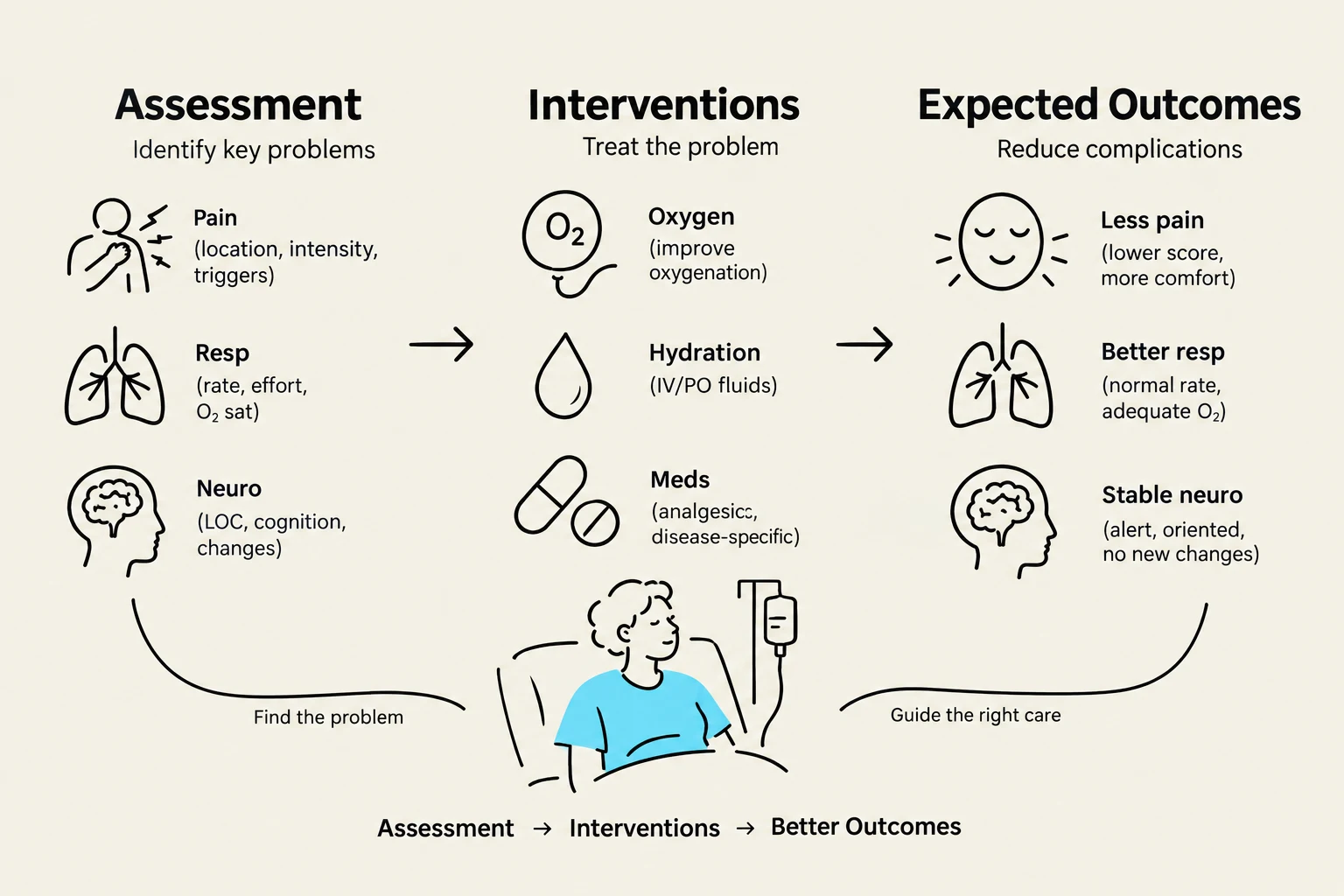
Assessment
The nurse must be vigilant in recognizing "cues" that indicate a worsening condition.
Pain Assessment: Monitor for sudden, intense pain which may signal an impending VOC.
Respiratory Status: Assess for tachypnea, shortness of breath, or chest pain, which could indicate acute chest syndrome.
Neurological Status: Monitor for signs of stroke, such as facial drooping, speech difficulty, or changes in consciousness.
Vital Signs: Watch for tachycardia or fever, which may indicate infection or physiological stress.
Interventions
Oxygenation: Support oxygenation to prevent further sickling.
Hydration: Ensure adequate fluid intake to reduce blood viscosity.
Pain Management: Administer prescribed analgesics promptly.
Patient Education: Educate the client on recognizing early signs of a crisis and the importance of medication adherence.
This diagram illustrates a medical process flow, starting with assessment of patient problems such as pain, respiratory status, and neurological state. It then moves to interventions including oxygen, hydration, and medications. Finally, it outlines the expected outcomes, such as reduced pain, improved respiratory function, and stable neurological status.
Keep reading for free.
Create an account to finish this reading and make it part of your study routine.