


Refeeding syndrome is a potentially fatal metabolic complication that occurs when nutritional support is reintroduced to individuals following periods of prolonged starvation or malnutrition. While the reintroduction of nutrients is the ultimate goal of clinical care, doing so too rapidly in a vulnerable patient can trigger a cascade of electrolyte shifts that lead to multi-organ failure and death. Understanding the metabolic transition from starvation to feeding is critical for healthcare providers to prevent this life-threatening event.
High-Risk Populations
Not every patient is at risk for refeeding syndrome; it specifically targets those whose bodies have adapted to a state of catabolism (breaking down tissue for energy). Identifying these patients early is the first step in prevention.
Key high-risk groups include:
- Chronic alcoholism: Often associated with long-term nutritional deficiencies.
- Anorexia nervosa: Characterized by prolonged periods of starvation.
- Prolonged NPO status: Patients who have been "nothing by mouth" for extended periods due to surgery or illness.
- Critical illness: Patients whose metabolic demands are high but nutritional intake is low.
- Significant weight loss: Individuals experiencing rapid or extreme depletion of body stores.
The Pathophysiology of Metabolic Shifting
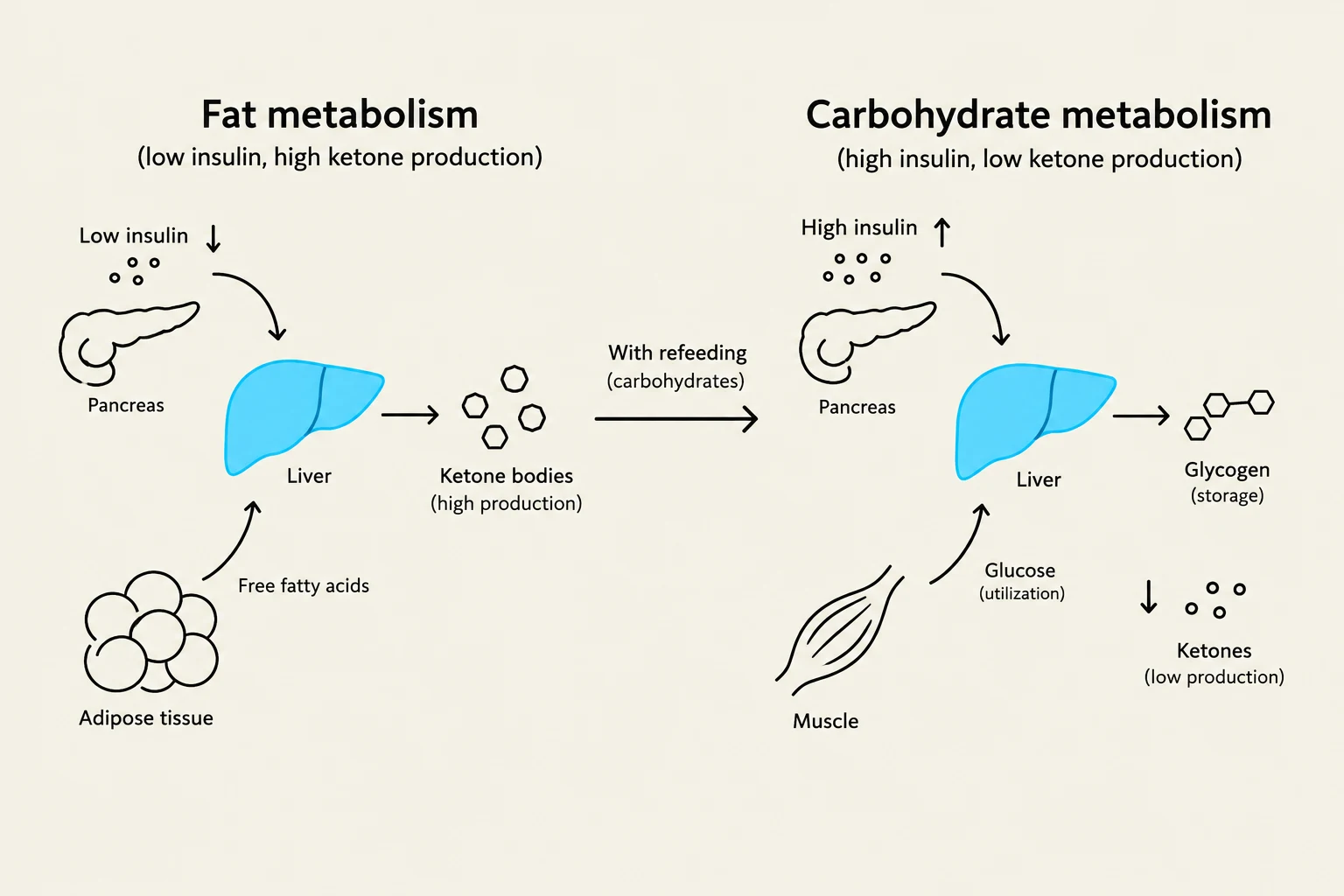
To understand refeeding syndrome, one must understand how the body manages energy during starvation versus feeding. During prolonged starvation, the body enters a state of ketosis, relying heavily on fat metabolism to preserve glucose for the brain. In this state, insulin levels are very low, and the body utilizes fat stores and muscle protein for fuel.
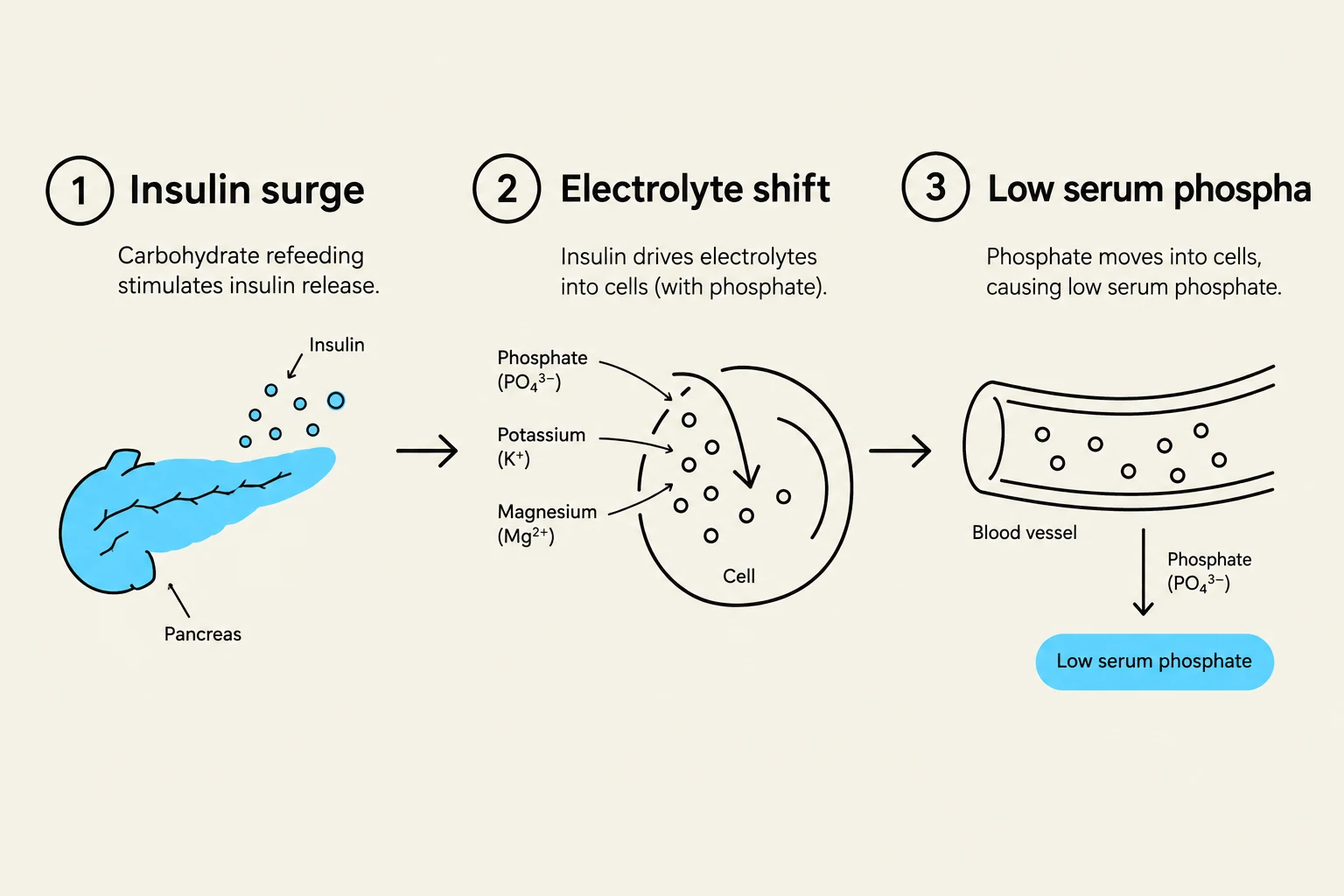
When nutrition (specifically carbohydrates) is reintroduced, the body undergoes a dramatic metabolic shift from fat metabolism back to carbohydrate metabolism. This shift triggers a massive insulin surge as the body attempts to process the incoming glucose.
Keep reading for free.
Create an account to finish this reading and make it part of your study routine.
Continue reading freeAlready have an account? Log in
Updated