


The gastrointestinal system is a complex network responsible for nutrient absorption, fluid balance, and metabolic regulation. When the liver—the body's primary metabolic factory—is compromised, the entire system can descend into a state of failure. This module explores the progression from chronic tissue damage to systemic instability, focusing on the pathophysiology of cirrhosis, the life-threatening complications of portal hypertension, and the metabolic challenges of liver failure.
From Cirrhosis to Liver Failure
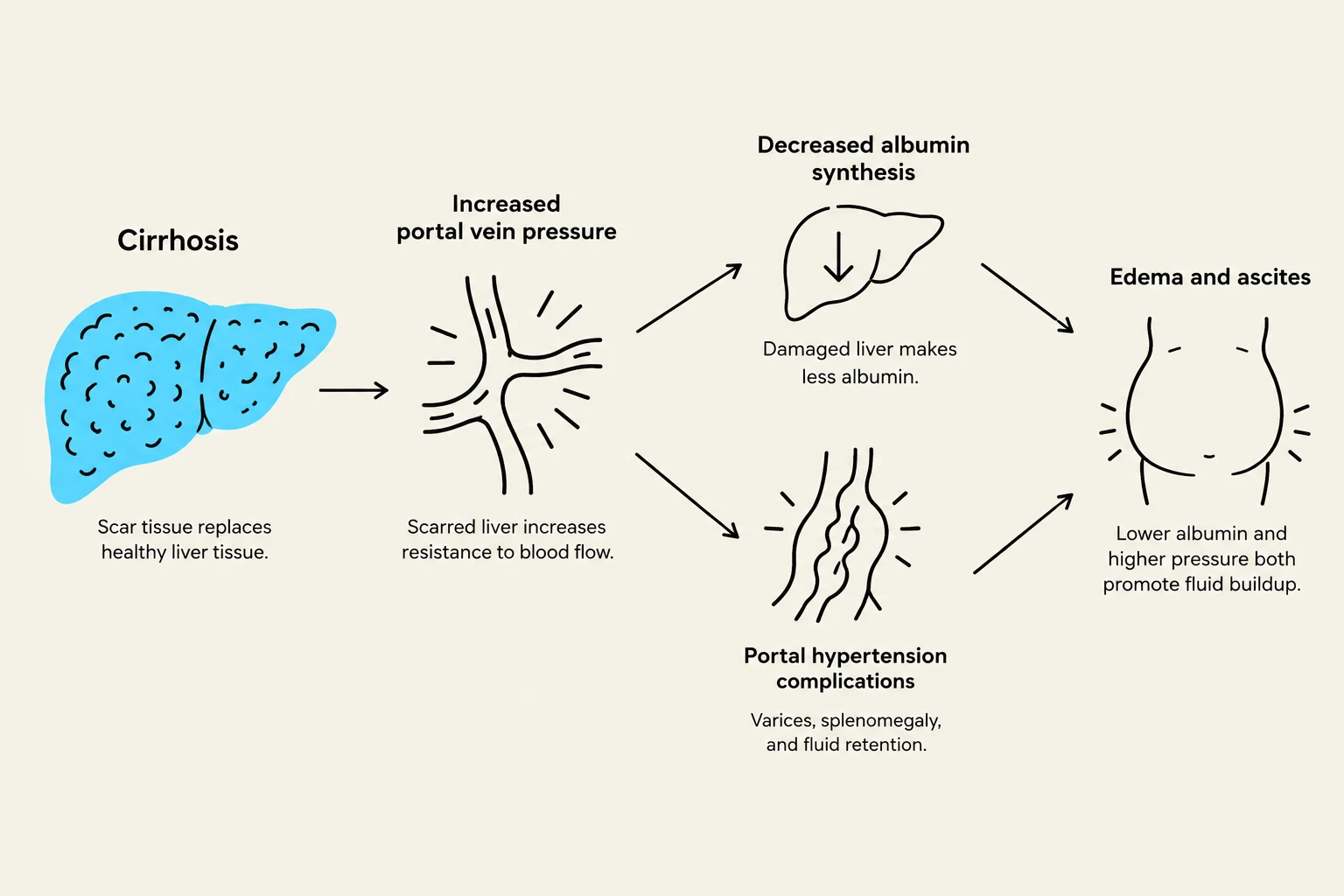
The journey toward systemic collapse often begins with cirrhosis. Cirrhosis is a chronic disease characterized by the destruction of hepatic cells and the replacement of healthy tissue with fibrosis (scarring) and nodular regeneration. As the liver becomes increasingly scarred, the physical architecture of the organ changes, creating significant resistance to blood flow.
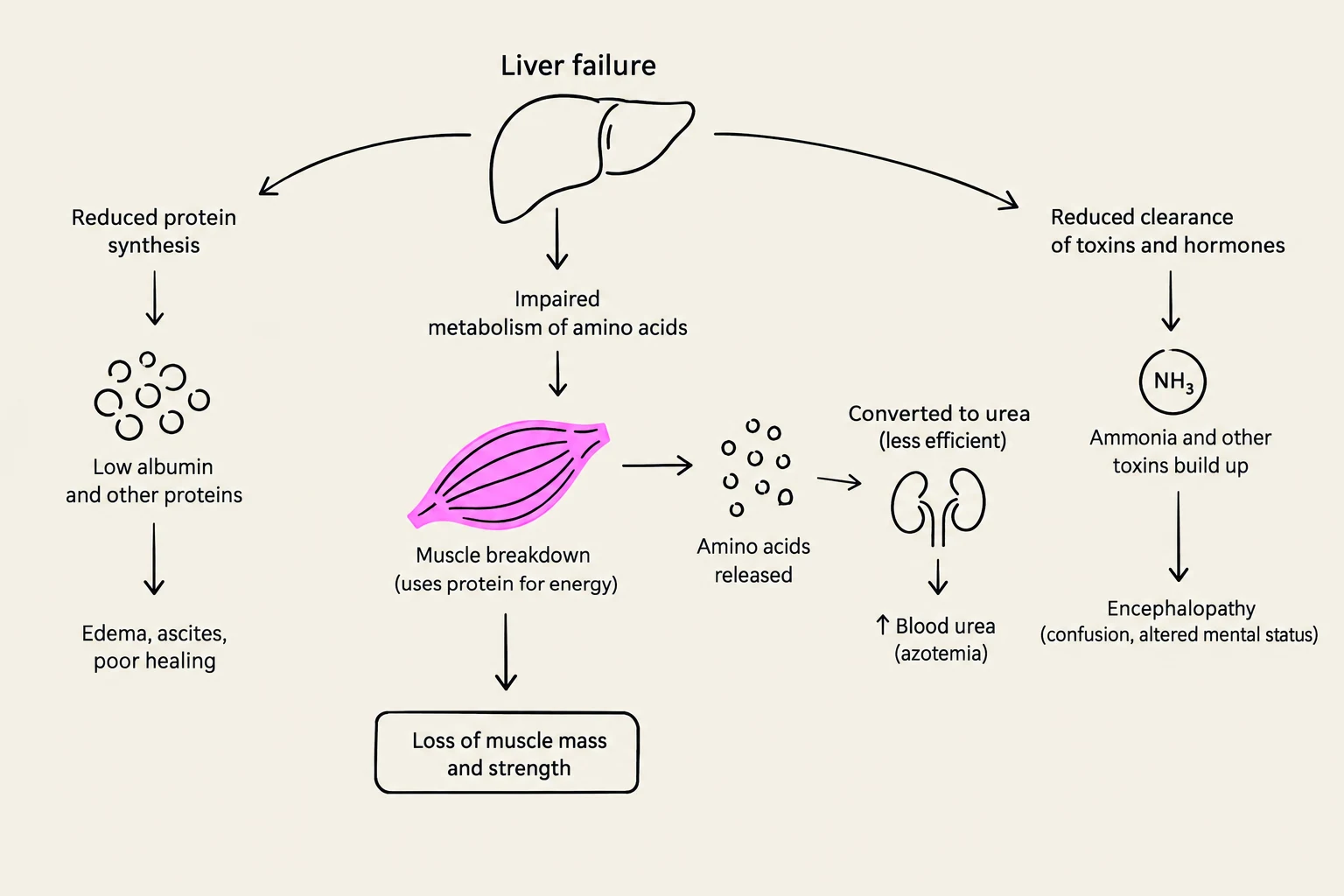
When the liver can no longer maintain the body's fluid, nutritional, or metabolic homeostasis, the condition progresses to liver failure. This is a critical state where the liver's ability to synthesize essential proteins, process toxins, and regulate vitamins is severely diminished.
Portal Hypertension and its Complications
One of the most significant consequences of cirrhosis is portal hypertension, defined as an increase in pressure within the portal vein (). This pressure arises due to the increased resistance to blood flow through the scarred liver and increased blood flow caused by splanchnic vasodilation.
Portal hypertension acts as a "bottleneck," forcing blood to seek alternative routes through smaller, more fragile vessels. This leads to several critical clinical manifestations:
Esophageal and Gastric Varices
As blood backs up, it enters the smaller, thin-walled veins of the lower esophagus and the upper portion of the stomach, causing them to become dilated and tortuous. These varices are extremely fragile and prone to life-threatening hemorrhage. Clinical signs of a bleed include hematemesis (vomiting blood) and melena (black, tarry stools).
Keep reading for free.
Create an account to finish this reading and make it part of your study routine.
Continue reading freeAlready have an account? Log in
Updated