Explores the definition of infection, the nature of pathogens (bacteria, viruses, prions), and how they cause disease. It details measures of pathogenicity and virulence, bacterial mechanisms like endotoxins, viral life cycles (lytic, lysogenic, latent), and the unique danger posed by prions.
In the study of pathophysiology, infection is defined as a state of cellular, tissue, and organ destruction that occurs when pathogenic organisms invade a host and penetrate its natural lines of defense. Understanding how these organisms operate requires a deep dive into their biological structures, their ability to cause disease, and the specific mechanisms they use to bypass or overwhelm the host's immune system.
The Nature of Pathogens
A pathogen is any disease-producing organism. These organisms do not all function in the same way; they employ various strategies to cause harm, such as the direct destruction of host cells, the interference with a host cell's metabolic functions, or the exposure of the host to harmful toxins.
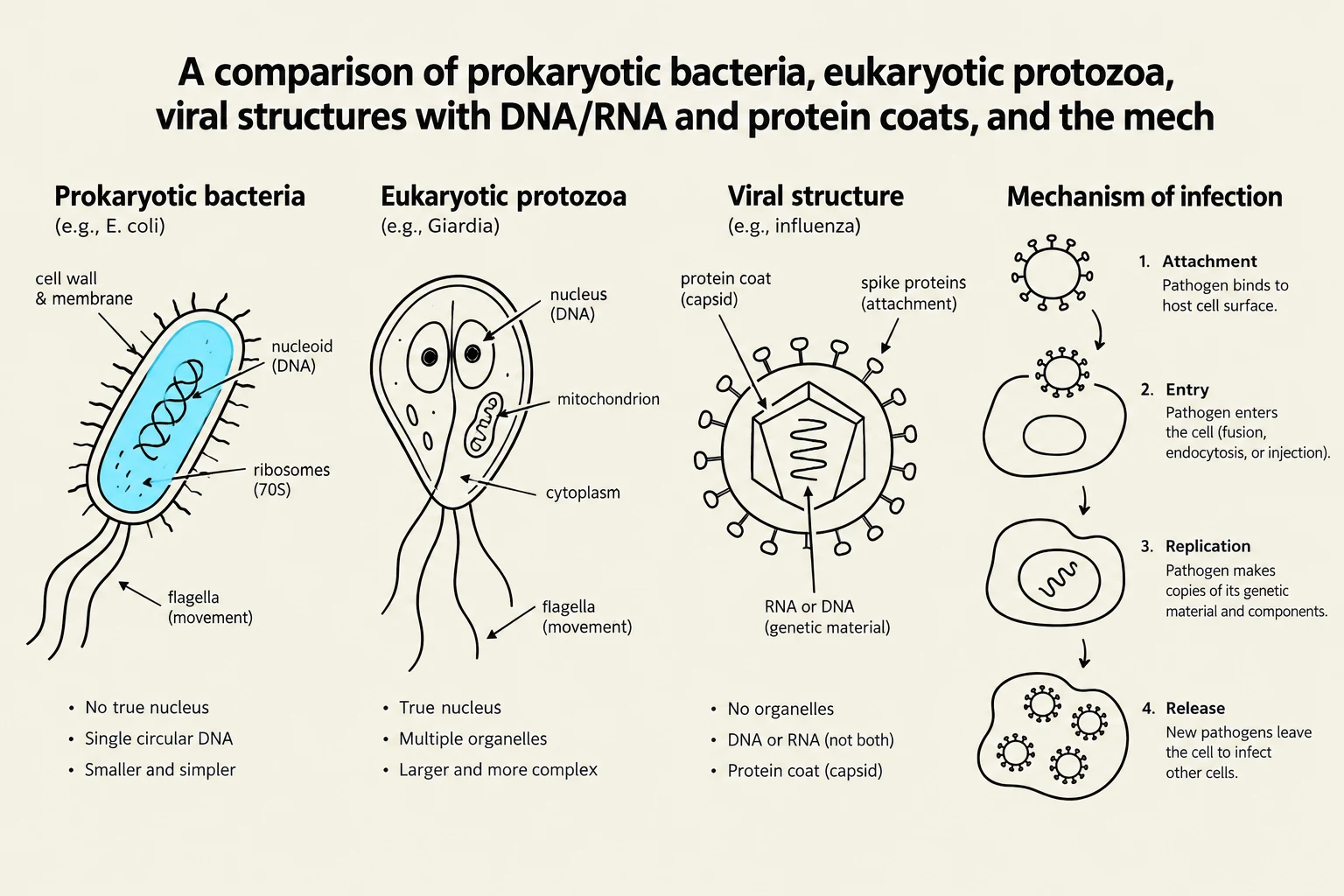
To understand pathogens, we must first categorize them based on their cellular structure. All living organisms can be broadly classified into two types: prokaryotes and eukaryotes.
Prokaryotes: These are simpler, single-celled organisms that lack a nucleus. A primary example is bacteria.
Eukaryotes: These are more complex cells containing a nucleus and membrane-bound organelles. Examples include protozoa.
Beyond these cellular organisms, there are non-cellular infectious agents. Viruses are infectious particles consisting of genetic material (either DNA or RNA) encased in a protein coat, sometimes surrounded by a membrane envelope. Unlike bacteria, viruses are not considered true cellular organisms because they require a host cell to replicate. Finally, there are prions, which are unique because they are not even composed of nucleic acids; they are infectious, misfolded proteins that trigger other proteins to misfold as well.
A comparison of prokaryotic bacteria, eukaryotic protozoa, viral structures, and the mechanism of viral infection.
Measuring Pathogenicity and Virulence
Not all pathogens are created equal. Scientists use specific terms to describe the "strength" and behavior of an infectious agent. While these terms are related, they describe distinct characteristics of a pathogen's ability to cause disease:
Pathogenicity: The general ability of an organism to cause disease.
Virulence: The degree or intensity of pathogenicity (how "strong" the pathogen is).
Infectivity: The ability of a pathogen to establish an infection within a host.
Toxigenicity: The capacity of a pathogen to produce toxins.
Antigenicity: The ability of a pathogen to stimulate an immune response.
Antigenic Variability: The ability of a pathogen to change its surface antigens to evade the host's immune system.
Exam Tip: If a question asks about the intensity of a disease, look for the term virulence. If it asks about the ability to evade the immune system through structural changes, look for antigenic variability.
Bacterial Mechanisms and Endotoxins
Bacteria are highly diverse organisms found throughout the environment. They possess several structural components, including a nucleoid, a cell wall, a flagellum, and sometimes an endospore.
A critical distinction in microbiology is the difference between Gram-positive and Gram-negative bacteria, which is based on the structure of their cell walls. This distinction is clinically vital because of endotoxins. Gram-negative bacteria possess an outer membrane containing lipopolysaccharides, which act as endotoxins. When these bacteria undergo cell lysis (death and breaking apart), these endotoxins are released into the host.
The release of endotoxins can trigger a massive, systemic inflammatory response known as septic shock. While we often associate sepsis with bacteria, it is important to note that more than one type of microorganism can lead to this life-threatening condition.
Viral Life Cycles: Lytic, Lysogenic, and Latent Phases
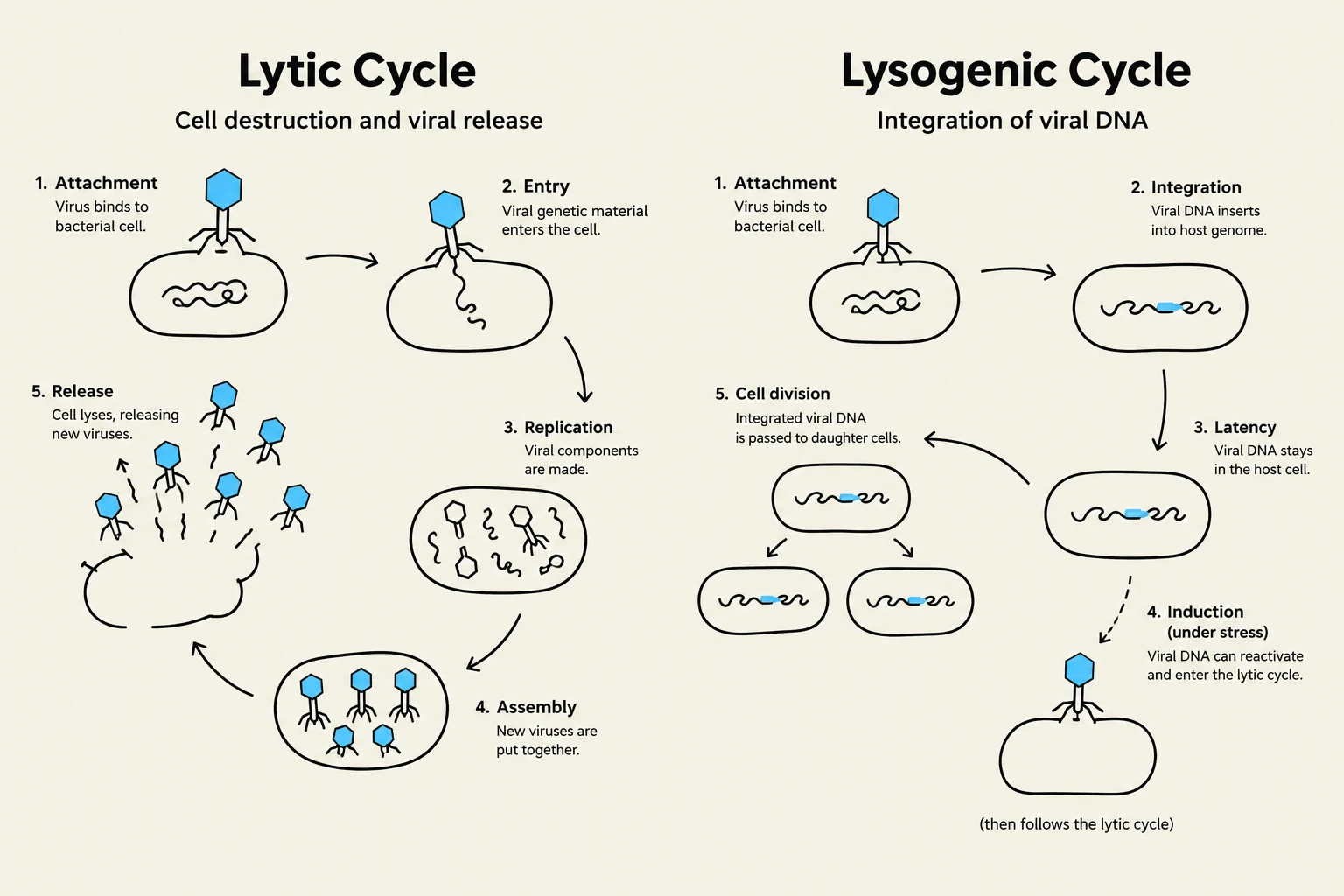
Viruses operate by hijacking the molecular machinery of a host cell. Their life cycles generally follow one of two primary paths: the lytic phase or the lysogenic phase.
Lytic Phase: The virus enters the cell, replicates its genetic material, assembles new viral particles, and then causes the host cell to burst (lyse) to release the new progeny.
Lysogenic Phase: The viral genetic material integrates into the host's DNA. During this phase, the cell "appears" normal and continues to function, but it carries the viral genome.
If a virus remains in the host without actively destroying cells or altering cell behavior, it is considered a latent virus. However, this state is not necessarily permanent. Triggers such as physiological stress or changes in the host's immune system can cause the virus to exit the lysogenic phase and enter the lytic phase, leading to active disease and cell destruction.
Diagram illustrating the Lytic and Lysogenic cycles of viral replication.
The Danger of Prions
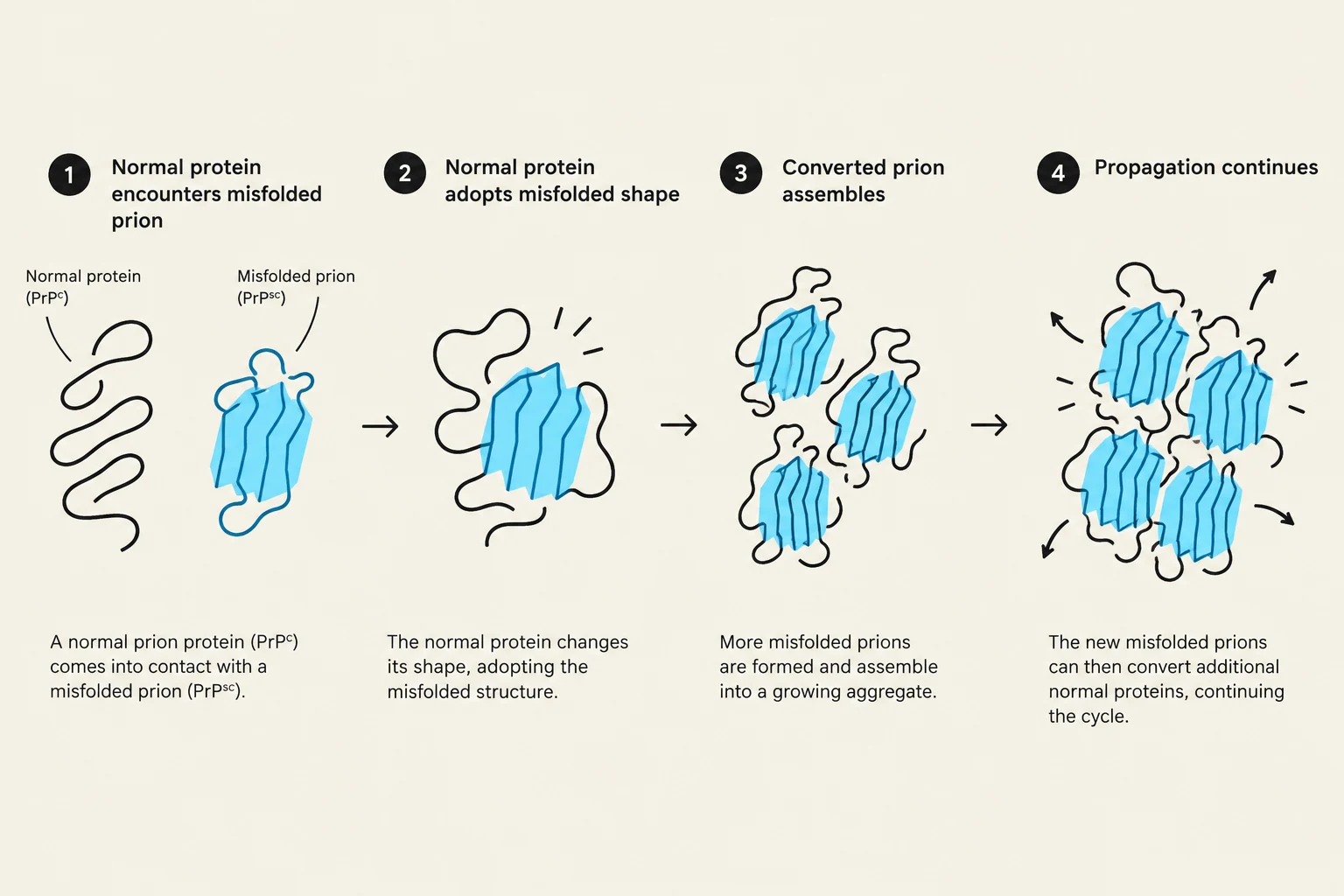
Prions represent a unique challenge in infectious disease because they lack DNA or RNA. They are simply misfolded proteins that act as infectious biological material. When a prion enters a system, it interacts with normal proteins, causing them to misfold into the prion shape as well.
This chain reaction leads to protein aggregates that damage tissues, particularly in the brain. Prion diseases include:
Creutzfeldt-Jakob disease (which can be inherited or acquired).
Bovine spongiform encephalopathy (often called "mad cow disease").
Chronic wasting disease in animals.
Transmission can occur through the consumption of infected animals or via contaminated medical equipment. Because they are proteins rather than living cells, prions are exceptionally difficult to "kill" using standard sterilization methods that target DNA or cellular metabolism.
This diagram illustrates the process of prion propagation, where a normal protein (PrPC) encounters a misfolded prion (PrPSc), adopts its misfolded shape, and then aggregates, converting more normal proteins into the misfolded form, thus continuing the cycle.
Keep reading for free.
Create an account to finish this reading and make it part of your study routine.