


In the complex world of cellular biology, the cell membrane acts as a sophisticated gatekeeper. To maintain homeostasis, cells must constantly exchange materials with their surroundings. While some processes require a significant investment of metabolic energy (ATP), many essential movements occur spontaneously. These are known as passive transport mechanisms.
The defining characteristic of passive transport is that substances move "down" their electrochemical gradient—from an area of higher concentration to an area of lower concentration—without the expenditure of cellular energy. This movement is driven by the inherent kinetic energy of molecules and the laws of thermodynamics.
Simple Diffusion: The Direct Path
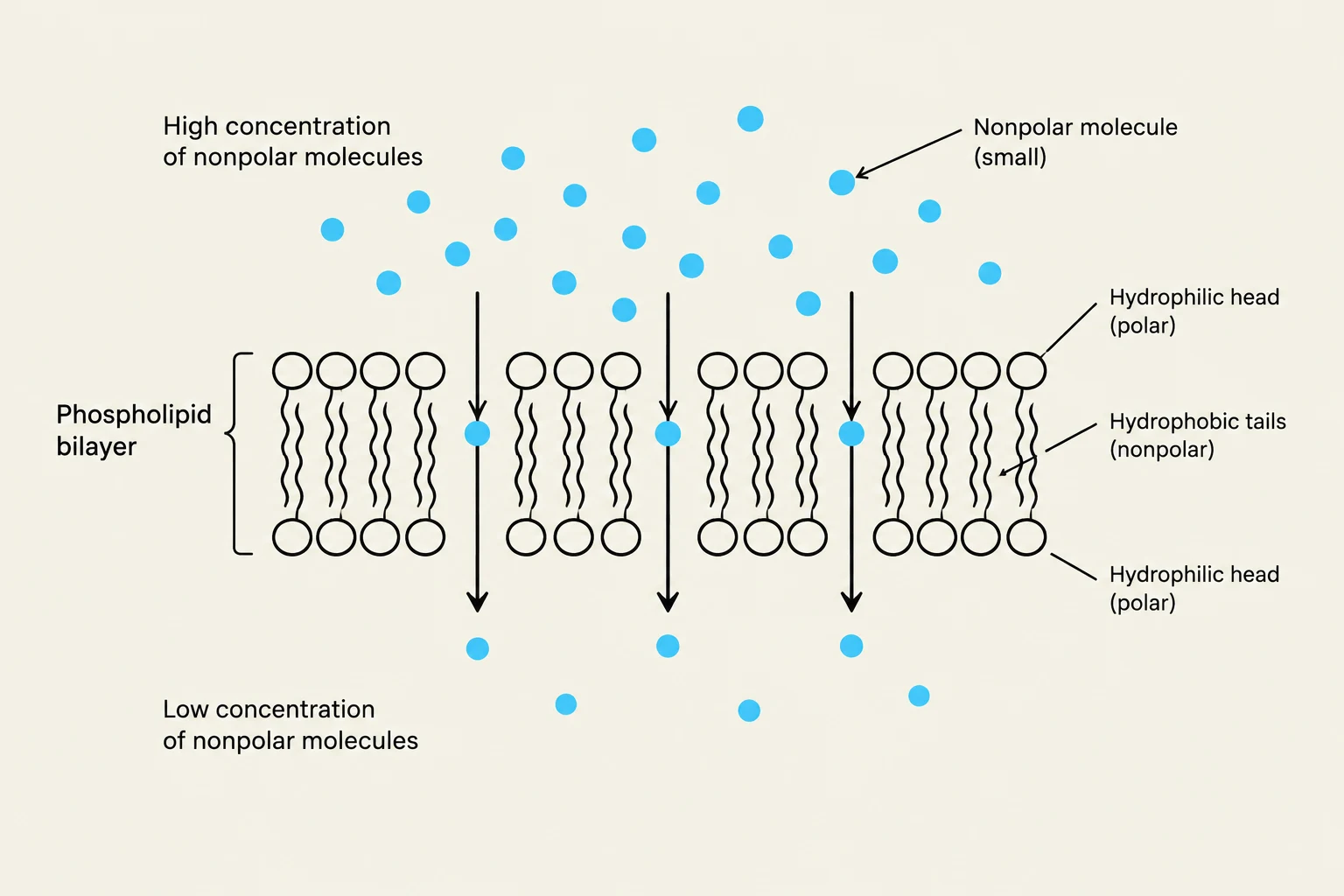
Simple diffusion is the most basic form of passive transport. In this process, small, nonpolar molecules pass directly through the lipid bilayer of the cell membrane. Because the interior of the plasma membrane is hydrophobic (composed of fatty acid tails), only certain substances can slip through without assistance.
Common examples of molecules that utilize simple diffusion include oxygen (), carbon dioxide (), and lipid-soluble vitamins. The rate of diffusion is influenced by several factors, including the steepness of the concentration gradient and the temperature of the environment.
Exam Tip: If a question asks why a molecule like can cross the membrane so easily while a glucose molecule cannot, focus on polarity and size. Nonpolar molecules "dissolve" into the lipid bilayer, whereas large or charged molecules are repelled by the hydrophobic core.
Keep reading for free.
Create an account to finish this reading and make it part of your study routine.
Continue reading freeAlready have an account? Log in
Updated