


Calcium is a vital mineral that serves many functions in the human body, ranging from muscle contraction to nerve impulse transmission. Because of its critical role, the body must maintain blood calcium ion concentrations within a very narrow, healthy range. This delicate balance is achieved through bone homeostasis, a process where the skeletal system acts as a reservoir for calcium, releasing it into the blood when levels are low and storing it when levels are high.
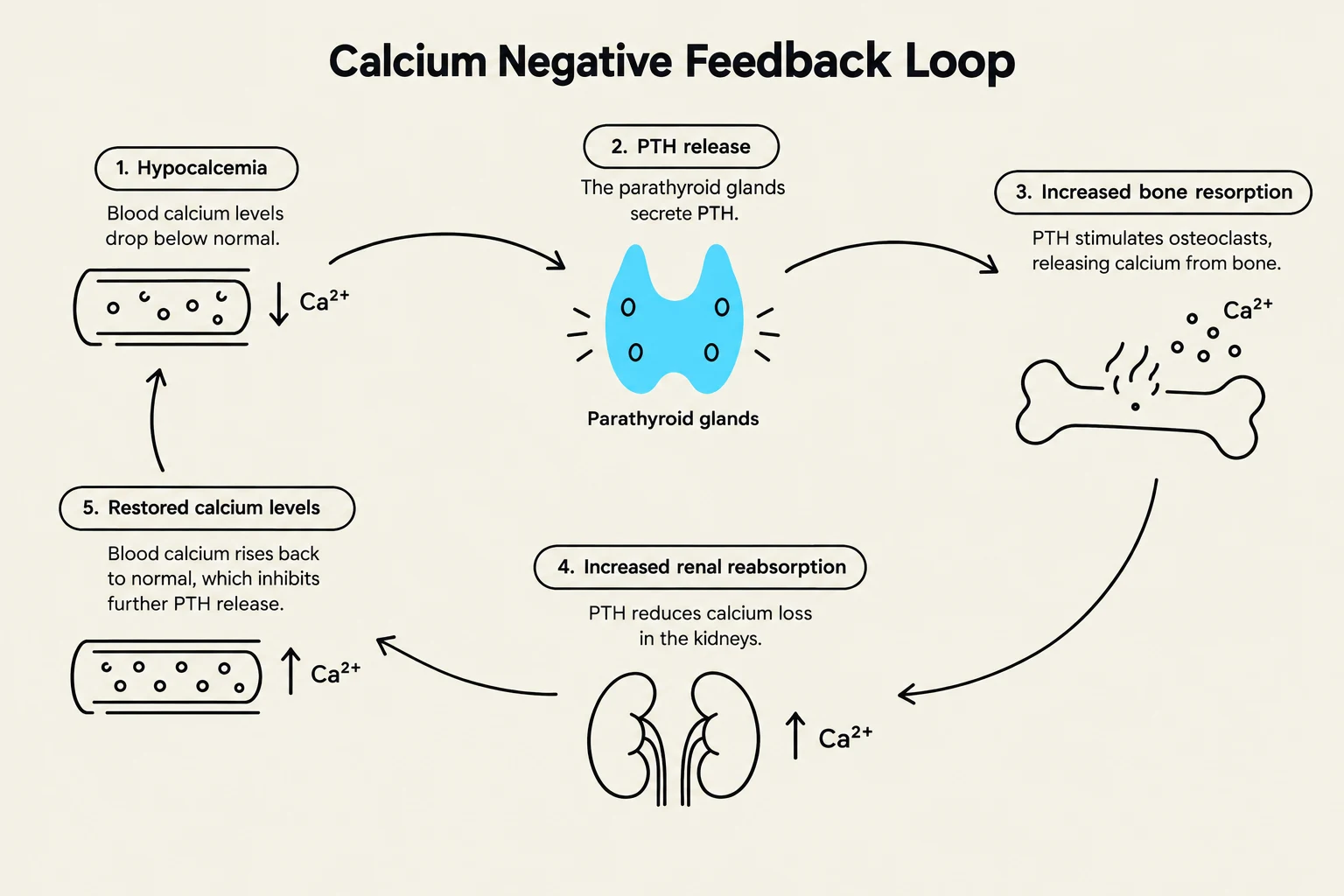
This regulation is managed by a negative feedback loop involving two primary antagonistic hormones: Parathyroid Hormone (PTH) and Calcitonin. These hormones act on three main target areas: the bones, the kidneys, and the small intestine.
The Role of Parathyroid Hormone (PTH)
When blood calcium levels drop below the normal physiological range—a condition known as hypocalcemia—the body must act immediately to prevent neurological or muscular dysfunction. The primary responder to this stimulus is the parathyroid gland, which consists of four small glands embedded in the posterior surface of the thyroid gland.
The chief cells within these glands act as sensors. When they detect low calcium, they secrete Parathyroid Hormone (PTH) into the bloodstream. PTH is a peptide hormone that travels through the blood to reach its target tissues.
Mechanisms of PTH Action
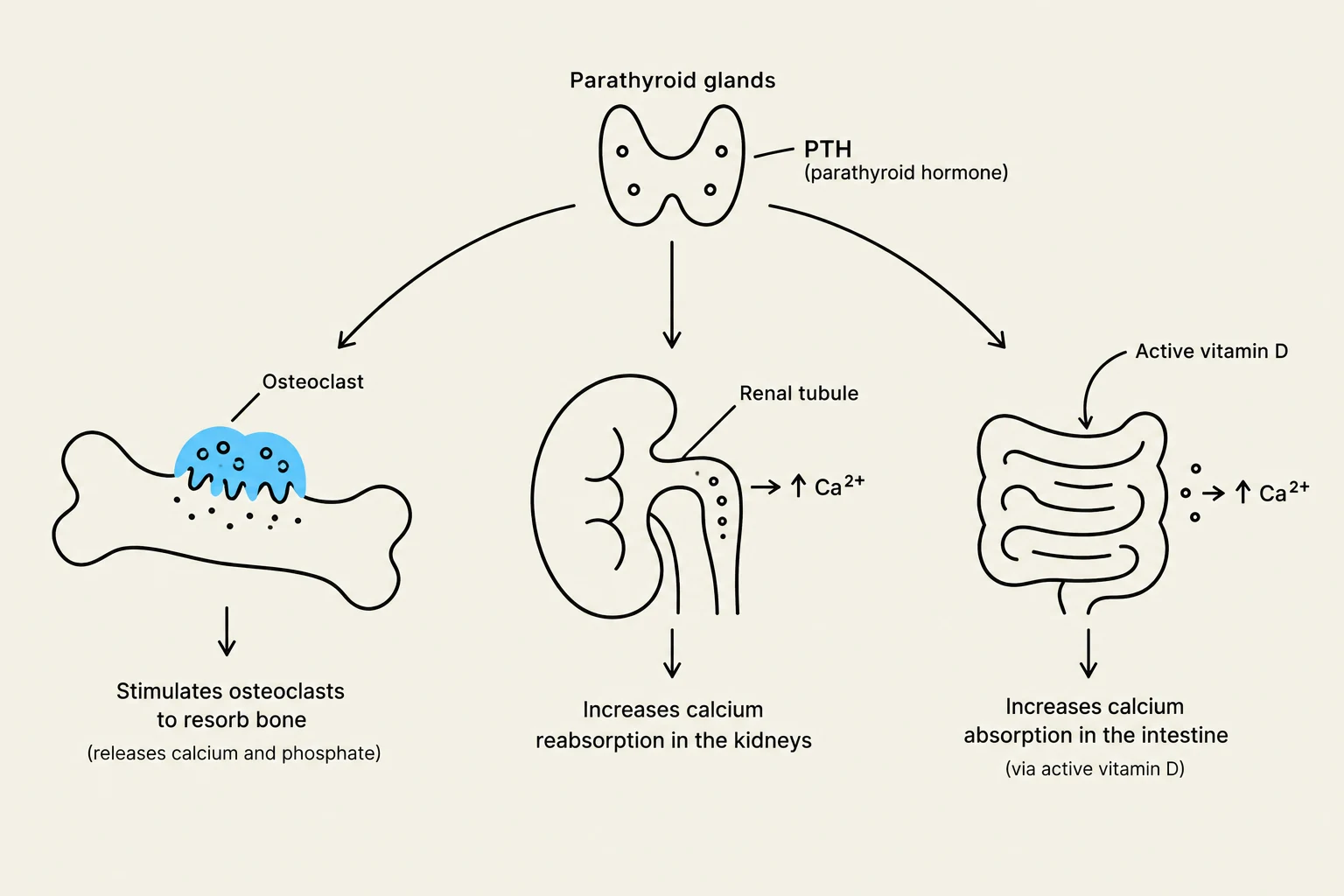
PTH increases blood calcium levels through three distinct pathways:
- Bone Resorption: PTH stimulates osteoclasts, which are bone-destroying cells. Interestingly, PTH does not necessarily target osteoclasts directly; instead, it induces changes in osteoblasts (bone-building cells) that subsequently enhance osteoclast activity. As osteoclasts break down the bone matrix, calcium ions are released from the bone into the blood.
- Renal Reabsorption: PTH acts directly on the kidney tubules to increase calcium ion reabsorption. Instead of allowing calcium to be excreted in the urine, the kidneys reclaim it and return it to the circulation.
- Intestinal Absorption via Vitamin D: PTH indirectly increases calcium absorption from the diet in the small intestine. It does this by stimulating the kidneys to convert vitamin D into its active form, calcitriol (vitamin ). Calcitriol then acts on the intestinal lining to facilitate the uptake of calcium from food.

Keep reading for free.
Create an account to finish this reading and make it part of your study routine.
Continue reading freeAlready have an account? Log in
Updated