


The first stage of labour is a period of intense physiological change characterized by the gradual onset and progression of uterine contractions to achieve cervical effacement and dilation. For many birthing individuals, this stage presents significant physical discomfort that requires a tailored approach to pain management. Effective nursing care involves understanding the underlying causes of pain and offering a spectrum of interventions, ranging from non-pharmacological comfort measures to advanced pharmacological options.
Understanding the Source of Pain
Pain during the first stage of labour is not a single sensation but a complex experience driven by several physiological factors. Primarily, pain is caused by:
- Cervical changes: The stretching and thinning (effacement) of the cervix as it prepares for dilation.
- Uterine distention: The stretching of the lower segment of the uterus during contractions.
- Uterine ischemia: Reduced blood flow to the uterine muscle during the peak of a contraction, which can trigger pain signals.
This pain often presents as "referred pain," starting in the uterus and radiating to the back, iliac crests, the gluteal area, and down the thighs. Typically, the birther experiences intense pain during the contraction itself, followed by a "break" or period of relief between contractions.

Non-Pharmacological Interventions
Non-pharmacological methods are often used as first-line interventions or in conjunction with medication to enhance relaxation and coping.
Physical and Sensory Comfort
- Therapeutic Touch: Techniques such as massage, counter-pressure, and the "double hip squeeze" can help alleviate localized discomfort.
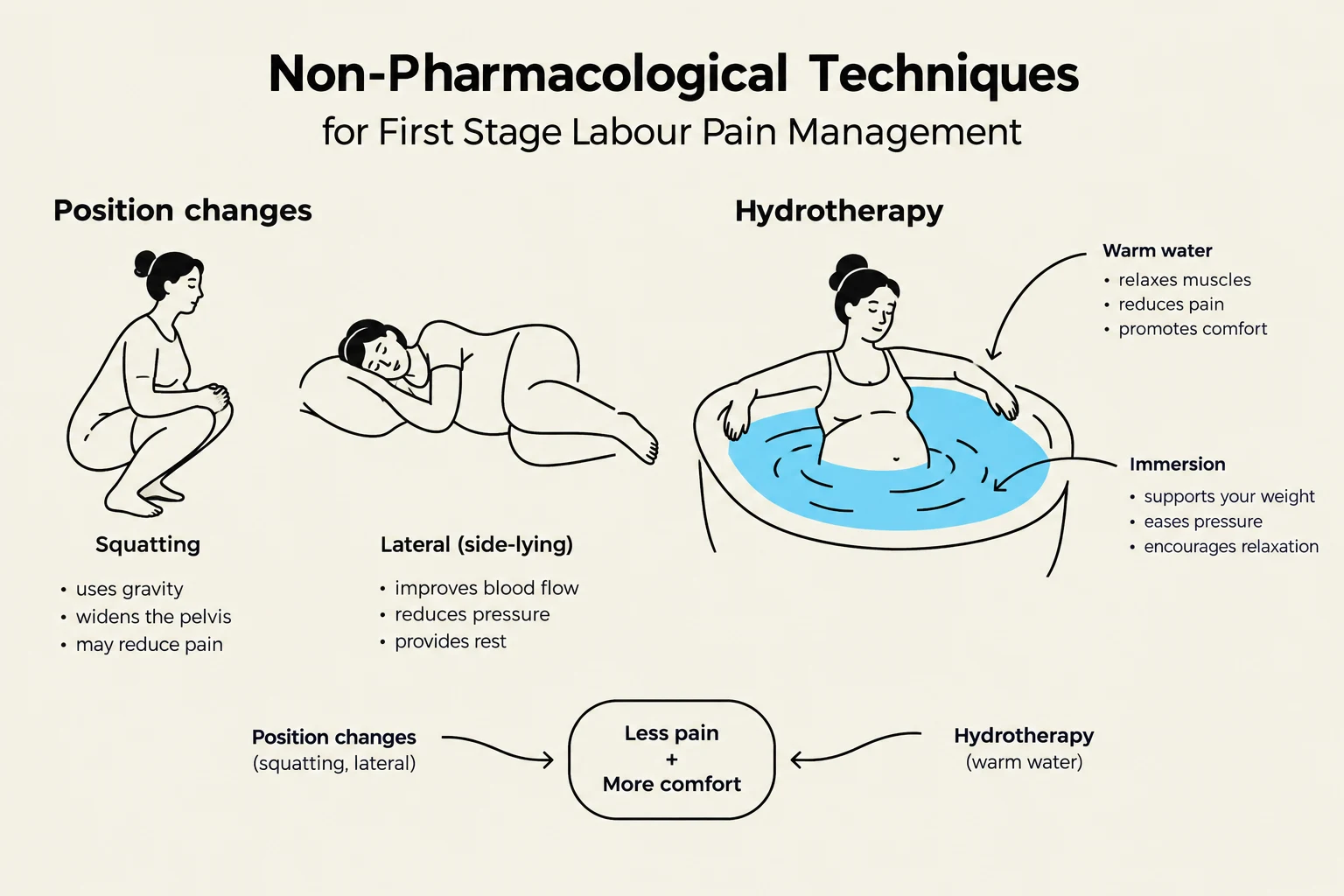
- Position Changes: Movement is crucial. Walking, rocking, using a birth ball, or changing to lateral (side-lying) or hands-and-knees positions can assist with fetal descent and pain relief.

Keep reading for free.
Create an account to finish this reading and make it part of your study routine.
Continue reading freeAlready have an account? Log in
Updated