This article explores the specialized domains of transplant nursing and perioperative nursing, covering graft rejection, immunosuppressive medications, and the preoperative, intraoperative, and postoperative phases of surgical care.
Nursing care for surgical and transplant clients requires a high degree of specialization, precision, and advocacy. Whether managing a patient undergoing a routine appendectomy or a complex organ transplant, nurses must utilize the nursing process and clinical judgment to ensure safety and optimize outcomes. This article explores the two critical domains of specialized surgical care: transplant nursing and perioperative nursing.
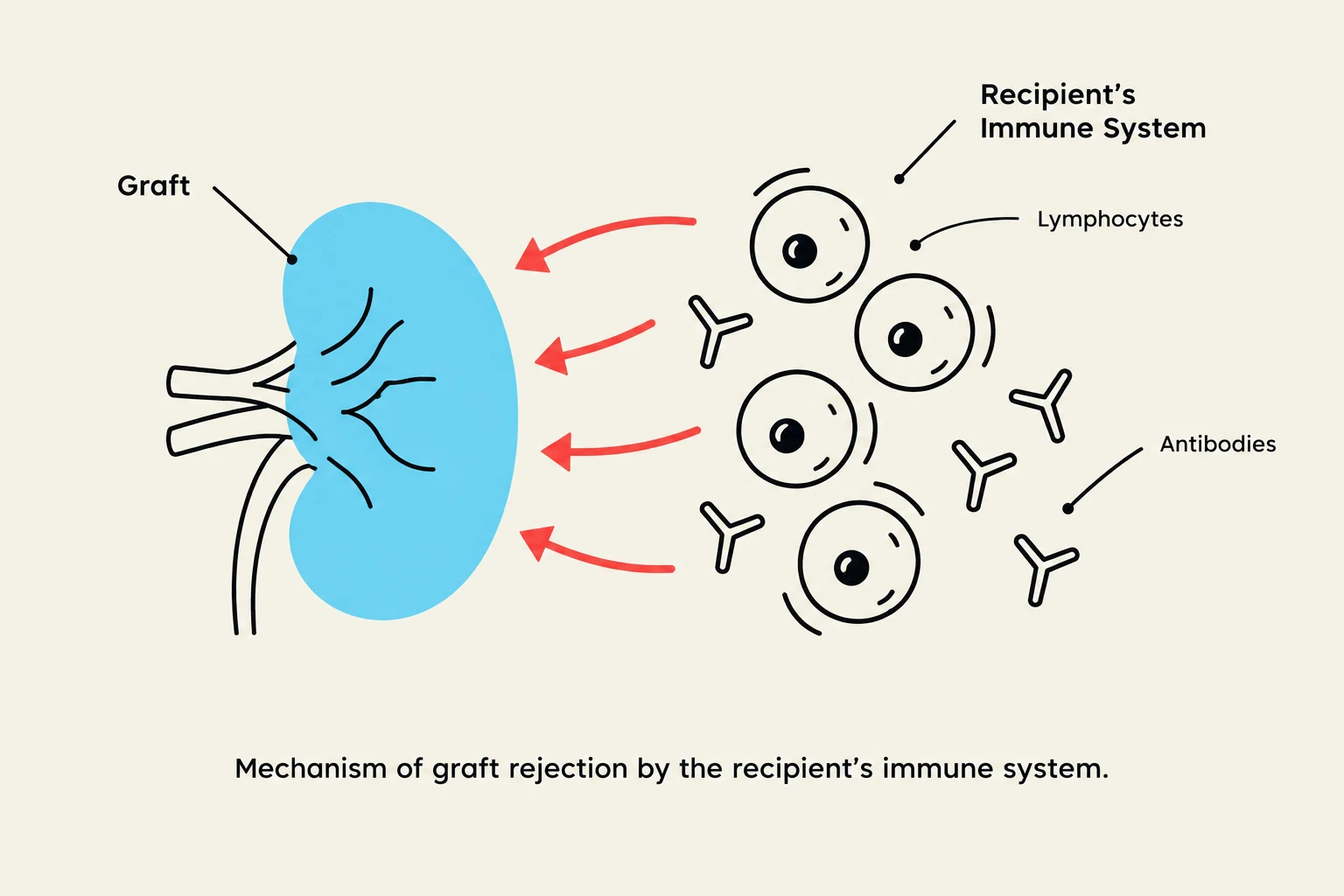
Mechanism of graft rejection by the recipient's immune system.
Transplant Nursing: Protecting the Graft
Transplant nursing focuses on the specialized care of both the donor and the recipient. The primary goal is to protect and optimize the well-being of both parties through the management of the graft—the donated organ or tissue.
Managing Graft Rejection
The most significant complication in transplant nursing is graft rejection, where the recipient's immune system attacks the new organ. Rejection is categorized by its timing and mechanism:
Acute Rejection: This can occur very rapidly (minutes to hours via antibodies) or more gradually (days to weeks via lymphocytes) after the transplant.
Chronic Rejection: This manifests months or even years after the procedure and can lead to total organ failure. Common symptoms include fatigue, anemia, jaundice, and nausea.
Immunosuppressive Medications
To prevent the body from rejecting the graft, clients are prescribed immunosuppressive medications. The nurse's role is multifaceted, focusing on four primary objectives:
Preventing graft rejection.
Reducing transplant-related complications.
Minimizing medication side effects.
Improving the client's overall quality of life.
Nurses must be vigilant in monitoring for complications, such as increased infection risk due to suppressed immunity or organ-specific malfunctions (e.g., monitoring for elevated BUN levels in kidney transplant recipients).
The Organ Procurement Coordinator
Because organ donation involves complex legal and ethical considerations, specialized professionals are required. The organ procurement coordinator (often a nurse or social worker) is specifically trained to handle the legalities of donation, provide information on which tissues can be donated, and discuss how donation impacts burial or cremation.
Exam Tip: When answering questions about immunosuppressive therapy, remember that the goal is not just "preventing rejection," but also minimizing side effects and improving the client's quality of life.
Perioperative Nursing Care
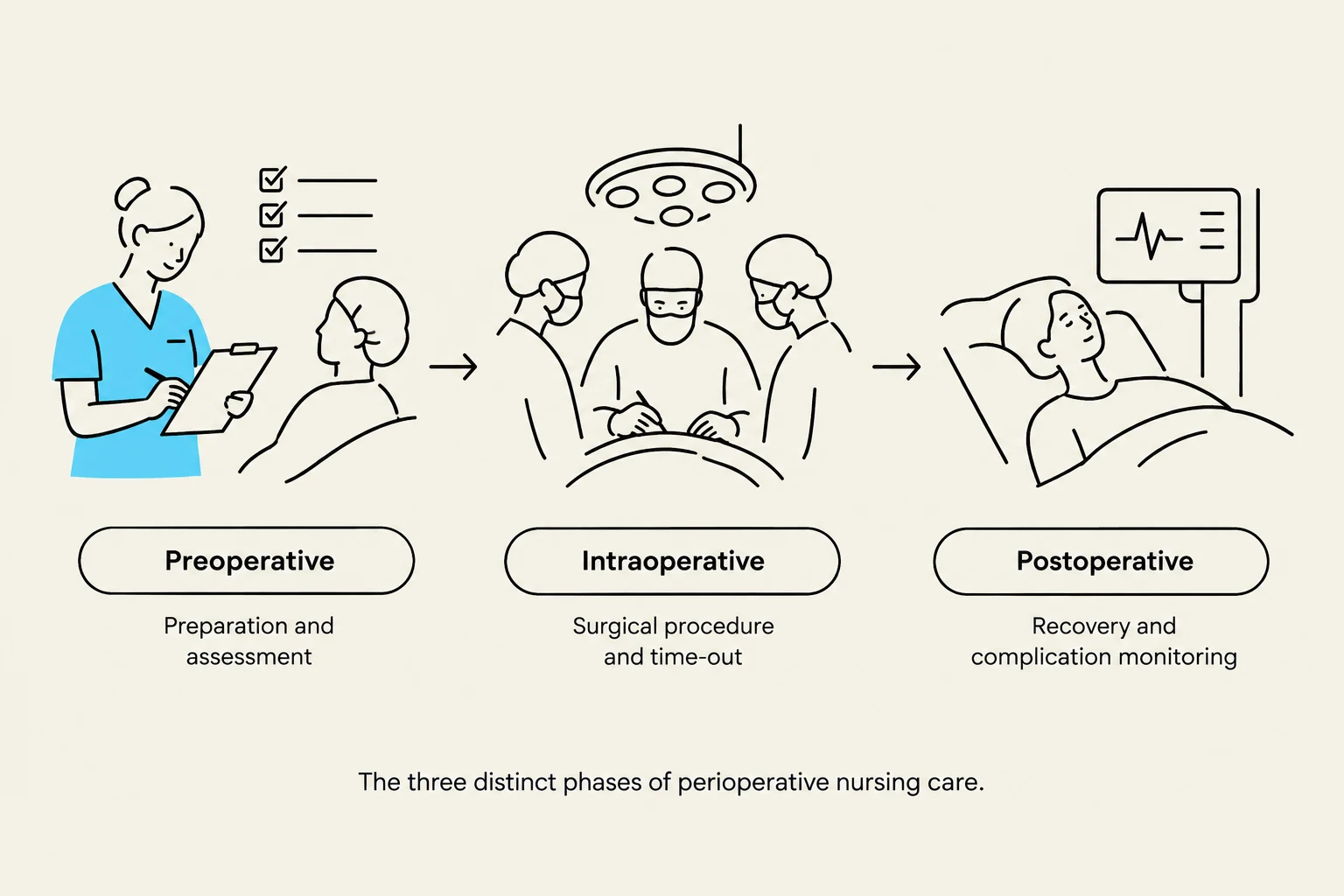
Perioperative nursing encompasses the care of a surgical client through three distinct phases: preoperative, intraoperative, and postoperative. The primary objective is to provide evidence-based care to ensure safe and successful outcomes.
The Preoperative Phase: Preparation and Risk Assessment
The preoperative phase begins as soon as the surgery is scheduled and focuses on establishing the client's baseline functional level and identifying surgical risks.
Physical Assessment: Nurses perform head-to-toe assessments, obtain vital signs, and review medical histories.
ASA Classification: The American Society of Anesthesiologists (ASA) uses a system to classify a client's physical status, which helps assess surgical risk. For example, an ASA I client is a healthy adult, while an ASA V client is in critical condition and likely to die without the procedure.
Preoperative Education: This is a critical nursing intervention. Education should cover dietary restrictions (NPO status), medications to hold or take, and exercises to prevent complications, such as diaphragmatic breathing or using an incentive spirometer.
The Intraoperative Phase: Safety and Asepsis
The three distinct phases of perioperative nursing care: preoperative (preparation and assessment), intraoperative (surgical procedure and time-out), and postoperative (recovery and complication monitoring).
The intraoperative phase begins when the client is transferred to the operating table and ends when they are moved to the postanesthesia care unit (PACU).
Universal Protocol: To prevent "wrong-site, wrong-procedure, or wrong-client" surgery, the surgical team utilizes the Universal Protocol. This includes a "time-out" performed by the entire team just before the incision.
SCIP Protocol: The Surgical Care Improvement Project (SCIP) emphasizes the administration of preoperative antibiotics (ideally within one hour before the incision) to reduce the risk of surgical site infections (SSI).
Aseptic Technique: Maintaining a sterile environment is vital to prevent contamination from microorganisms.
The Postoperative Phase: Recovery and Complication Prevention
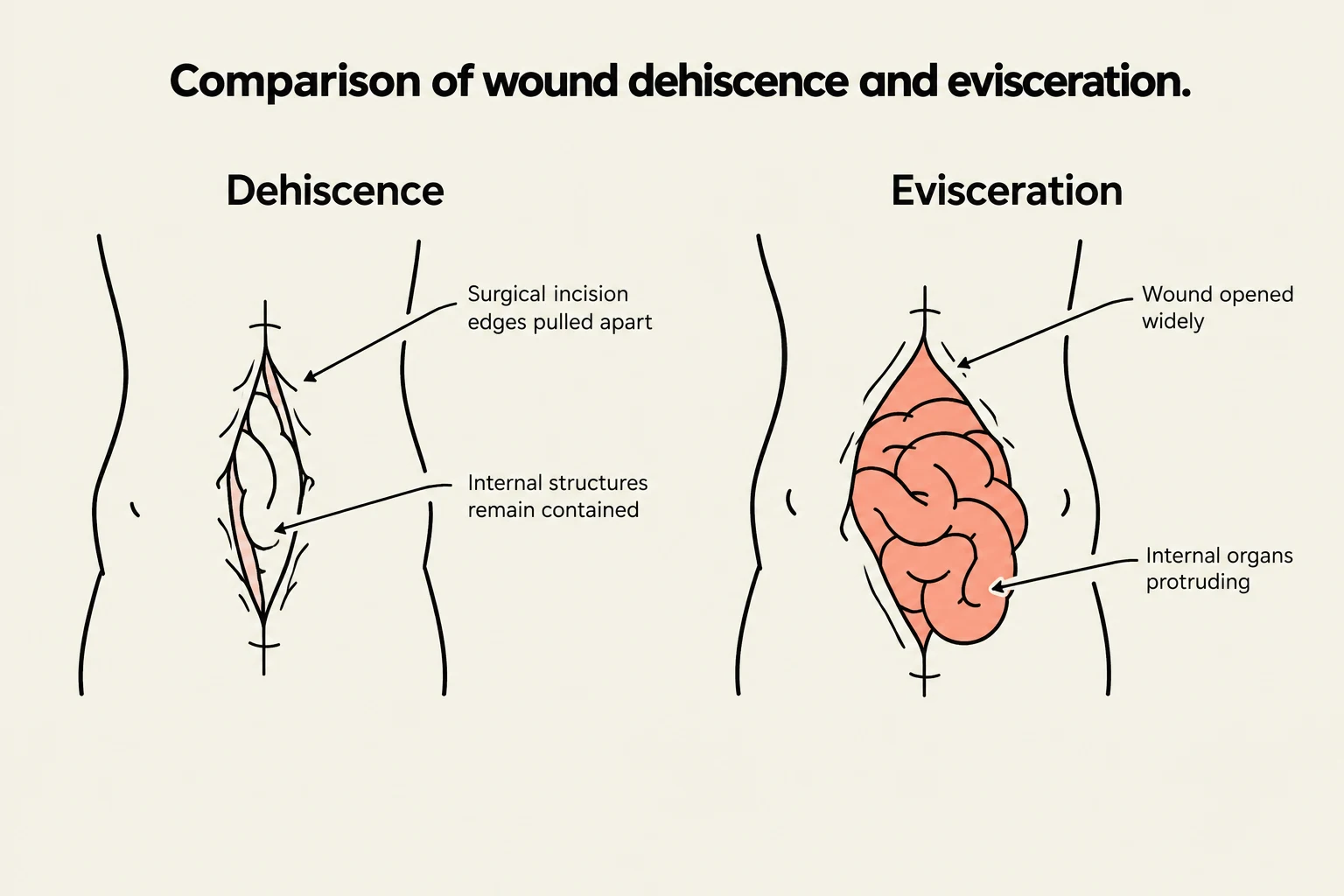
Comparison of wound dehiscence and evisceration.
The postoperative phase focuses on stabilizing the client and preventing complications such as atelectasis, hemorrhage, blood clots, and ileus.
Postoperative Education: This phase reinforces preoperative teaching. Nurses teach clients about wound care, lifestyle modifications, and the importance of early ambulation and breathing exercises to prevent pulmonary and vascular issues.
Monitoring for Complications: Nurses must monitor for signs of hemorrhage (vital signs, wound bleeding) and respiratory distress. In cases of abdominal surgery, nurses must watch for dehiscence (wound opening) or evisceration (organs protruding through the wound).
Safety and Communication Competencies
Modern perioperative nursing is guided by professional standards and safety frameworks.
QSEN and Safety
Safety is one of the six Quality and Safety Education for Nursing (QSEN) competencies. It refers to minimizing risk of harm to both the client and the clinical team.
Communication Tools
Because clients move through many different areas (ER, OR, PACU, surgical unit), effective hand-off communication is essential for continuity of care.
SBAR: A standardized tool used to communicate Situation, Background, Assessment, and Recommendation.
I PASS the BATON: A more detailed communication framework used during transitions of care to ensure that information regarding patient assessment, safety concerns, and "next steps" is clearly understood by the receiving team.
Clinical Note: Effective communication is not just a "soft skill"—it is a requirement of The Joint Commission (TJC) to ensure patient safety during hospitalizations.
Keep reading for free.
Create an account to finish this reading and make it part of your study routine.