Overview of the U.S. Health Care Workforce and Modern Care Models
An examination of the diverse roles within the U.S. health care system, from physicians and nurses to allied health professionals and administrators. It also explores the evolving paradigms of patient-centered care and population health.
The United States health care industry is a massive economic engine, employing more than 13% of the national labor force. This sector is experiencing continuous growth, driven by several key demographic and legislative factors: an aging population, increased life expectancy, and the expansion of health insurance coverage through the Affordable Care Act (ACA). As the demand for services rises, the complexity and diversity of the healthcare workforce expand to meet the needs of a changing society.
Physicians: The Core of Medical Practice
Physicians are licensed professionals who must graduate from accredited medical schools and complete supervised internship or residency programs. While they share many similarities, they are categorized into two distinct types based on their medical philosophy:
Allopathic Physicians (MD): These practitioners view medical treatment as an active intervention designed to produce a counteracting reaction to neutralize the effects of disease.
Osteopathic Physicians (DO): These practitioners place a specific emphasis on the musculoskeletal system, often focusing on the correction of joint tissues.
Generalists vs. Specialists
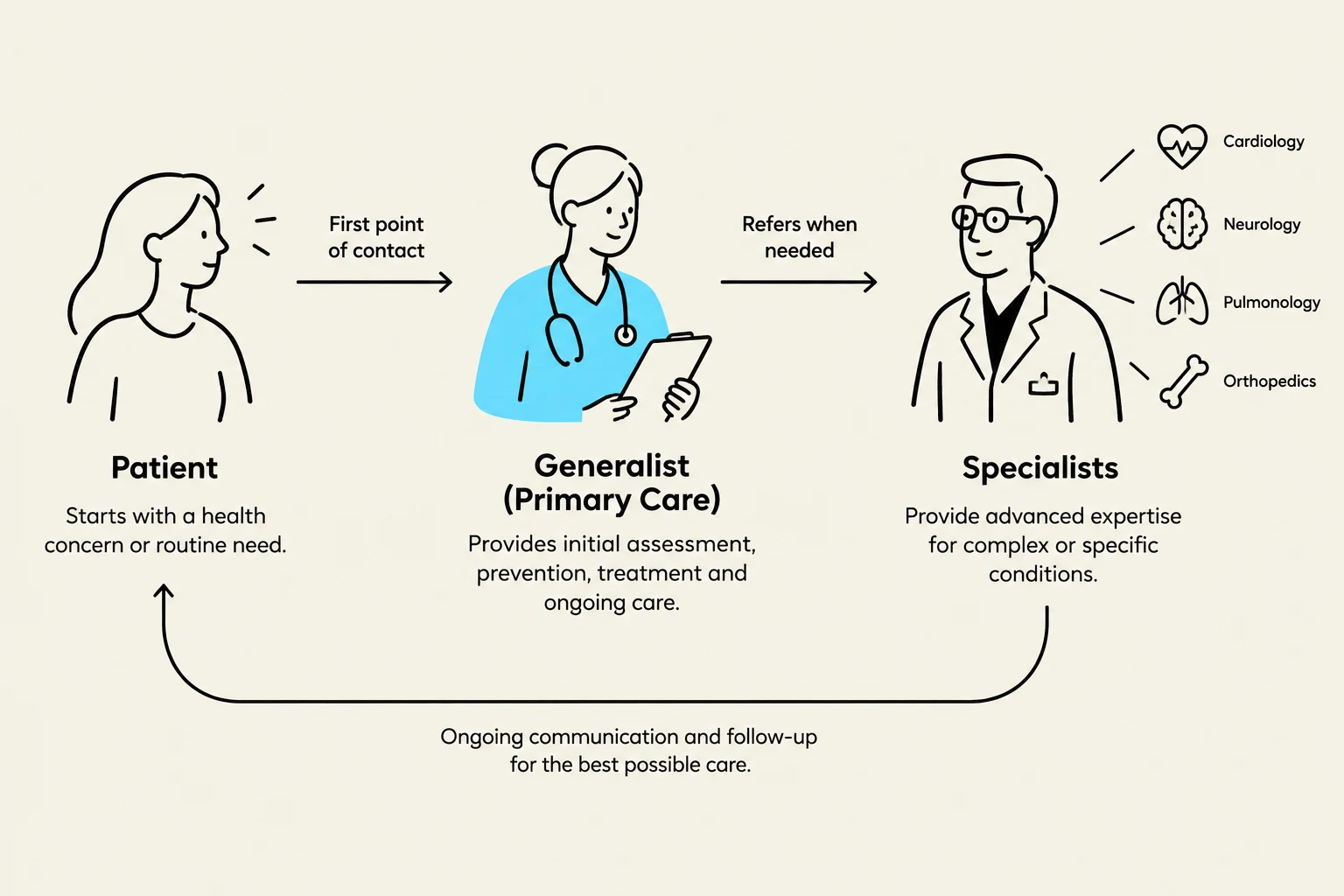
Physicians are further categorized by their scope of practice. Generalists (primary care physicians) serve as "gatekeepers" in managed care systems, providing longitudinal care that focuses on the patient as a whole. In contrast, Specialists provide episodic care focused on specific organ systems or diseases. Because of the advanced technology and training required, specialists often work in hospital settings and require referrals from generalists.
Exam Tip: Note the historical trend in specialty maldistribution. Between 1965 and 1992, the number of primary care physicians grew by only 13%, while the number of specialists increased by 121%. This imbalance can lead to a high volume of expensive, intensive medical services.
This diagram illustrates the patient journey through the healthcare system, starting with a general practitioner and potentially leading to specialist care.
A unique subset of physicians are Hospitalists, who are specialists organized specifically around the site of care (the hospital) rather than a specific disease.
Doctoral-Level Professionals and Subspecialties
Beyond physicians, several other professions require doctoral-level training to provide specialized care.
Dentistry
Dentists diagnose and treat issues related to the teeth, gums, and oral tissues. The field is highly subdivided into various subspecialties, including:
Orthodontics: Straightening teeth.
Endodontics: Root canal therapy.
Periodontics: Treatment of the gums.
Other areas: Oral and maxillofacial surgery, pediatric dentistry, prosthodontics, and oral pathology.
Pharmacy
The role of the pharmacist has evolved from simple prescription dispensing to becoming an expert in drug therapy and patient education. Specialized roles include:
Pharmacotherapists: Experts who work closely with physicians on drug therapy.
Nutrition-support pharmacists: Specialists in preparing drugs for nutritional therapy.
Radiopharmacists (Nuclear pharmacists): Professionals who produce radioactive drugs for diagnosis and therapy.
Other Specialists
Other doctoral-level providers include Optometrists (vision care), Psychologists (mental health), Podiatrists (foot diseases and surgery), and Chiropractors (manipulation and physiotherapy).
Nursing and Nonphysician Practitioners
Nurses represent the largest group of health care professionals and serve as the primary caregivers for patients' physical, mental, and emotional needs.
Nursing Roles and APRNs
While Registered Nurses (RNs) provide essential bedside and ambulatory care, the field includes Advanced-Practice Registered Nurses (APRNs) who hold specialized roles. These include:
Nurse Practitioners (NP)
Certified Nurse-Midwives (CNM)
Clinical Nurse Specialists (CNS)
Certified Registered Nurse Anesthetists (CRNA).
Nonphysician Practitioners (NPPs)
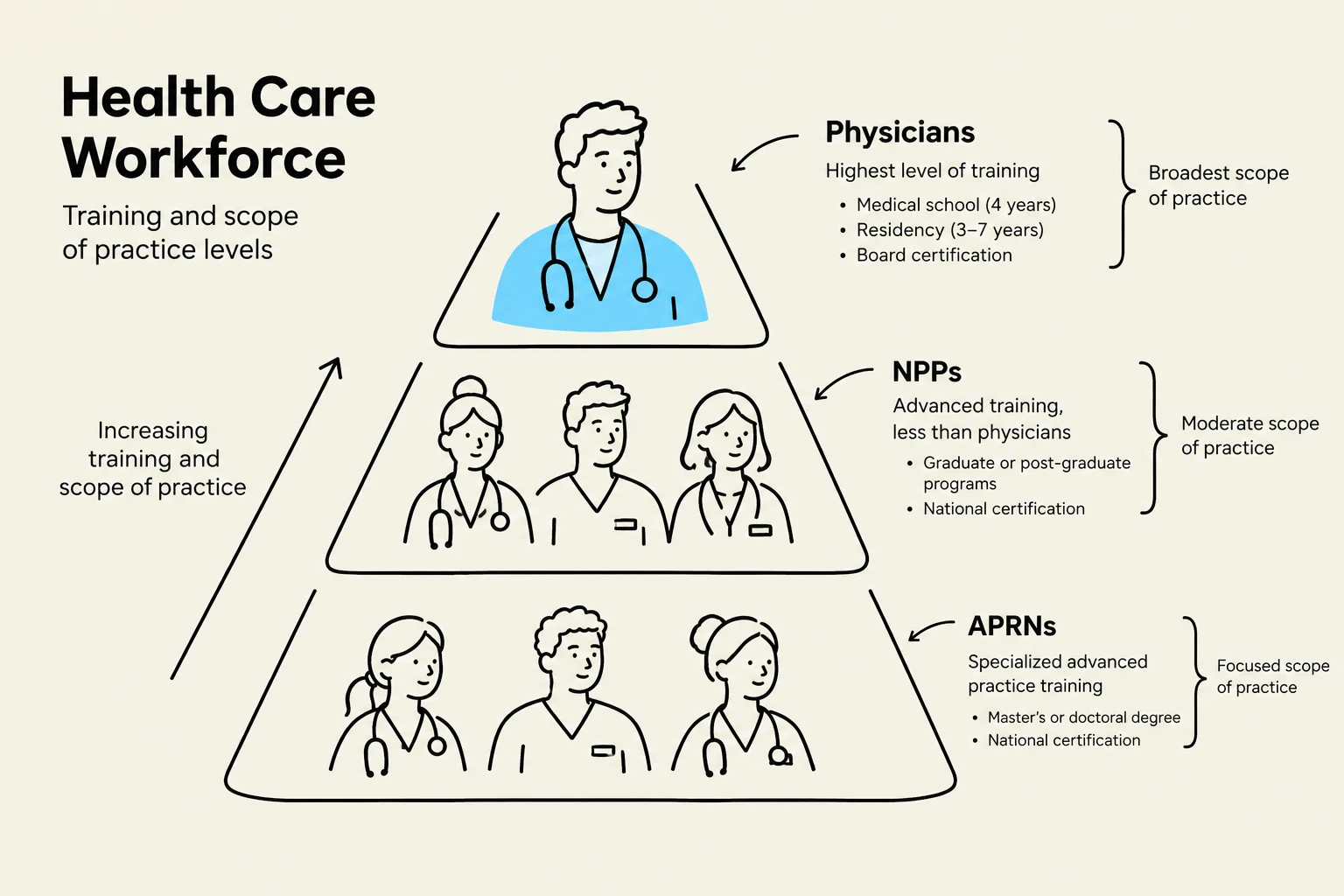
NPPs occupy a middle ground in the hierarchy of care. They receive more advanced training than RNs but less than physicians. While they cannot manage the full range of primary care or the most complex cases, they are highly valued because they can provide high-quality, cost-effective care and often show a greater personal interest in patients. However, their full potential is often limited by legal restrictions and reimbursement policies.
This diagram illustrates the hierarchy of the healthcare workforce, detailing different levels of training and scope of practice for physicians, NPPs, and APRNs.
The Supporting Workforce
A functional health care system relies on a vast network of support staff, from clinical technicians to administrative leaders.
Allied Health Professionals
This group is divided based on the level of education and the nature of their tasks:
Technicians and Assistants: These individuals typically have less than two years of postsecondary education. They perform specific procedures under the supervision of therapists or technologists.
Technologists and Therapists: These professionals are trained to evaluate patients, diagnose problems, and develop treatment plans.
Community Health Workers
Community health workers serve as "physician extenders" within the community. They often perform socially oriented tasks as "natural helpers" alongside clinical tasks. They are most effective when they have clearly defined roles and rigorous training.
Health Service Administrators
Administrators constitute the largest portion of the health care labor force. They operate at all levels of an organization—top, middle, and entry—and are responsible for the operational, clinical, and financial outcomes of the entire health care entity.
Modern Paradigms: Patient-Centered Care and Population Health
As the industry evolves, the focus of care is shifting from purely clinical interventions to broader models of wellness.
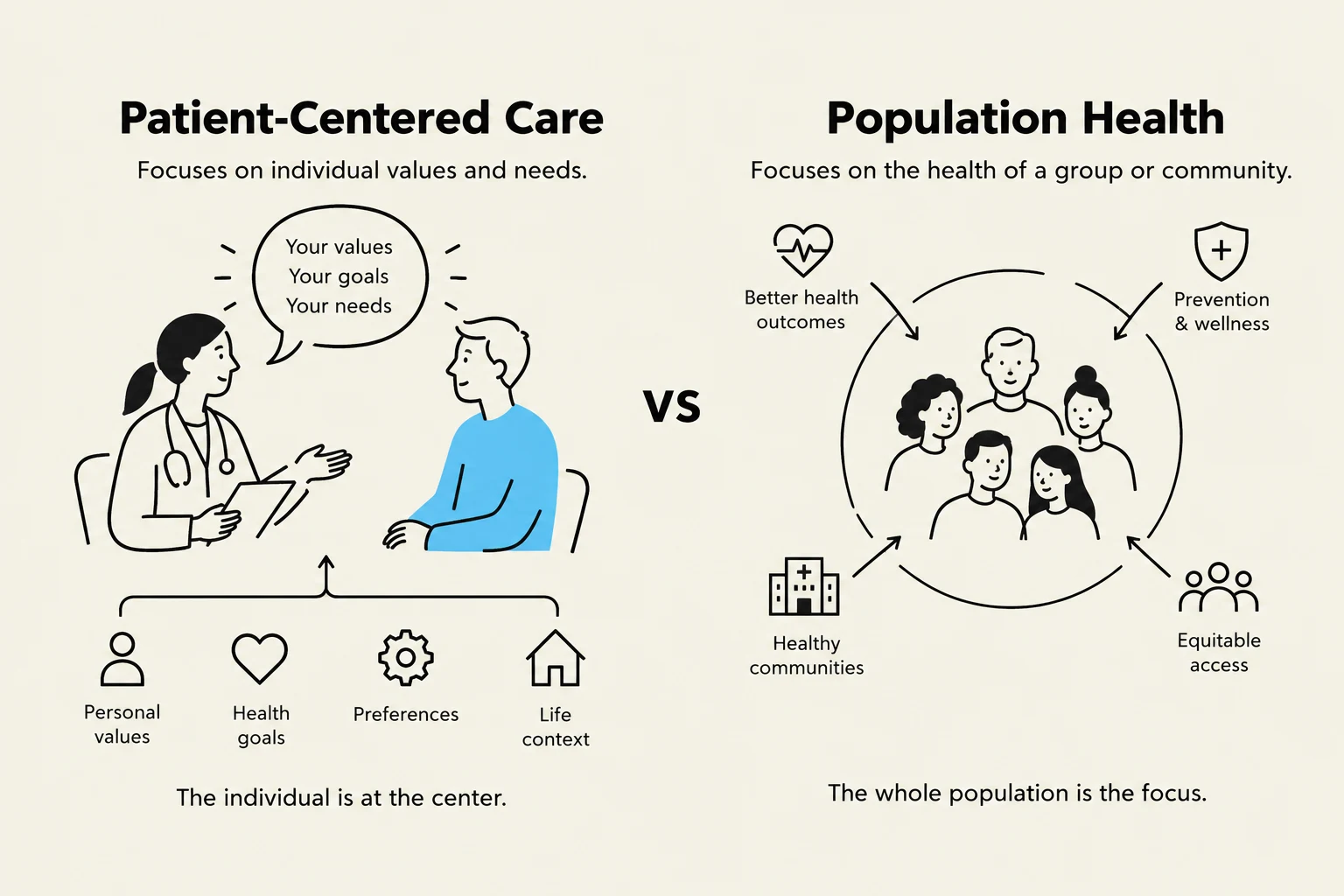
Patient-Centered Care: This model emphasizes care that is respectful and responsive to individual patient preferences, needs, and values. In this model, the patient's values guide every clinical decision.
Population Health: Rather than focusing on the individual, this approach looks at the health outcomes of a group of individuals, which are influenced by multiple complex determinants.
This illustration contrasts patient-centered care, which focuses on individual needs and values, with population health, which emphasizes the health of a group or community through factors like prevention, equitable access, and healthy communities.
Keep reading for free.
Create an account to finish this reading and make it part of your study routine.