


The lymphatic system is a vital component of the body that functions as a drainage and immune defense network. Operating in parallel with the cardiovascular system, it ensures fluid balance and monitors for pathogens. While the cardiovascular system acts as a high-speed delivery service for oxygen and nutrients, the lymphatic system serves as a specialized cleanup and security crew, ensuring that the fluids bathing our cells remain balanced and free of harmful invaders.
Fluid Dynamics and Homeostasis
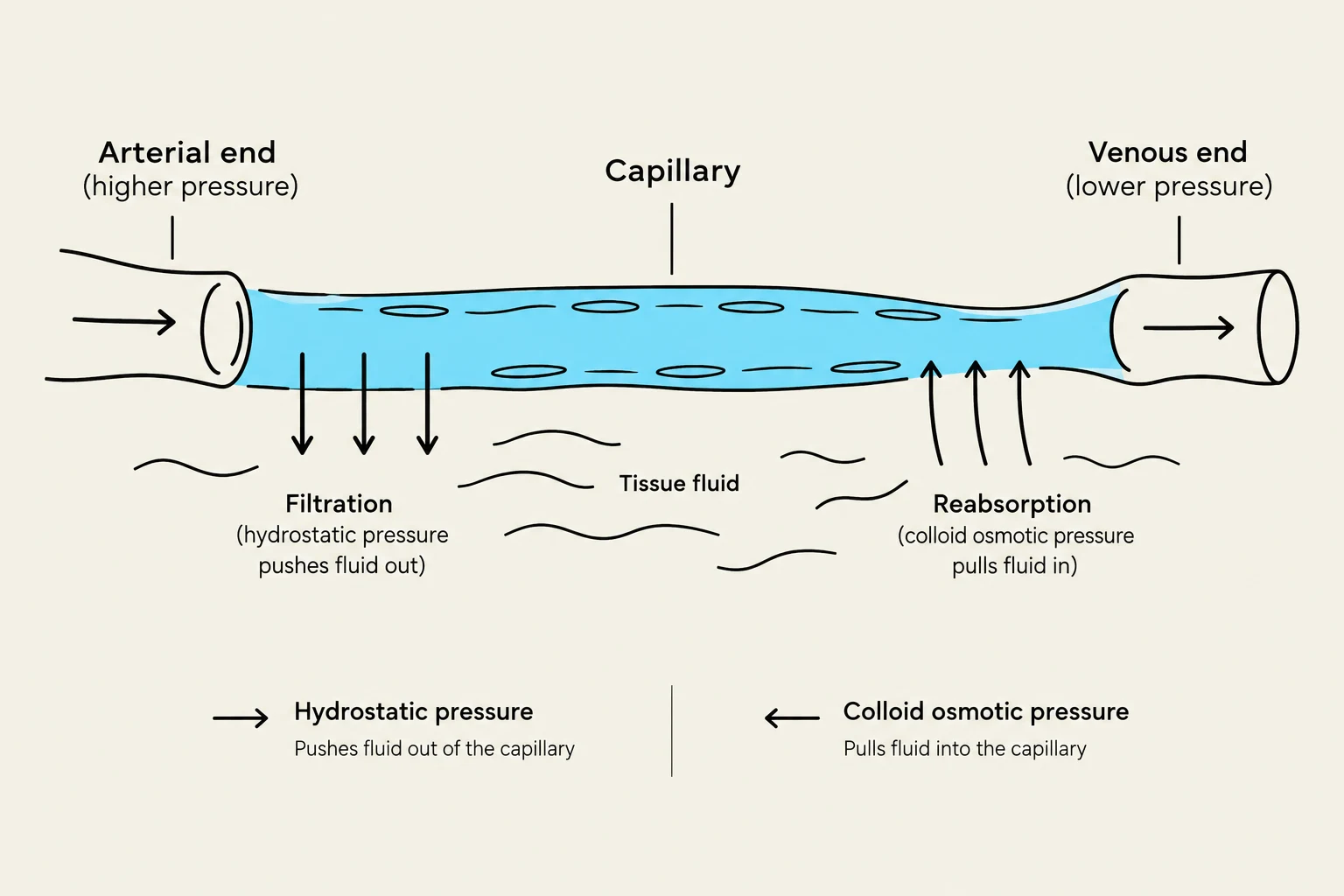
To understand why the lymphatic system is necessary, we must first look at how blood interacts with our tissues. At the microscopic level, blood flows through capillaries to deliver nutrients. This process is governed by two opposing forces: hydrostatic pressure and colloidal osmotic pressure.
At the arterial end of a capillary, the blood pressure generated by the heart creates a high hydrostatic pressure. This pressure is strong enough to force water and small solutes out of the blood vessel and into the spaces between cells, known as the interstitial fluid.
As blood moves toward the venous end of the capillary, the hydrostatic pressure drops significantly. However, the blood still contains large proteins, such as albumin, which cannot easily pass through the capillary walls. These proteins create a "pulling" force called colloidal osmotic pressure. This force attracts water back into the bloodstream.
The problem arises because these two forces are not perfectly balanced. More fluid is pushed out at the arterial end than is pulled back in at the venous end.
The Math of Fluid Balance If we represent the pressure at the arterial end as and the reabsorption at the venous end as , the net loss of fluid can be expressed as: In a healthy body, this results in a deficit of approximately 3 liters of fluid per day that must be recovered to prevent edema (swelling).
Keep reading for free.
Create an account to finish this reading and make it part of your study routine.
Continue reading freeAlready have an account? Log in
Updated