


Substance abuse is a complex issue that intersects medicine, sociology, and pharmacology. For healthcare providers, understanding the nuances between different stages of use and the physiological mechanisms at play is critical for effective assessment and management. Whether dealing with accidental poisonings or intentional misuse, recognizing the patterns of behavior and the chemical interactions involved can be the difference between a successful intervention and a fatal outcome.
Defining Substance Abuse
Substance abuse is defined as the self-administration of licit or illicit substances in a manner that deviates from approved medical or social practices. It is important to note that this definition is inherently cultural. What one society deems "abusive" may differ from another, and a society's perception of abuse does not always align with the actual physiological harm caused by a specific substance.
Within the spectrum of substance use, we distinguish between general drug abuse and the specific progression toward addiction. Drug abuse involves the use of substances for purposes other than their intended medical use, often for pleasurable or coping purposes.
The Progression of Dependence
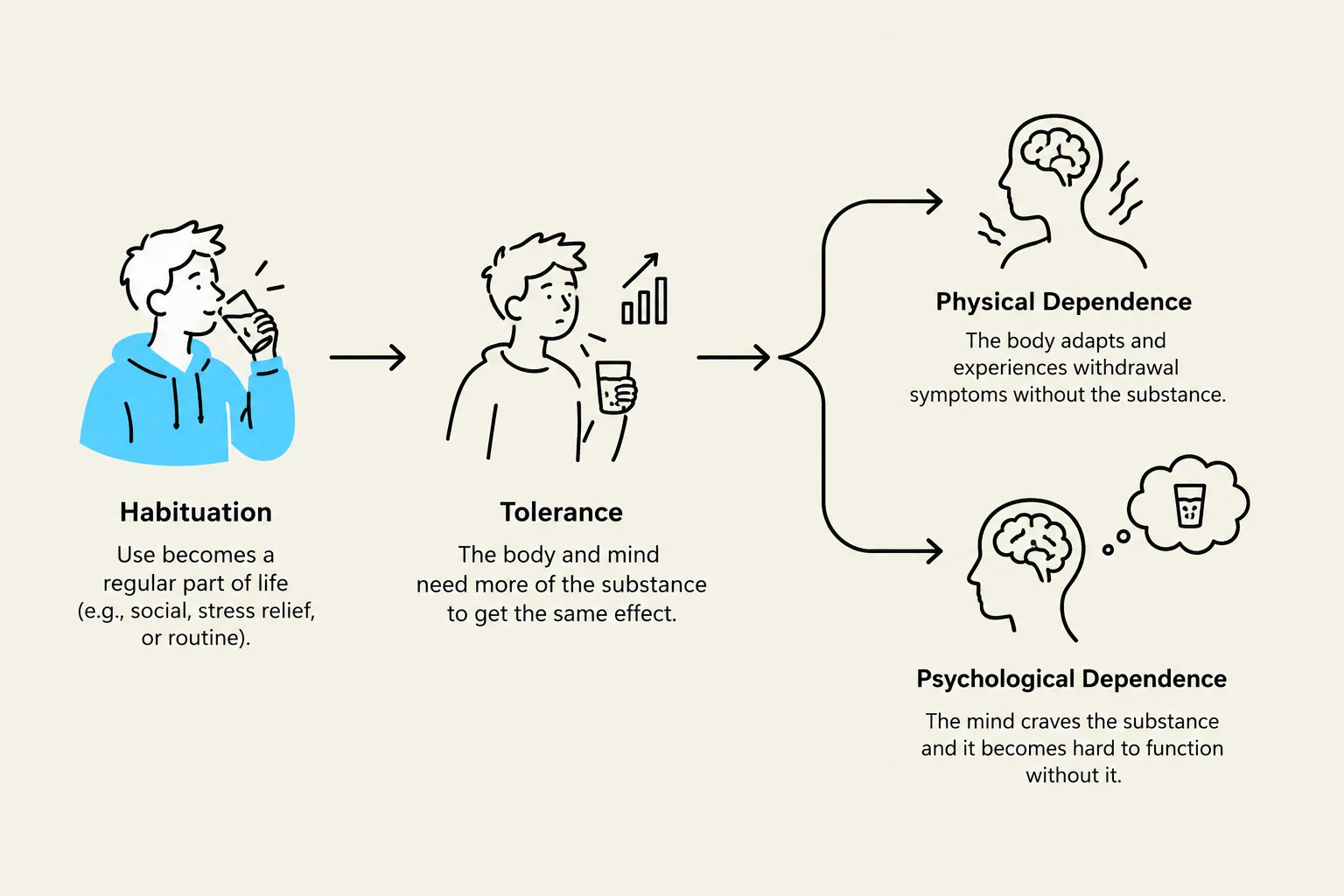
The transition from occasional use to a chronic condition involves several distinct pharmacological and behavioral stages. Understanding these terms is essential for clinical documentation and patient history taking.
- Habituation: This refers to the development of a habit or a routine involving a substance.
- Tolerance: As use continues, the body adapts, creating a state where increasing amounts of a substance are required to achieve the same physiological or psychological effect.
- Physical Dependence: This is the body's physiological adaptation to a substance. If the substance is suddenly discontinued, the patient may experience a withdrawal syndrome.
- Psychological Dependence: This involves an emotional or mental compulsion to use a substance, even in the absence of physical symptoms.
- Drug Addiction: This is a complex condition characterized by compulsive use of a substance despite the presence of harmful consequences.

Keep reading for free.
Create an account to finish this reading and make it part of your study routine.
Continue reading freeAlready have an account? Log in
Updated