Explains the fundamental process of gene expression control, detailing how cells regulate which genes are active to create diverse cell types and respond to environmental cues. Covers transcription, post-transcriptional, and translational regulation.
Every cell in a multicellular organism contains the exact same set of genetic instructions—the entire genome. Yet, a skin cell looks and functions entirely differently from a liver cell or a neuron. This functional diversity is not due to having different genes, but rather due to gene expression control: the process by which cells regulate which genes are turned "on" or "off" and to what extent.
By controlling the flow of information from DNA to RNA to protein, cells can adjust their protein composition to meet specific needs, respond to external signals like hormones, and undergo differentiation to form specialized tissues.
The Hierarchy of Regulation
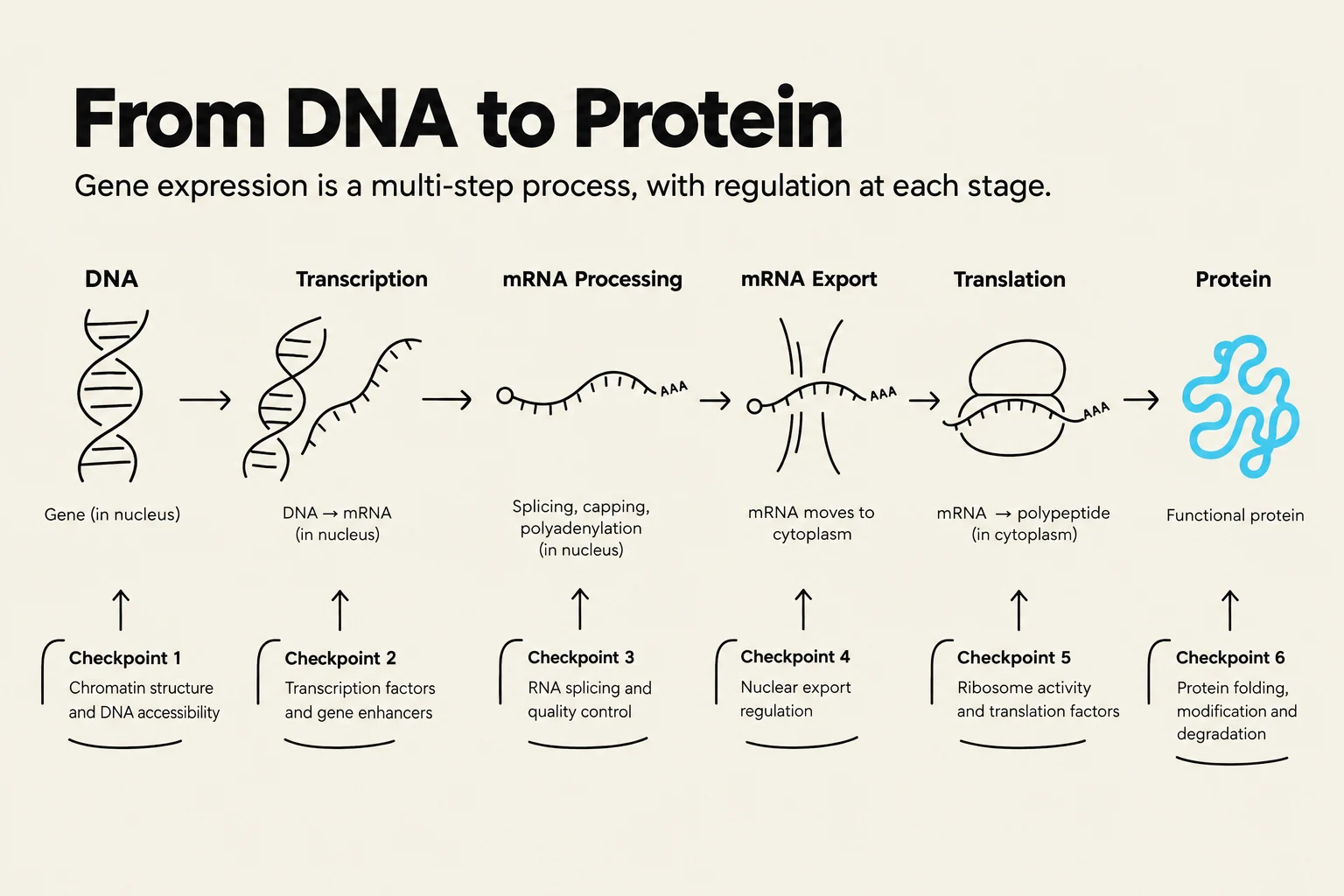
Gene expression is a multi-step process, and regulation can occur at almost any stage along the pathway. While many steps exist, the most critical point of control for the majority of genes is the initiation of transcription.
The various levels of control include:
Transcription regulation: Controlling when and how often a gene is transcribed into RNA.
Post-transcriptional controls: Managing how an RNA transcript is processed, exported, or degraded.
Translation regulation: Selecting which mRNAs are actually translated into proteins by ribosomes.
Protein destruction: Regulating how rapidly specific proteins are broken down after they are made.
This diagram illustrates the process of gene expression, from DNA to protein synthesis, highlighting key stages and regulatory checkpoints.
Transcription Regulation
Transcription is the first major gatekeeper. Cells use specialized proteins called transcription regulators to switch genes on or off. These regulators bind to specific, short stretches of DNA known as regulatory DNA sequences.
Repressors and Activators
Transcription regulators generally fall into two categories:
Repressors: These proteins turn genes off by binding to DNA and preventing RNA polymerase from transcribing the gene.
Activators: These proteins turn genes on by helping to recruit RNA polymerase to the promoter.
In bacteria, these regulators often control genes organized in clusters called operons. For example, the trp operon in bacteria is turned off when tryptophan levels are high (via a repressor) and turned on when levels drop. The Lac operon in E. coli is a classic example of dual control: it uses both a repressor (to sense lactose) and an activator (to sense glucose levels) to ensure the cell uses the most efficient energy source available.
Eukaryotic Complexity: Enhancers and Chromatin
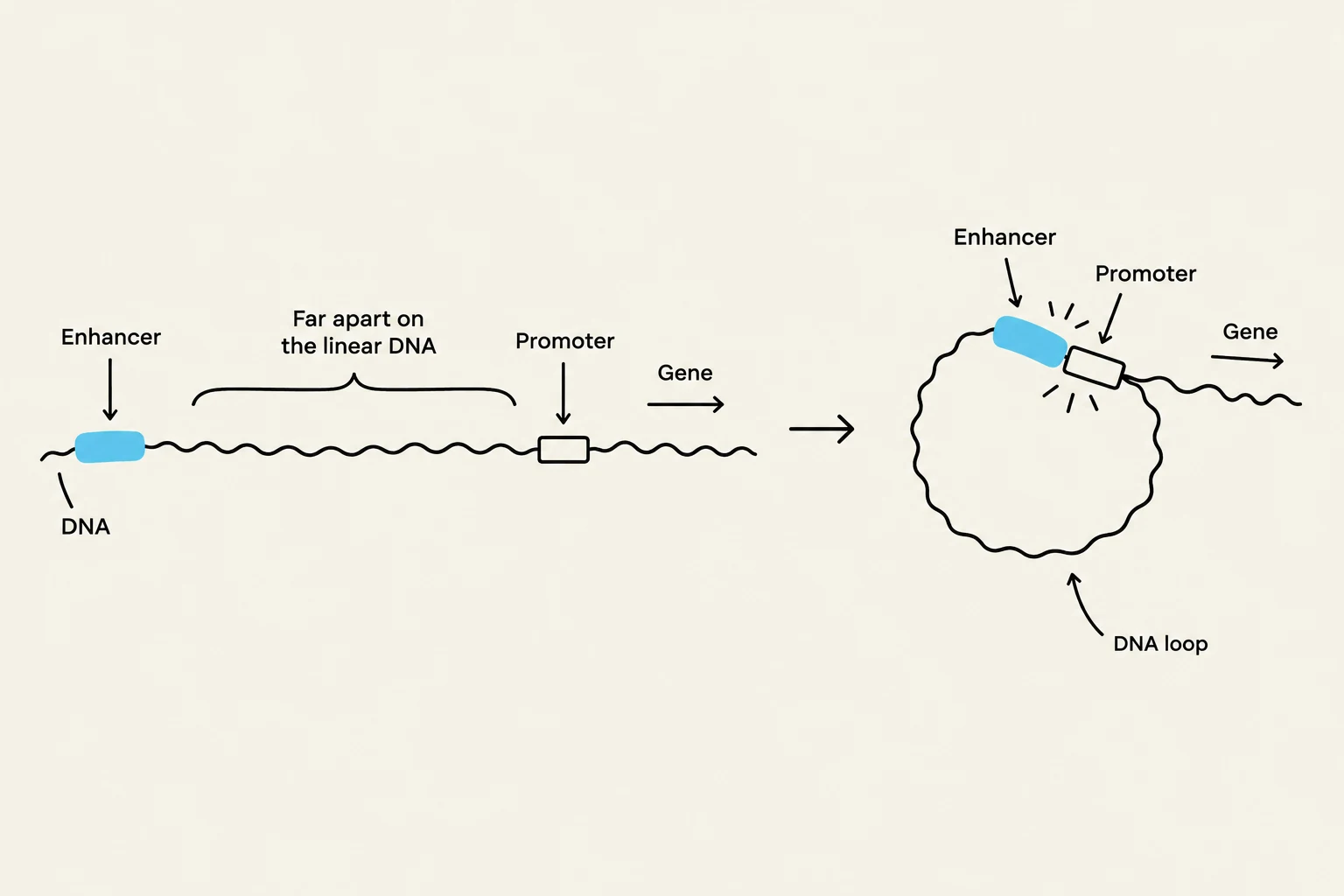
Eukaryotic regulation is significantly more complex. Unlike bacteria, where regulatory sequences are usually close to the promoter, eukaryotic regulators often act from a distance.
Enhancers: These are regulatory DNA sequences that can be located thousands of nucleotides away from the gene they regulate. To bridge this distance, the DNA loops out, allowing the activator protein bound to the enhancer to physically contact the transcription machinery at the promoter.
Chromatin Modification: Because eukaryotic DNA is wrapped around histones to form chromatin, regulators must also manage accessibility. Activators can recruit histone acetyltransferases to loosen chromatin structure, making DNA more accessible, while repressors can recruit histone deacetylases to tighten it.
This diagram illustrates how an enhancer and a promoter region on a DNA molecule can interact to regulate gene expression, potentially through the formation of a DNA loop.
Exam Tip: If asked about the primary site of gene regulation for most genes, remember that transcription initiation is the most common and important control point.
Combinatorial Control and Cell Differentiation
How does a single organism develop into hundreds of different cell types? The answer lies in combinatorial control.
Eukaryotic genes are rarely controlled by a single protein. Instead, groups of transcription regulators work together like a "committee" to determine if a gene is expressed. While many cells share the same general transcription factors, the specific combination of activators and repressors present in a cell determines its unique protein composition.
Furthermore, a single transcription regulator can coordinate the expression of many different genes simultaneously, allowing for the large-scale changes required to form an entire organ or specialized tissue. This ability to maintain a specific set of expressed genes is what allows differentiated cells to maintain their identity.
Post-Transcriptional Controls
Once an RNA transcript is made, the cell has several more ways to control whether that message becomes a functional protein.
RNA Processing and Stability
The lifetime and efficiency of an mRNA molecule are dictated by specific nucleotide sequences in its untranslated regions (UTRs). These sequences act as binding sites for proteins that can either promote translation or trigger mRNA degradation.
Regulatory RNAs
Small, non-coding RNA molecules play a massive role in silencing gene expression:
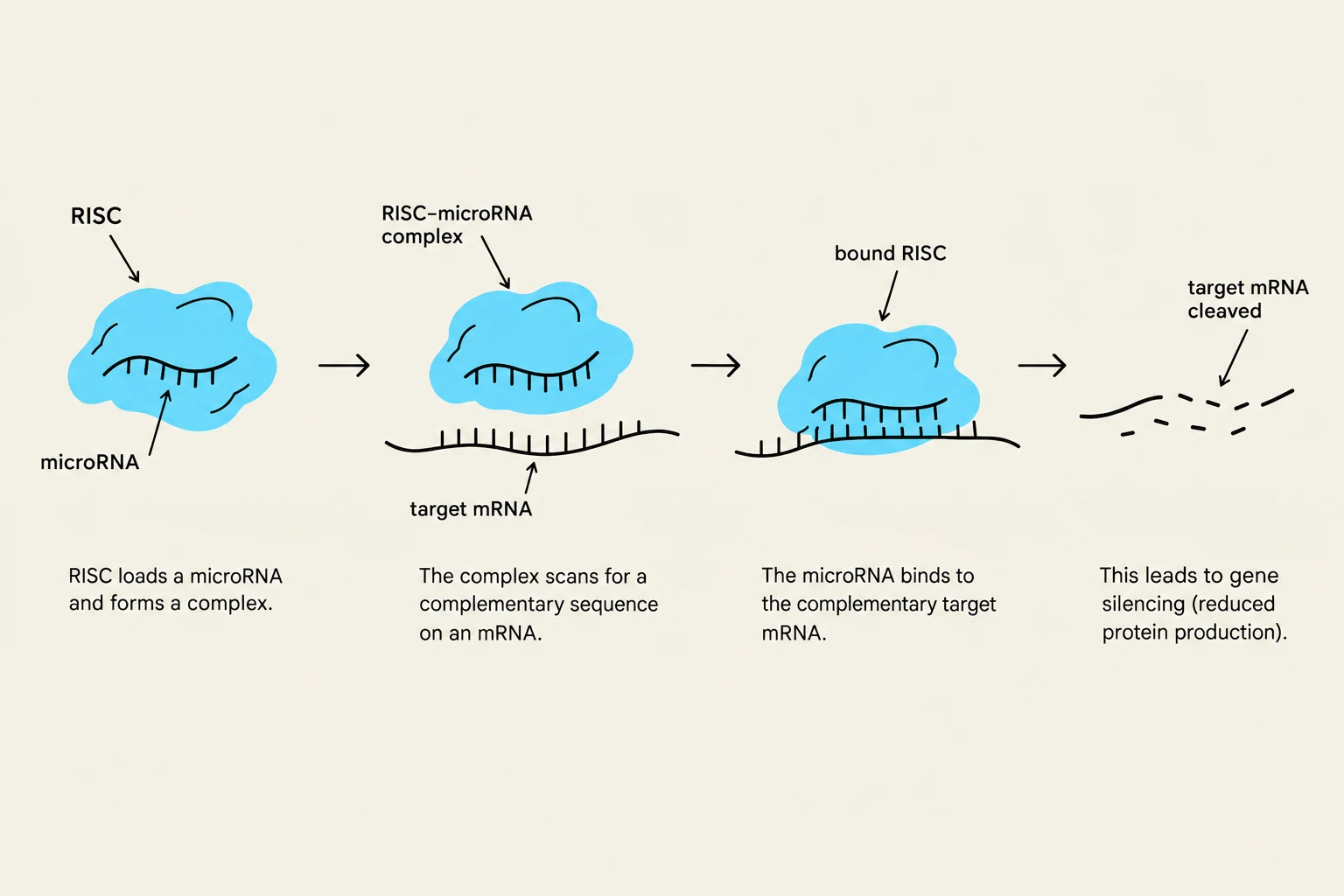
MicroRNAs (miRNAs): These molecules base-pair with specific target mRNAs to inhibit their stability or prevent them from being translated. Because one miRNA can target any mRNA containing a specific complementary sequence, a single miRNA can regulate an entire set of different genes.
Small interfering RNAs (siRNAs): These are part of a defense mechanism called RNA interference (RNAi). They are produced from foreign, double-stranded RNAs (such as those from a virus) to direct the destruction of those specific sequences, protecting the cell from infection.
This diagram illustrates the process of gene silencing mediated by RISC and microRNA. RISC loads a microRNA, forming a complex that then scans for a complementary sequence on target mRNA. Upon binding, the microRNA directs the cleavage of the target mRNA, leading to reduced protein production.
In summary, gene expression is a highly orchestrated, multi-layered process. From the initial binding of a transcription factor to the final destruction of a protein, every step provides an opportunity for the cell to fine-tune its internal environment in response to its needs and the world around it.
Keep reading for free.
Create an account to finish this reading and make it part of your study routine.