


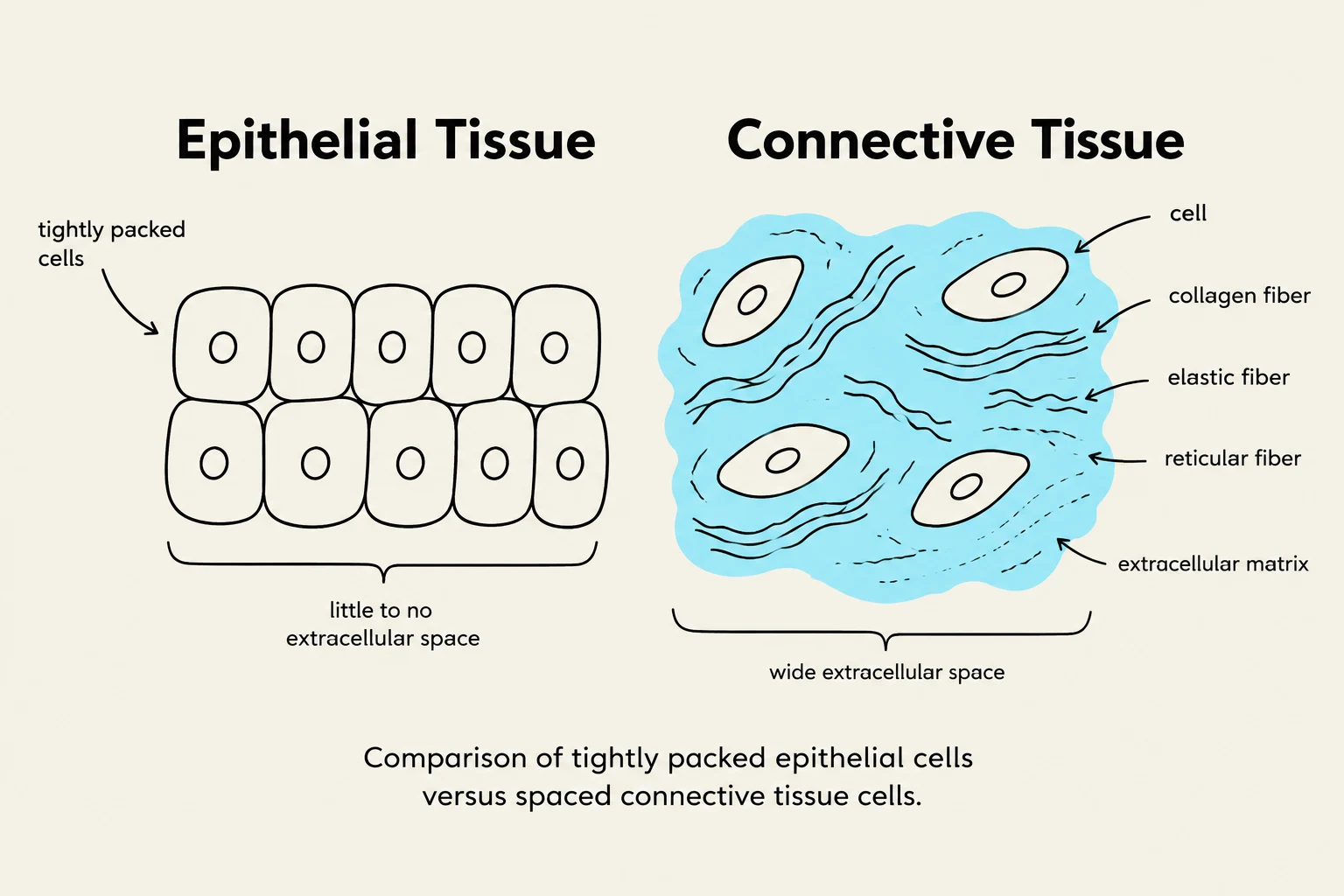
Connective tissue is one of the four primary tissue types in the human body, serving as the essential "glue" and structural framework that holds us together. While epithelial tissue focuses on covering and secreting, connective tissue is specialized to protect, support, transport, store energy, and bind various tissues together. Unlike the tightly packed cells found in epithelial tissue, connective tissue is defined by its unique composition of cells and an expansive extracellular environment.
The Connective Tissue Matrix
The most distinguishing feature of connective tissue is the extracellular matrix. This is the non-living material that surrounds the living cells, and its composition determines whether a tissue is liquid (like blood), flexible (like cartilage), or rigid (like bone).
The matrix is composed of two main components: fibers and ground substance.
1. Fibers
Fibers are strands of protein that provide structural integrity to the tissue. There are two primary types mentioned in histology:
- Collagen: These fibers provide strength and durability to the matrix.
- Elastic fibers: These allow the tissue to stretch and recoil.
2. Ground Substance
The ground substance is the "filler" that occupies the space between the cells and the fibers. It is a complex mixture that varies significantly depending on the specific type of connective tissue. It typically consists of:
- Water
- Hyaluronic acid
- Large proteins and sugars, such as chondroitin sulfate, dermatan sulfate, or fibronectin.
Study Tip: To remember the difference, think of the fibers as the "rebar" (steel rods) in concrete and the ground substance as the "concrete" itself. The combination of both creates the final strength and shape of the structure.

Keep reading for free.
Create an account to finish this reading and make it part of your study routine.
Continue reading freeAlready have an account? Log in
Updated