


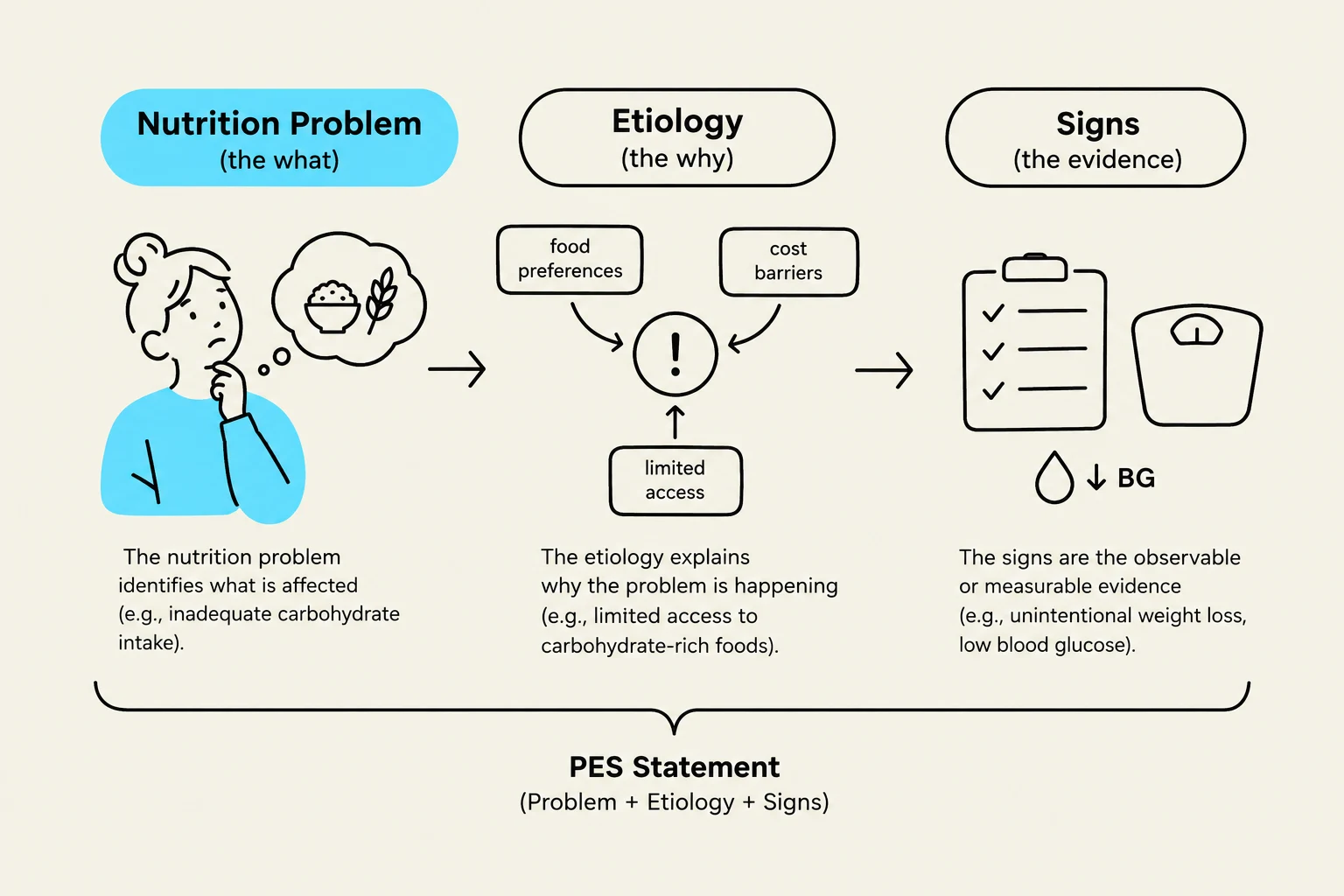
Mastering the Nutrition Care Process (NCP) requires more than just knowing what a patient eats; it requires the ability to translate clinical data into a precise Nutrition Diagnosis. In the outpatient setting, nutrition problems often revolve around the management of chronic conditions like diabetes or digestive sensitivities. One of the most critical skills for a dietitian is constructing a valid PES statement: Problem (the diagnosis), Etiology (the cause), and Signs and Symptoms (the evidence).
This article serves as a clinical cheat sheet for four common outpatient diagnoses related to carbohydrate and fiber intake. By understanding the specific etiologies and signs/symptoms associated with each, you can ensure your documentation is both accurate and actionable.
Understanding the PES Framework
Before diving into specific diagnoses, let's review the anatomy of a professional PES statement. A well-constructed statement follows a logical flow: the Problem is linked to the Etiology by "related to," and the Etiology is linked to the Signs and Symptoms by "as evidenced by".
Clinical Tip: Always try to use the specific medical cause when known. For example, instead of writing "related to physiological causes," write "related to Type 2 Diabetes".
1. Excessive Carbohydrate Intake (NI-5.8.2)
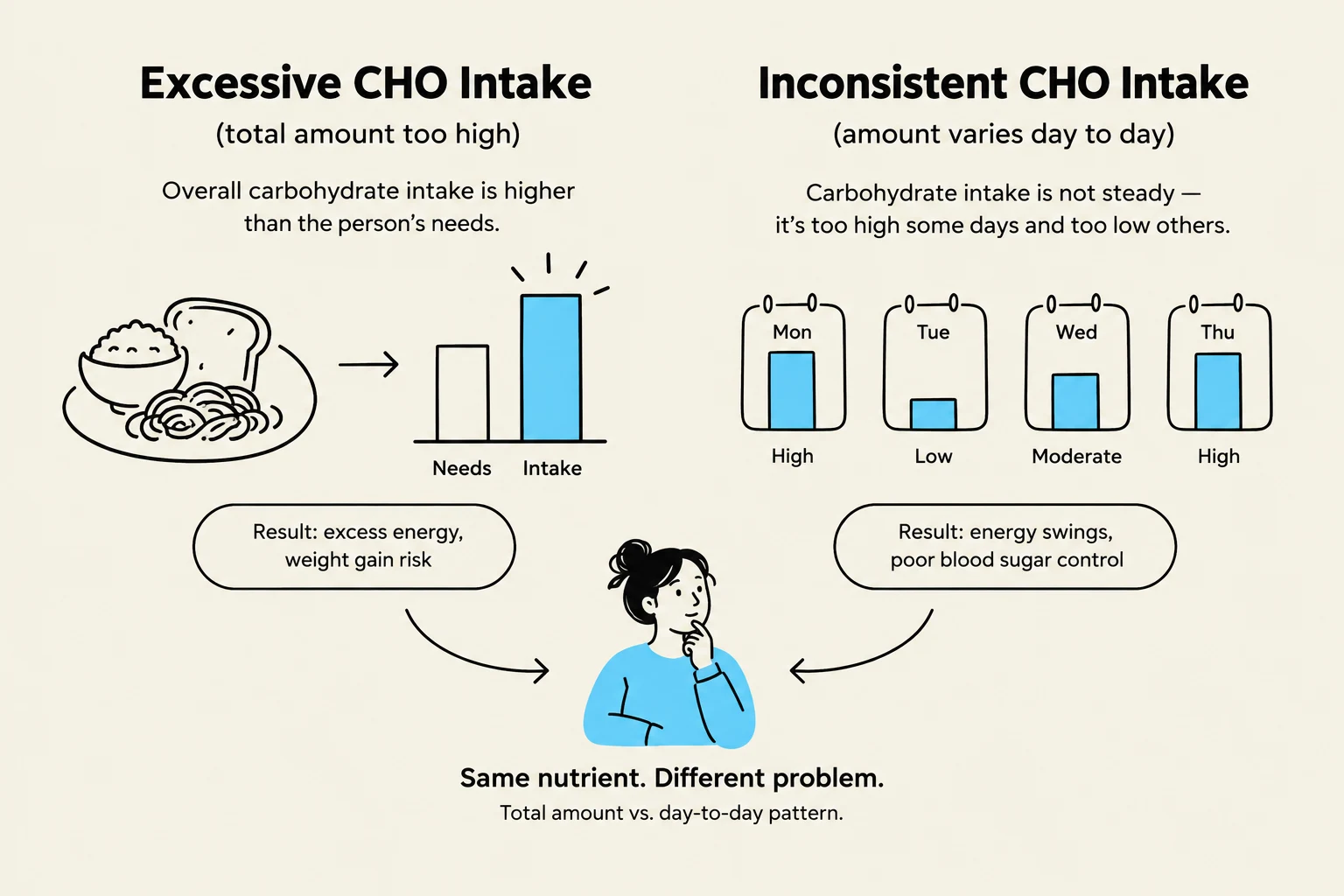
This diagnosis is used when a patient's intake of carbohydrates exceeds established reference standards or physiological recommendations. This is frequently seen in patients managing glycemic control.
Common Etiologies:
- Physiological factors: Diabetes, lactase deficiency, or sucrase-isomaltase deficiency.
- Knowledge deficits: Lack of understanding regarding appropriate carbohydrate amounts.
- Psychological factors: Depression or disordered eating.
- Socioeconomic/Cultural factors: Economic constraints limiting food choices or cultural practices that affect carbohydrate reduction.
Keep reading for free.
Create an account to finish this reading and make it part of your study routine.
Continue reading freeAlready have an account? Log in
Updated