


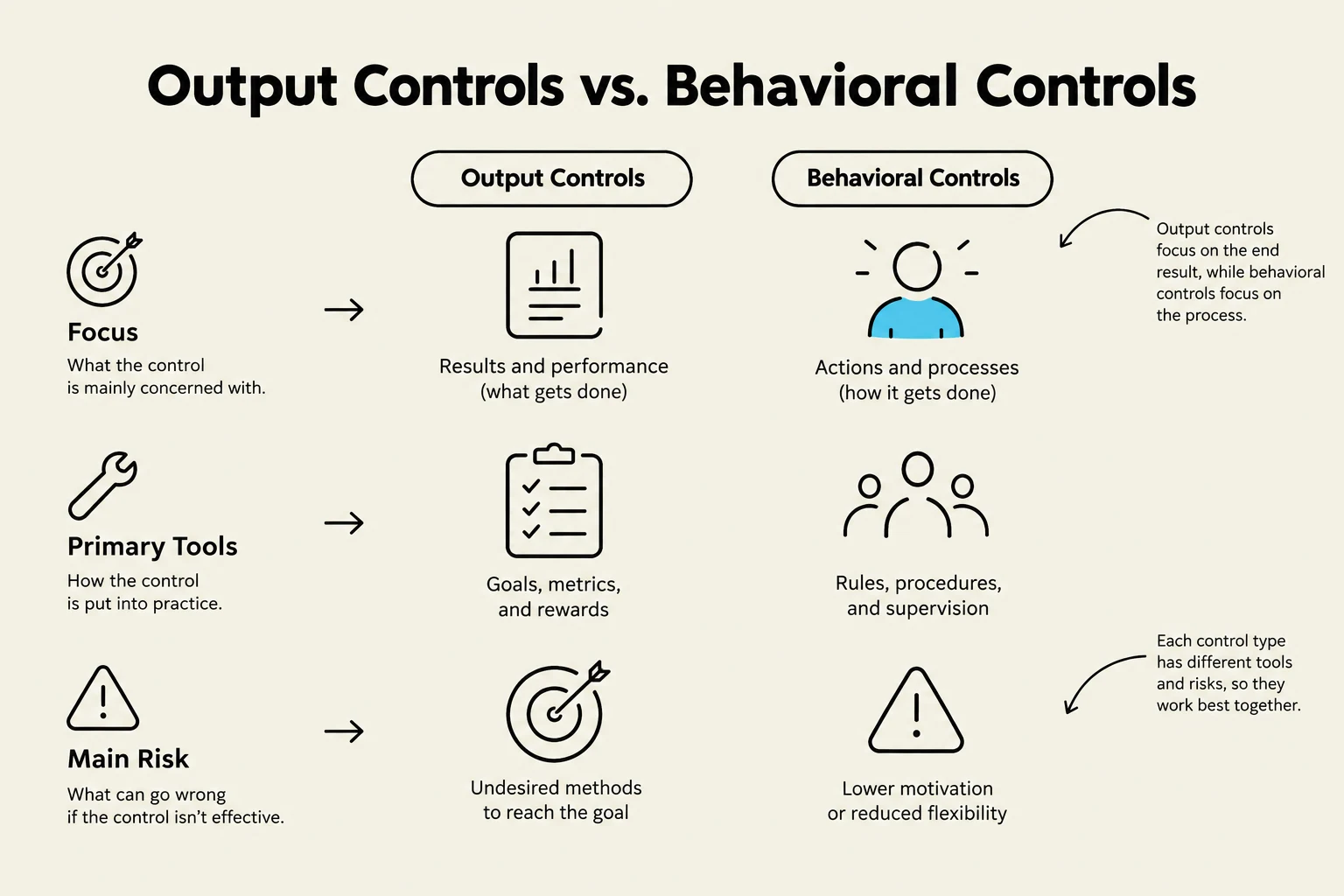
In any large organization, a fundamental challenge exists: how do you ensure that thousands of individual employees act in a way that serves the best interests of the entire firm? As companies grow in complexity, it becomes increasingly difficult to align individual self-interest with organizational goals. To solve this, management employs two primary mechanisms of control: output controls, which focus on the "what" (the results), and behavioral controls, which focus on the "how" (the actions and processes).
Output Controls: Managing by Results
Output controls are designed to influence behavior by focusing on measurable outcomes and performance targets. Instead of monitoring every move an employee makes, management sets specific benchmarks and evaluates success based on whether those targets are met.
Performance Targets and Hurdle Rates
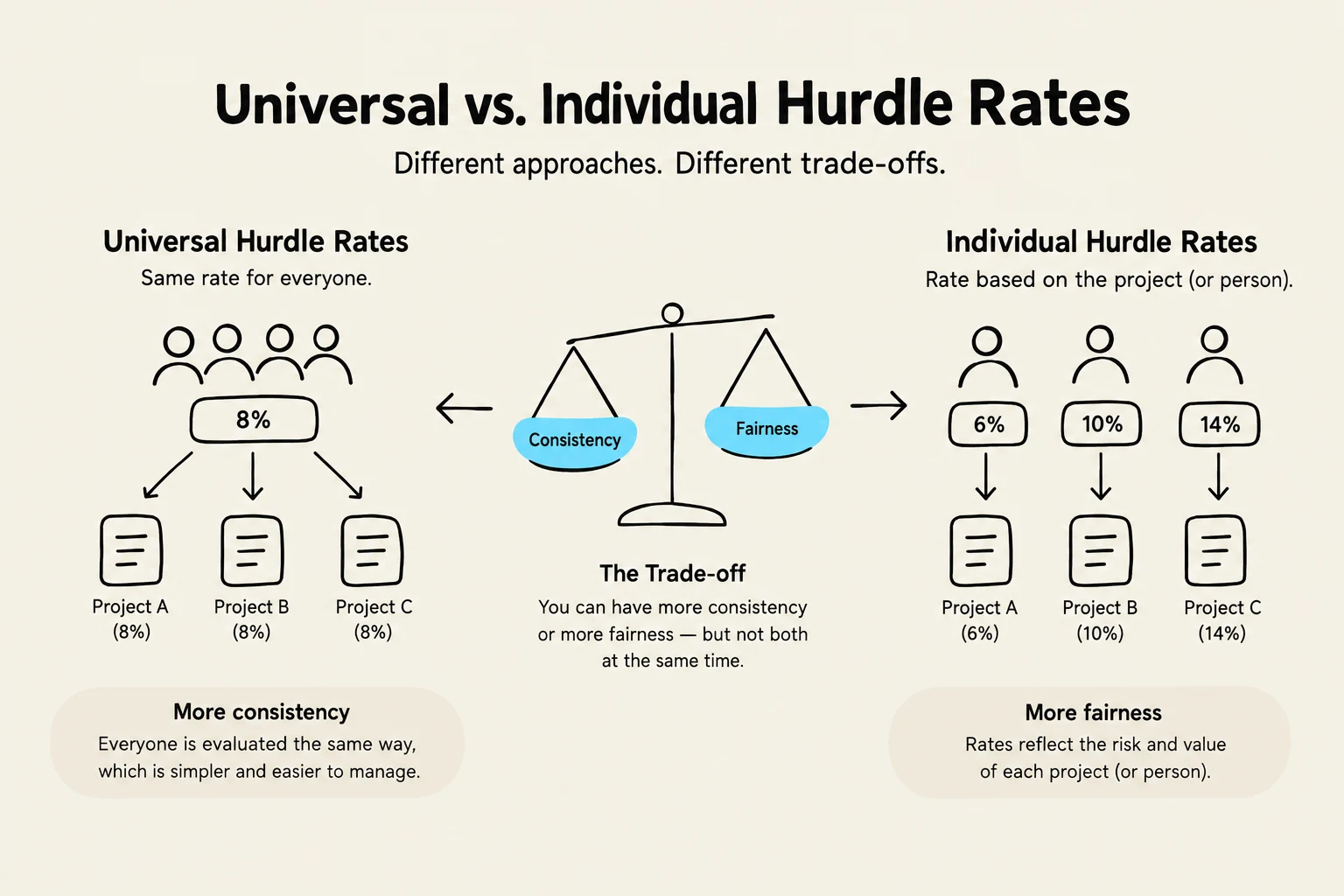
A common way to implement output control is through performance targets, such as Return on Investment (ROI) or specific customer service metrics. To standardize these targets, firms often use "hurdle rates"—minimum acceptable levels of performance that a division or manager must achieve.
There are two main ways to apply these rates:
- Universal Hurdle Rates: The firm applies a single performance threshold across all divisions (e.g., every division must achieve a 5% ROI increase). While this creates a consistent "rulebook," it can be inherently unfair. A division operating in a highly competitive or volatile industry might actually be performing exceptionally well compared to its peers, yet still fail to meet a universal rate designed for more stable industries.
- Individual Hurdle Rates: To be more equitable, firms can set unique targets for each unit based on its specific market conditions. However, this introduces a different problem: political maneuvering. Powerful managers may use their influence to negotiate lower, easier-to-reach hurdle rates, leading to internal friction and resource allocation based on politics rather than merit.
Keep reading for free.
Create an account to finish this reading and make it part of your study routine.
Continue reading freeAlready have an account? Log in
Updated