Oral Health: Conditions of the Tongue, Gums, and Teeth
An overview of common disorders affecting the tongue, gingiva, and teeth, including inflammatory, infectious, and traumatic conditions. Covers glossitis, gingivitis, periodontitis, dental caries, abscesses, and tooth avulsion.
The oral cavity is a complex ecosystem where various tissues—including the tongue, gingiva (gums), and teeth—interact with a diverse microbiome. Disorders of these structures can range from benign, localized irritations to life-threatening systemic infections or malignancies. Understanding the distinction between inflammatory, infectious, and traumatic conditions is essential for effective clinical management and timely referral.
Tongue Disorders: Glossitis and Glossodynia
The tongue is a highly vascularized muscular organ that can manifest several distinct pathologies. One common inflammatory condition is glossitis, a benign condition characterized by a red, smooth surface of the tongue. This appearance often results from the loss of lingual papillae and is frequently associated with nutritional deficiencies, such as iron, niacin (Vitamin B3), riboflavin (Vitamin B2), or Vitamin E, as well as certain drugs or autoimmune diseases.
When patients present with burning sensations or pain in the tongue, the condition is termed glossodynia. If no visible clinical findings are present, it is referred to as "Burning Mouth Syndrome," which is most common in postmenopausal women. Glossodynia can occur alongside glossitis and may be triggered by medications (such as diuretics), tobacco use, xerostomia (dry mouth), diabetes, or candidiasis.
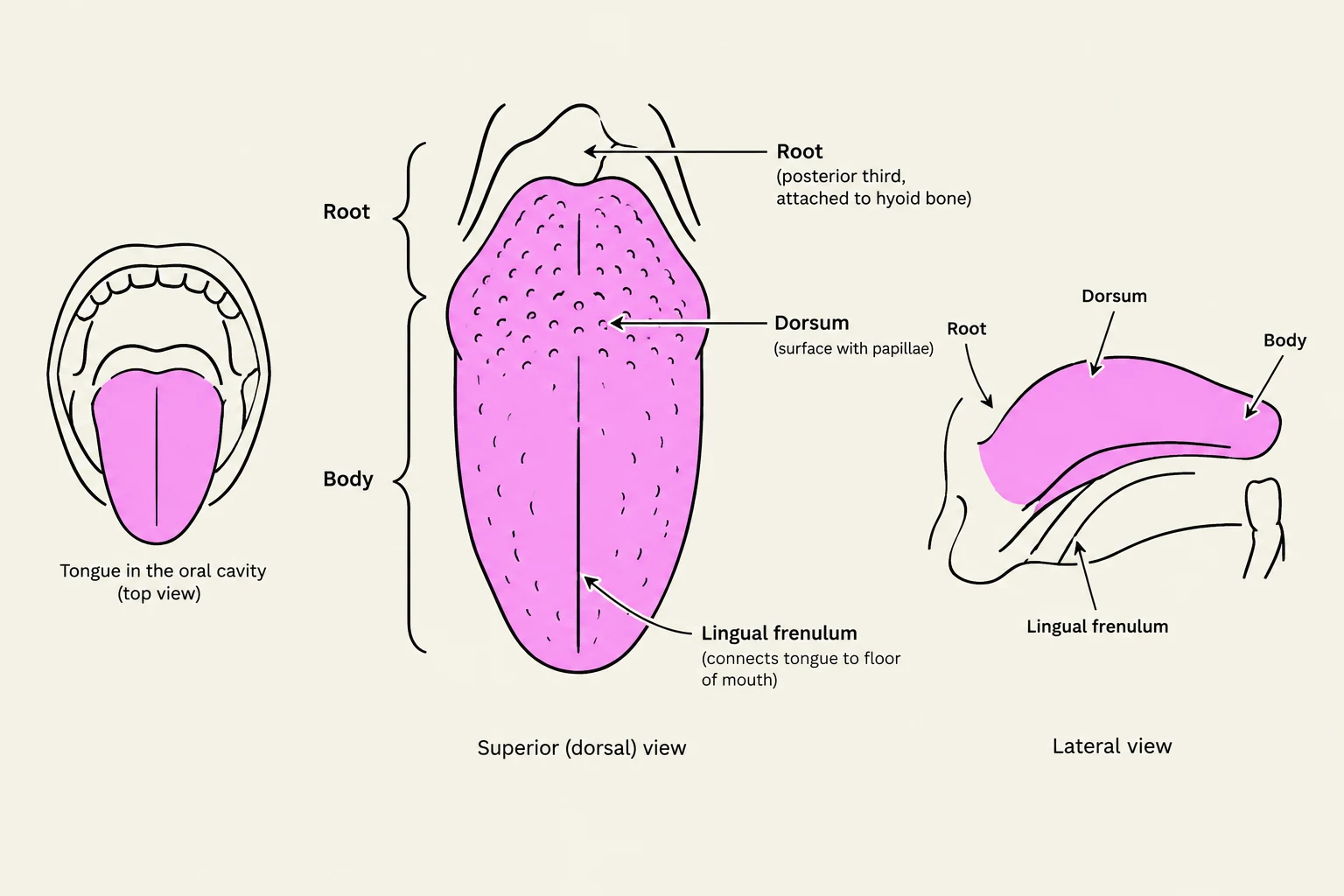
Diagrams illustrating the anatomy of the human tongue, showing its root, body, dorsum, and lingual frenulum from superior (dorsal) and lateral views, as well as a top view of the tongue within the oral cavity.
Clinical Pearl: If a patient presents with a persistent oral lesion that fails to heal, always prioritize a biopsy to rule out malignancy, such as Squamous Cell Carcinoma (SCC).
Gingival and Periodontal Diseases
The health of the gingiva is heavily dependent on the management of dental plaque. Gingivitis is the initial stage of plaque-associated gum disease, characterized by inflammation of the gingiva due to plaque accumulation. Crucially, gingivitis is reversible with improved oral hygiene, such as regular brushing, flossing, and professional dental cleanings.
If left untreated, gingivitis can progress to periodontitis. This is a more severe infection that extends into the deeper tissues, leading to the destruction of the periodontal ligament and the loss of alveolar bone. Periodontal infections can escalate into life-threatening complications, including the infection of deep fascial spaces in the head and neck, osteomyelitis of the jaw, or even hematogenous spread to other parts of the body.
Necrotizing Ulcerative Gingivitis (NUG)
A more acute and severe presentation is Necrotizing Ulcerative Gingivitis, also known as "Trench Mouth" or Vincent Angina. This condition presents as painful, acute gingival inflammation and necrosis, often accompanied by bleeding, halitosis (bad breath), fever, and cervical adenopathy. It is frequently seen in young adults experiencing stress, smoking, impaired immunity, or poor oral hygiene, and is driven by spirochetes and fusiform bacilli.
Diagram illustrating the progression of gum health from healthy gingiva to gingivitis and periodontitis, detailing key features of each stage.
Dental Caries and Abscesses
Dental caries (cavities) result from the interaction between oral bacteria and fermentable carbohydrates, which produce acid that demineralizes the tooth surface. Risk factors include age, diabetes, smoking, and socioeconomic status, while prevention relies on fluoride use, diet control, and good oral hygiene.
When decay reaches the pulp or if an infection spreads, a dental abscess may form. Patients typically experience intense tenderness in the affected tooth, sometimes accompanied by swelling of the gums, cheeks, mouth, or neck.
Emergency Warning: While many abscesses are managed with antibiotics and dental referral, certain symptoms warrant emergent attention. If a patient presents with less than two finger-widths of trismus (difficulty opening the mouth), difficulty swallowing, or cellulitis extending to the orbital region, they require immediate evaluation by a dentist and potential hospital admission.
Trauma: Permanent Tooth Avulsion
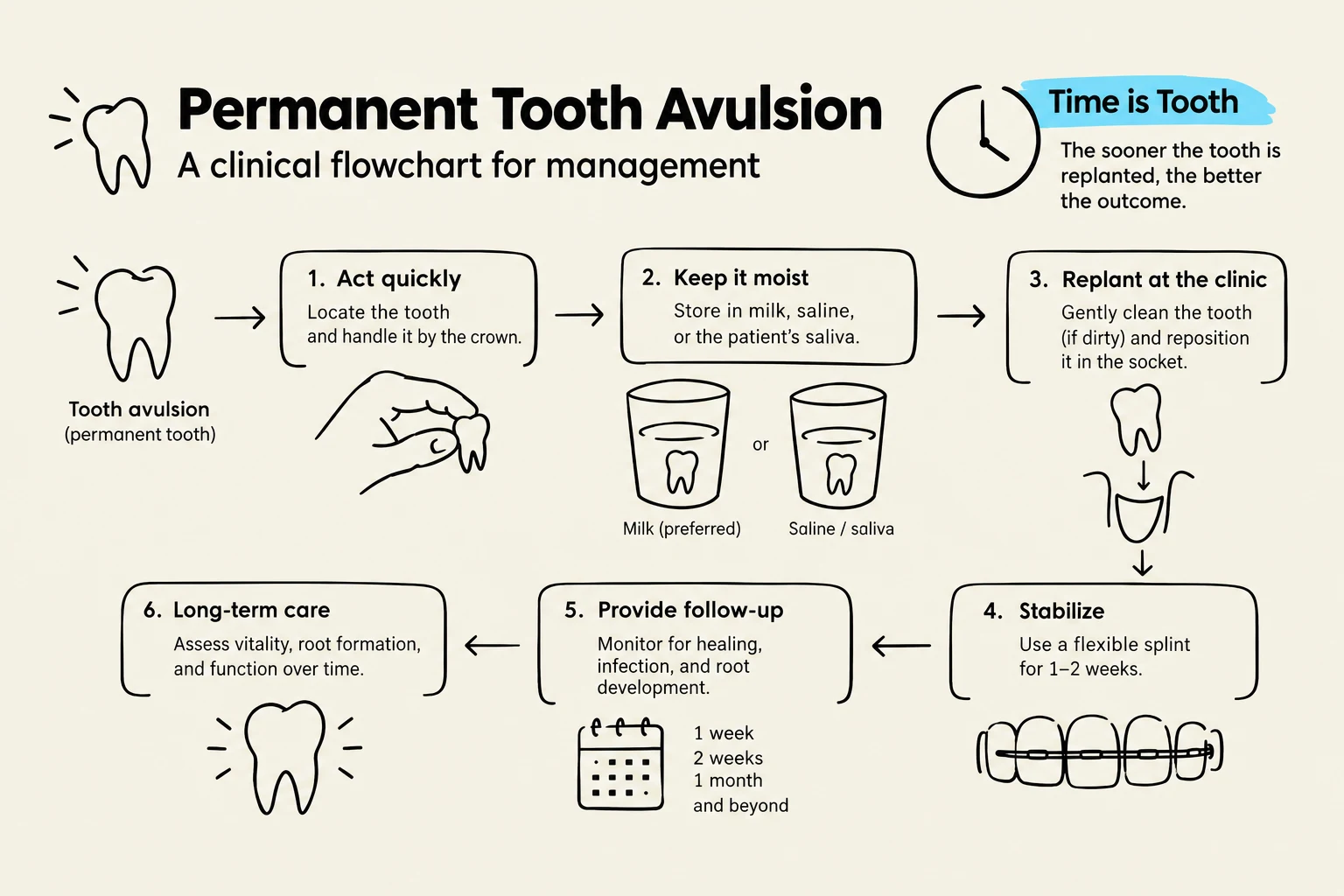
A permanent tooth avulsion occurs when a tooth is completely knocked out of its socket due to trauma. In these cases, time is the most critical factor; the best chance for successful replantation is within one hour of the injury.
Management Steps for Avulsion:
Handle the crown only: Never touch the root of the tooth.
Rinse and Replace: Rinse the tooth with saline immediately and attempt to place it back into the socket.
Storage: If replacement is not possible, keep the tooth in milk or Pedialyte with an ice pack.
Follow-up: Seek emergency dental treatment immediately and ensure tetanus prophylaxis is up to date.
A flowchart illustrating the management steps for a permanent tooth avulsion, emphasizing prompt action, proper storage of the tooth, replantation, stabilization, follow-up, and long-term care.
Summary Table of Key Conditions
Condition
Primary Feature
Key Management
Glossitis
Red, smooth tongue
Treat underlying deficiency
Gingivitis
Reversible gum inflammation
Hygiene & dental cleaning
Periodontitis
Bone and ligament loss
Dental referral/debridement
Dental Caries
Acid-driven demineralization
Fillings & fluoride
Dental Abscess
Localized infection/swelling
Drainage & antibiotics
Keep reading for free.
Create an account to finish this reading and make it part of your study routine.