


Oral hygiene is often viewed as a routine comfort task, but in a clinical setting, it is a critical safety intervention. For clients with decreased consciousness or impaired swallowing, improper oral care can lead to life-threatening complications, most notably aspiration. This article explores the principles of maintaining oral health, managing dentures, and implementing specific safety protocols to protect the airway of vulnerable clients.
The Purpose of Oral Hygiene
Maintaining oral health serves several vital functions beyond simple cleanliness. It helps maintain oral comfort, reduces debris and odor, protects mucous membranes, and supports the client's ability to eat and speak.
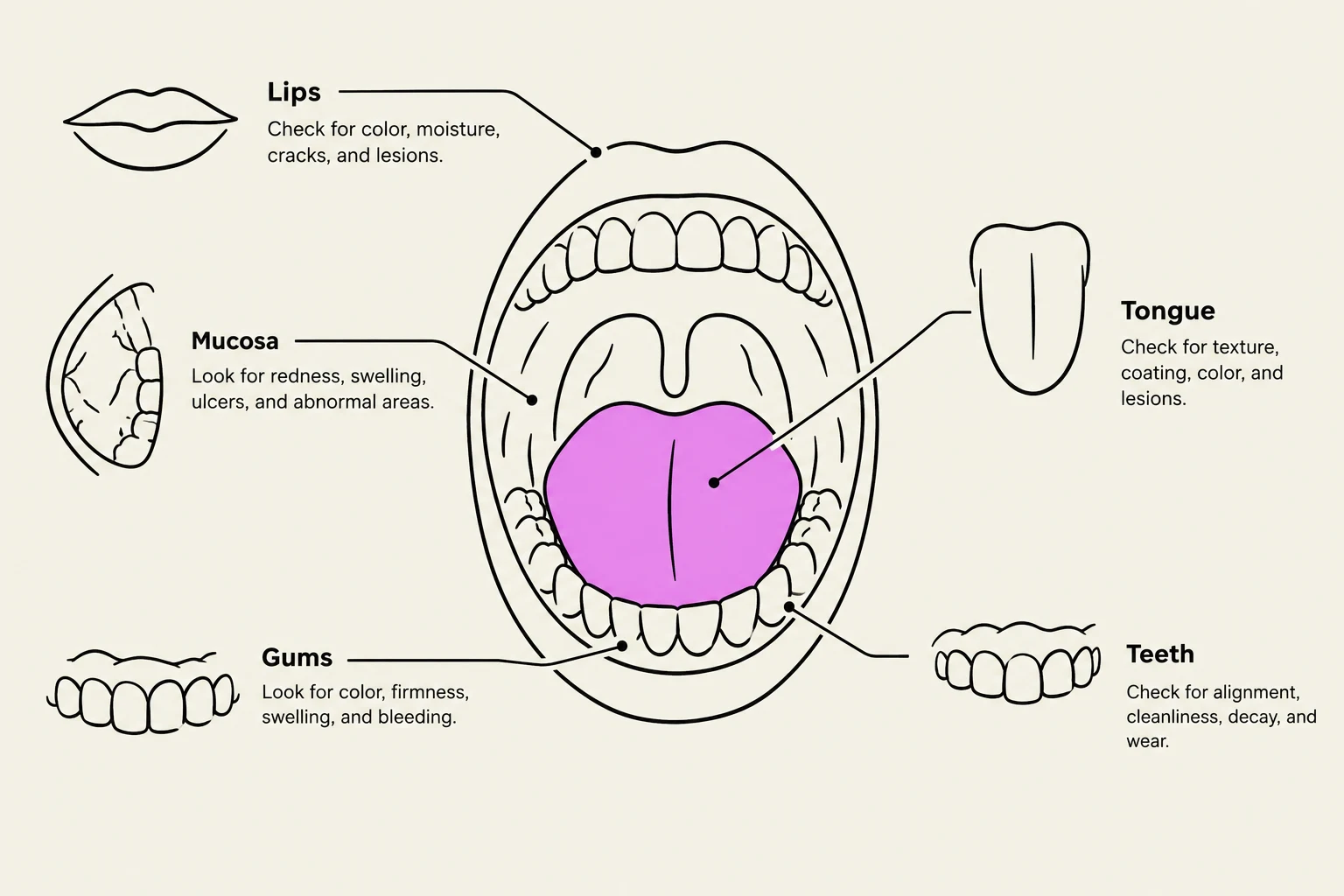
When performing oral care, the nurse must conduct a thorough assessment. This includes inspecting the lips, oral mucosa, tongue, gums, and teeth or dentures. Key observations include moisture levels, odor, presence of pain, lesions, bleeding, or any difficulty with swallowing.
Exam Tip: If a question asks for the "first" action in oral care, always prioritize assessing the client's ability to swallow and their level of consciousness to determine the appropriate safety precautions.
Oral Care for Conscious vs. Decreased Consciousness
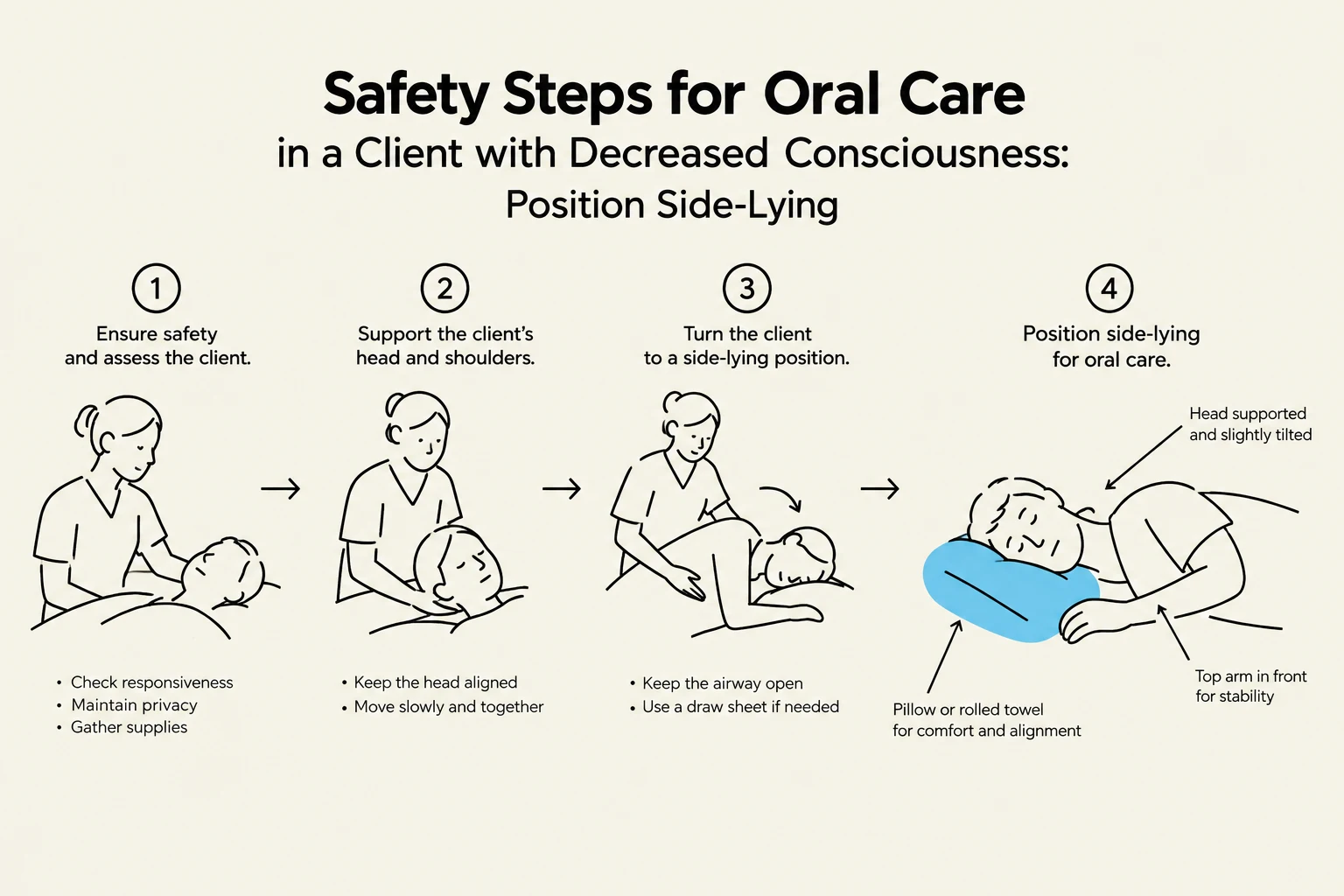
The approach to oral care changes significantly based on the client's neurological status and ability to protect their airway.
Keep reading for free.
Create an account to finish this reading and make it part of your study routine.
Continue reading freeAlready have an account? Log in
Updated