Opioid Agonists, Antagonists, and Antimigraine Agents Pharmacology
This pharmacology resource covers the therapeutic actions, adverse effects, nursing implications, and patient teaching for opioid agonists, opioid antagonists, and triptan antimigraine agents.
Understanding the management of acute and chronic pain, as well as debilitating migraine headaches, is a cornerstone of nursing practice. This requires a deep dive into three distinct but clinically related classes of medications: opioid agonists, which activate pain-relief receptors; opioid antagonists, which reverse the effects of those agonists; and triptans, which target the vascular components of migraines.
Neurobiology of Opioid Receptors
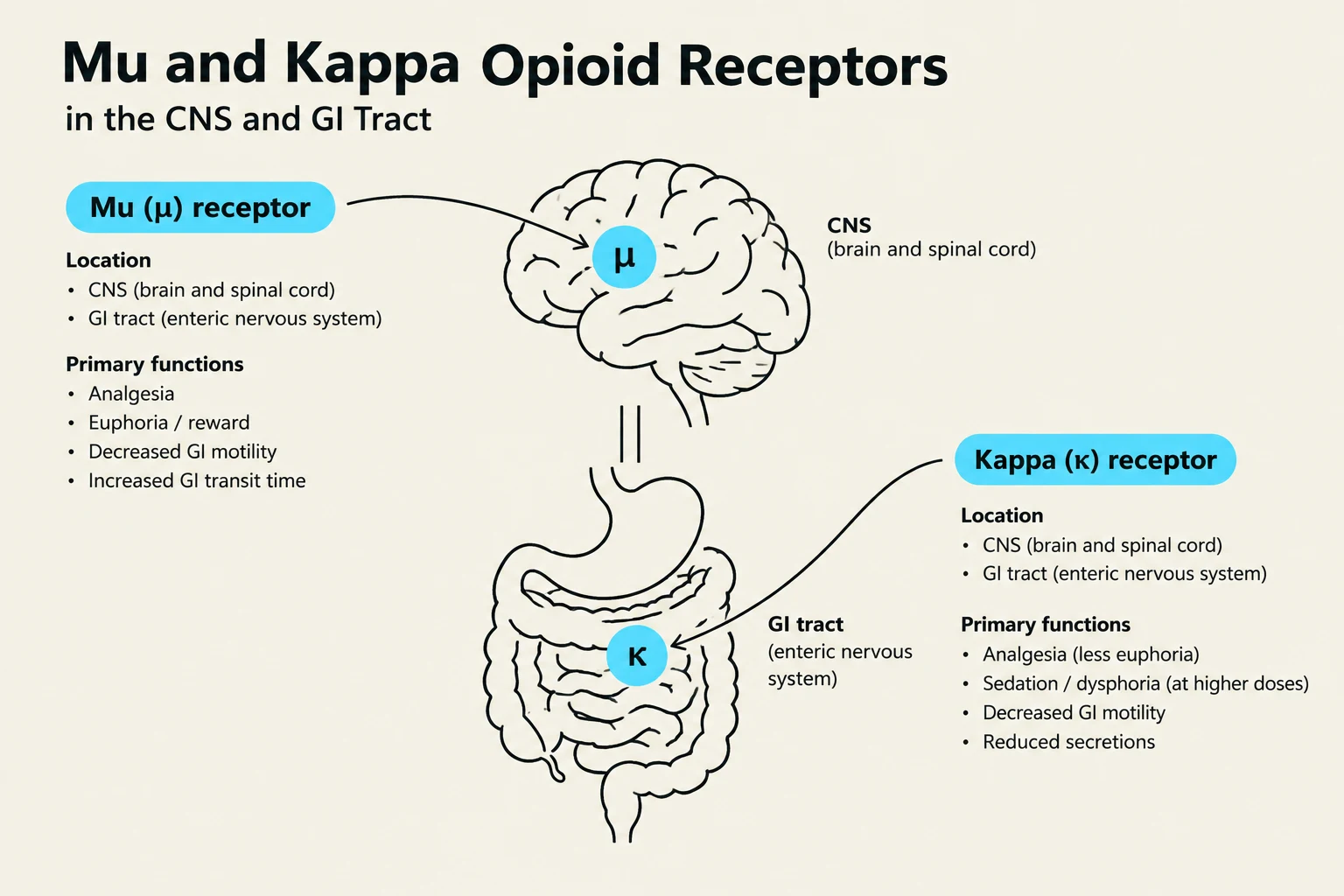
To understand how these drugs work, we must first look at the receptors they target in the Central Nervous System (CNS) and the peripheral nervous system. Opioids primarily interact with two types of receptors: Mu (μ) and Kappa (κ).
Mu (μ) Receptors
Located in the brain, spinal cord, GI tract, and peripheral sensory neurons, these receptors are the primary targets for most clinical opioids. Activation of Mu receptors results in:
Analgesia: Significant reduction in pain perception.
Respiratory Depression: Slowing of the breathing rate.
GI Effects: Decreased motility (leading to constipation).
CNS Effects: Euphoria, mood regulation, and reward/pleasure reinforcement.
Physical Effects: Miosis (pinpoint pupils).
Kappa (κ) Receptors
Found primarily in the hypothalamus and spinal cord, these receptors offer a different profile:
Analgesia: Pain reduction, mostly in the brain and spinal cord.
Sedation: Regulation of sleep and sedation.
Psychological Effects: Can cause dysphoria (unpleasant feelings) and influence the stress response.
Diagram illustrating the locations and primary functions of Mu (μ) and Kappa (κ) opioid receptors in the Central Nervous System (CNS) and the Gastrointestinal (GI) tract.
Opioid Agonists: Mechanisms and Clinical Use
Opioid agonists are medications that "activate" the receptors described above. Most hospital-prescribed opioids, such as Morphine, Fentanyl, and Hydromorphone, have strong Mu receptor activity.
Mechanism of Action
At the cellular level, opioid agonists block calcium from entering the presynaptic neuron, which decreases the release of neurotransmitters like Substance P and glutamate. Simultaneously, they allow potassium to exit the postsynaptic neuron, impairing the transmission of the pain signal. This results in both a reduction in the intensity of pain and a change in how the brain perceives the emotional response to that pain.
Common Opioid Agents
Medication
Typical Route
Clinical Notes
Morphine
PO, IV
Standard hospital baseline.
Fentanyl
IV
Highly potent; often used in infusions.
Hydromorphone
PO, IV
More potent than morphine.
Oxycodone/Hydrocodone
PO
Often combined with acetaminophen (e.g., Percocet, Vicodin).
Methadone
PO
Primarily used for maintenance, not typically started for acute pain.
Tramadol
PO
Unique: Low Mu/Kappa activity; works primarily on serotonin.
Clinical Tip: When you see "CONTIN" in a medication name (like Oxycontin), it signifies an extended-release, long-acting formulation. These are not for "as needed" (PRN) or short-term relief.
Adverse Effects and Nursing Implications
The side effect profile of opioids is significant and requires constant vigilance.
Common Effects: Constipation (the only side effect that rarely resolves without intervention), drowsiness, nausea/vomiting (via the Chemoreceptor Trigger Zone), and urinary retention.
Serious Effects:Respiratory depression and hypotension.
Nursing Assessments:
Pain Assessment: Always establish a baseline.
Vital Signs: Monitor respiratory rate and blood pressure. Note: Sedation often precedes respiratory depression; if a patient is excessively drowsy, monitor them closely.
Bowel Patterns: Assess GI function and implement stool softeners as needed.
Patient Teaching:
Avoid driving or operating heavy machinery.
Do not stop the medication abruptly to avoid withdrawal.
Store medications in a locked area away from children and pets.
Opioid Antagonists: Reversing the Effect
When an opioid overdose is suspected, or when an opioid's effects must be immediately halted, we use an opioid antagonist.
Naloxone
Naloxone is the primary antagonist used in clinical settings. Unlike agonists, naloxone binds strongly to the Mu receptors but does not activate them. Instead, it effectively "blocks" the receptor, displacing the opioid and reversing its effects.
This diagram illustrates how naloxone, an opioid antagonist, binds to mu receptors in the brain, displacing opioids and restoring respiratory function in cases of opioid-induced respiratory depression.
Pharmacokinetics & Nursing Care:
Onset: Rapid (2–5 minutes).
Half-life: Short (~30 minutes). Because the half-life of naloxone is often shorter than the opioid it is reversing, patients may require repeat doses as the opioid reattaches to the receptors.
Adverse Effects: Naloxone can cause Sudden Opioid Abstinence Syndrome, characterized by nausea, vomiting, sweating, chills, and agitation.
Nursing Priority: Stay with the patient until the overdose symptoms resolve. Monitor respiratory rate, BP, and pulse oximetry closely.
Antimigraine Agents: Triptans
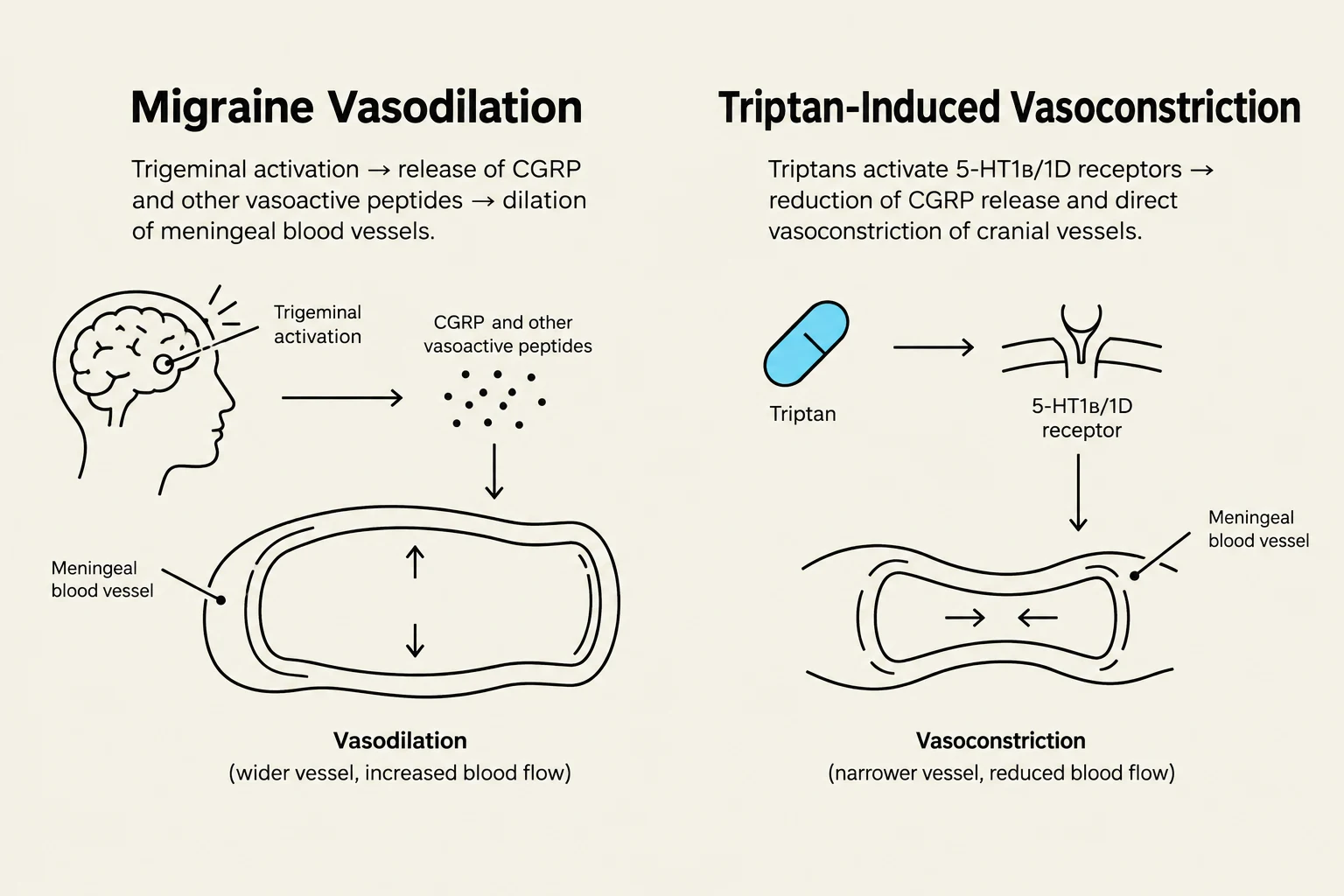
Migraine headaches are characterized by unilateral pulsating pain, nausea, and sensitivity to light and sound. While most migraines involve vasodilation, Triptans work through the opposite mechanism: vasoconstriction.
Sumatriptan
Sumatriptan is a selective serotonin receptor agonist that causes vasoconstriction of cranial vessels to relieve migraine symptoms.
Key Clinical Considerations:
Usage: Used for acute treatment of migraines or cluster headaches. It is not used for prevention.
Contraindications: Do not use in patients with Coronary Artery Disease (CAD), history of stroke, TIA, or uncontrolled hypertension, as the vasoconstrictive effect could be dangerous.
Interactions:
MAOIs: Risk of impaired metabolism.
SSRIs: Caution is required due to the risk of Serotonin Syndrome.
Ergotamines: Avoid use with ergot-containing drugs to prevent prolonged vascular constriction.
Adverse Effects:
Patients may experience tingling, warmth, or a feeling of tightness/pressure in the chest, neck, or jaw. While common due to vasoconstriction, any severe or persistent chest pain must be reported immediately to rule out angina or cardiac events.
This diagram illustrates the mechanisms of migraine vasodilation and triptan-induced vasoconstriction, showing how trigeminal activation leads to vasodilation and how triptans cause vasoconstriction by activating 5-HT1B/1D receptors.
Clinical Application: Putting it Together
Consider a patient presenting with a severe migraine (9/10 pain), nausea, and light sensitivity.
Potential Orders & Rationale:
Sumatriptan (6 mg SubQ): To cause cranial vasoconstriction and stop the acute migraine.
Hydromorphone (0.5 mg IV): To provide rapid analgesic relief for severe pain.
Ondansetron (4 mg IV): To manage nausea and vomiting.
Nursing Judgment:
As the nurse, you must monitor vital signs frequently (e.g., every 15 minutes initially) to ensure the patient does not develop hypotension from the opioid or hypertension/chest pain from the triptan.
Exam Tip: If a question asks about the priority assessment for a patient receiving an opioid, look for respiratory rate. If it asks about the priority for a triptan, look for cardiovascular history (BP and heart health).
Keep reading for free.
Create an account to finish this reading and make it part of your study routine.