The landscape of oncology has undergone a profound shift from traditional cytotoxic chemotherapy toward more precise therapeutic modalities. While traditional chemotherapy targets all rapidly dividing cell lines—often leading to significant systemic toxicity—biological and targeted agents are designed to exploit specific molecular characteristics of cancer cells. These agents aim to disrupt oncogenic pathways, starve tumors of resources, or recruit the patient's own immune system to destroy malignant cells.
However, precision does not equate to safety. These therapies possess very narrow therapeutic indexes, meaning the margin between an effective dose and a toxic dose is slim. Clinicians must remain vigilant, as the side effects of these agents can be severe and, in many cases, are a direct consequence of the biological pathways being targeted.
Biological Agents: Monoclonal Antibodies (mAbs)
Biological agents are typically large-molecule proteins derived from living organisms. A primary class of these agents is monoclonal antibodies (mAbs), which are engineered to bind to specific antigens on the surface of cancer cells. Once bound, these antibodies can either trigger the immune system to destroy the cell (via complement-mediated mechanisms) or be internalized to induce cell death.
Nomenclature and Origins
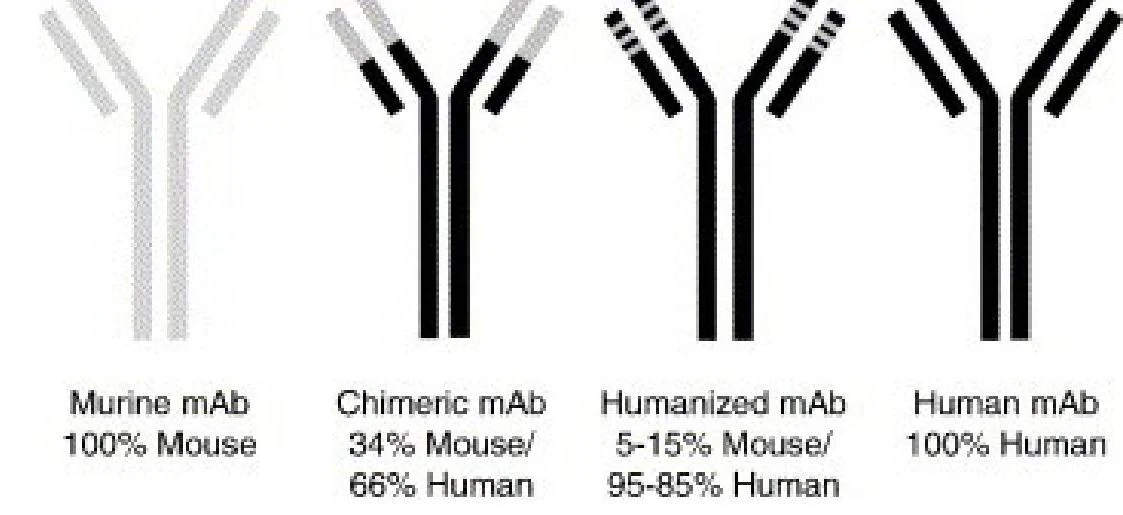
Historically, the suffix -mab indicates a monoclonal antibody. The letters preceding the suffix traditionally provided information about the antibody's origin:
-omab: Mouse origin
-ximab: Chimeric (part human, part mouse)
-zumab: Humanized (mostly human)
-umab: Fully human
Diagrams illustrating different types of monoclonal antibodies (mAbs): Murine, Chimeric, Humanized, and Human, showing their percentage of mouse and human components.
Exam Tip: While nomenclature is evolving to include terms like -tug (unmodified immunoglobulins) or -ment (fragments), the core concept is that these are large proteins designed for high specificity.
Clinical Examples and Toxicities
Because mAbs target specific receptors, their side effects are often "on-target" effects related to the function of that receptor in healthy tissue.
HER2/neu Targets: Trastuzumab is a classic example used in breast cancer. Because the HER2 receptor is also expressed in cardiac tissue, a major clinical concern is cardiotoxicity (e.g., decreased ejection fraction).
CD20+ Targets: Rituximab targets the CD20 antigen on B cells. Because it depletes B cells, it can lead to profound immunosuppression, increasing the risk of infections like Hepatitis B reactivation. A critical acute risk is Tumor Lysis Syndrome (TLS), caused by the rapid destruction of large numbers of cancer cells.
VEGF Targets: Bevacizumab (Avastin) inhibits angiogenesis (the growth of new blood vessels). This leads to specific risks including hypertension, proteinuria, and impaired wound healing.
Clinical Note: For patients on Bevacizumab, it is essential to monitor urine protein regularly and hold therapy prior to surgical procedures due to the risk of impaired wound healing.
Targeted Agents: Small Molecule Inhibitors
Unlike large-molecule biologics, targeted agents often consist of small molecules that can enter the cell to inhibit intracellular enzymatic functions. A major class of these is Tyrosine Kinase Inhibitors (TKIs).
Tyrosine Kinases (TKs) and TKIs
Tyrosine kinases are enzymes that play critical roles in signaling pathways regulating cell growth and division. They function by phosphorylating tyrosine groups on proteins, a process that requires transferring a phosphate from ATP. Mutations in these kinases can lead to constitutive (constant) signaling, driving uncontrolled malignancy.
TKIs work by binding to the ATP-binding pocket of the kinase, thereby preventing phosphorylation and halting the growth signal.
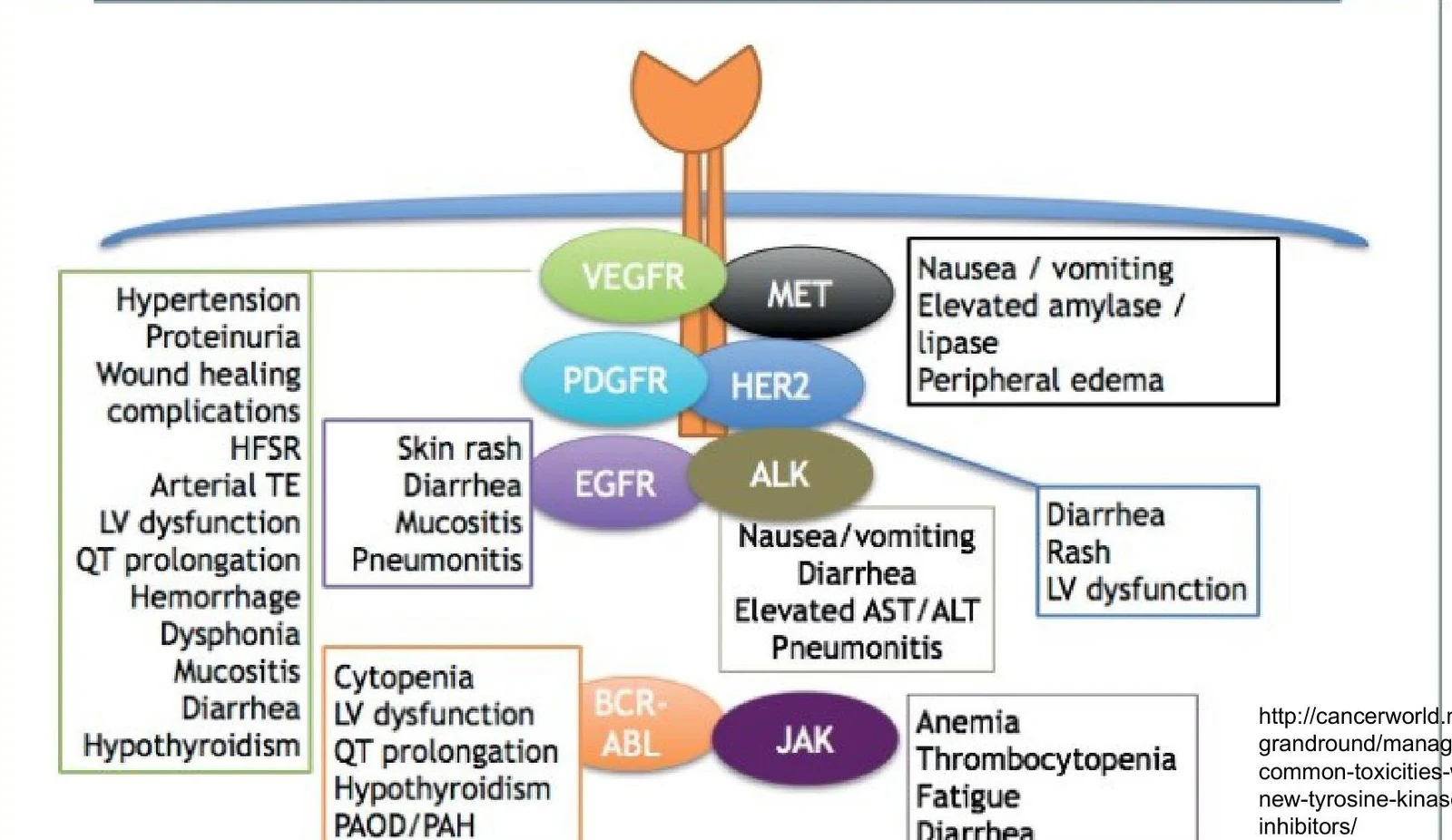
This diagram illustrates the side effects associated with various tyrosine kinase inhibitors, categorized by the targeted receptor or pathway.
Key Molecular Targets
BCR-ABL: An abnormal tyrosine kinase resulting from the translocation of genes on chromosomes 9 and 22; it is the driver of Chronic Myeloid Leukemia (CML). Drugs like Imatinib (Gleevec) target this.
EGFR (Epidermal Growth Factor Receptor): Involved in cell proliferation. Inhibitors like Cetuximab are used in colorectal and head and neck cancers.
Clinical Pearl: In colorectal cancer, Cetuximab is only effective in patients with "wild-type" KRAS genes; mutations in KRAS allow the cancer to bypass EGFR inhibition.
VEGFR (Vascular Endothelial Growth Factor Receptor): Targets angiogenesis. TKIs like Sorafenib or Sunitinib are used in renal and hepatocellular cancers.
ALK (Anaplastic Lymphoma Kinase): Targeted in certain Non-Small Cell Lung Cancers (NSCLC).
PARP (Poly ADP-ribose polymerase): Inhibitors like Olaparib are used in cancers with DNA repair deficiencies, such as ovarian or breast cancer.
BTK (Bruton's Tyrosine Kinase): Targeted in B-cell malignancies like CLL using drugs like Ibrutinib.
PI3K (Phosphoinositide 3-kinase): Targeted in various lymphomas and breast cancers.
KRAS G12C: A specific mutation targeted by newer agents like Sotorasib in NSCLC.
Metabolism and Drug Interactions
A critical pharmacokinetic feature of many small-molecule TKIs is that they are metabolized by the cytochrome P450 3A4 (CYP3A4) enzyme system. This creates a high potential for drug-drug interactions:
CYP3A4 Inhibitors (e.g., ketoconazole, clarithromycin): Can increase TKI levels, leading to toxicity.
CYP3A4 Inducers (e.g., phenytoin, rifampin, carbamazepine): Can decrease TKI levels, leading to treatment failure.
Specialized Mechanisms
mTOR Inhibitors
The Mammalian Target of Rapamycin (mTOR) is a protein kinase responsible for cell growth, proliferation, and autophagy. Inhibitors like Everolimus disrupt these processes. Unlike chemotherapy, their side effects—such as hyperglycemia and hyperlipidemia—are not due to rapid cell division but rather the disruption of metabolic signaling pathways.
Proteasome Inhibitors
Agents like Bortezomib inhibit the proteasome, the cell's "recycling center". By preventing the degradation of proteins, these drugs cause a buildup of misfolded proteins that triggers apoptosis (cell death). A notable risk with these agents is the activation of latent viruses, such as Herpes Zoster (shingles), necessitating prophylactic treatment with acyclovir.
Immunomodulators
Some agents, such as Lenalidomide, act as immunomodulators. These drugs are highly effective but carry significant risks of thrombosis and are potent teratogens.
Warning: Lenalidomide is a "cousin" to Thalidomide and requires strict pregnancy prevention programs (e.g., Revassist) due to the high risk of severe birth defects.
Summary Table of Key Clinical Correlations
Target
Example Agent
Primary Clinical Use
Key Toxicity/Note
HER2/neu
Trastuzumab
Breast Cancer
Cardiotoxicity
CD20+
Rituximab
NHL, CLL
Infusion reactions, TLS, Hep B reactivation
VEGF
Bevacizumab
Colorectal, Lung
HTN, Proteinuria, Impaired wound healing
EGFR
Cetuximab
Colorectal, Head/Neck
Skin rash (indicator of response), Low Mg
BCR-ABL
Imatinib
CML
Small molecule; CYP3A4 substrate
PARP
Olaparib
Ovarian, Breast
Small molecule inhibitor
Keep reading for free.
Create an account to finish this reading and make it part of your study routine.