


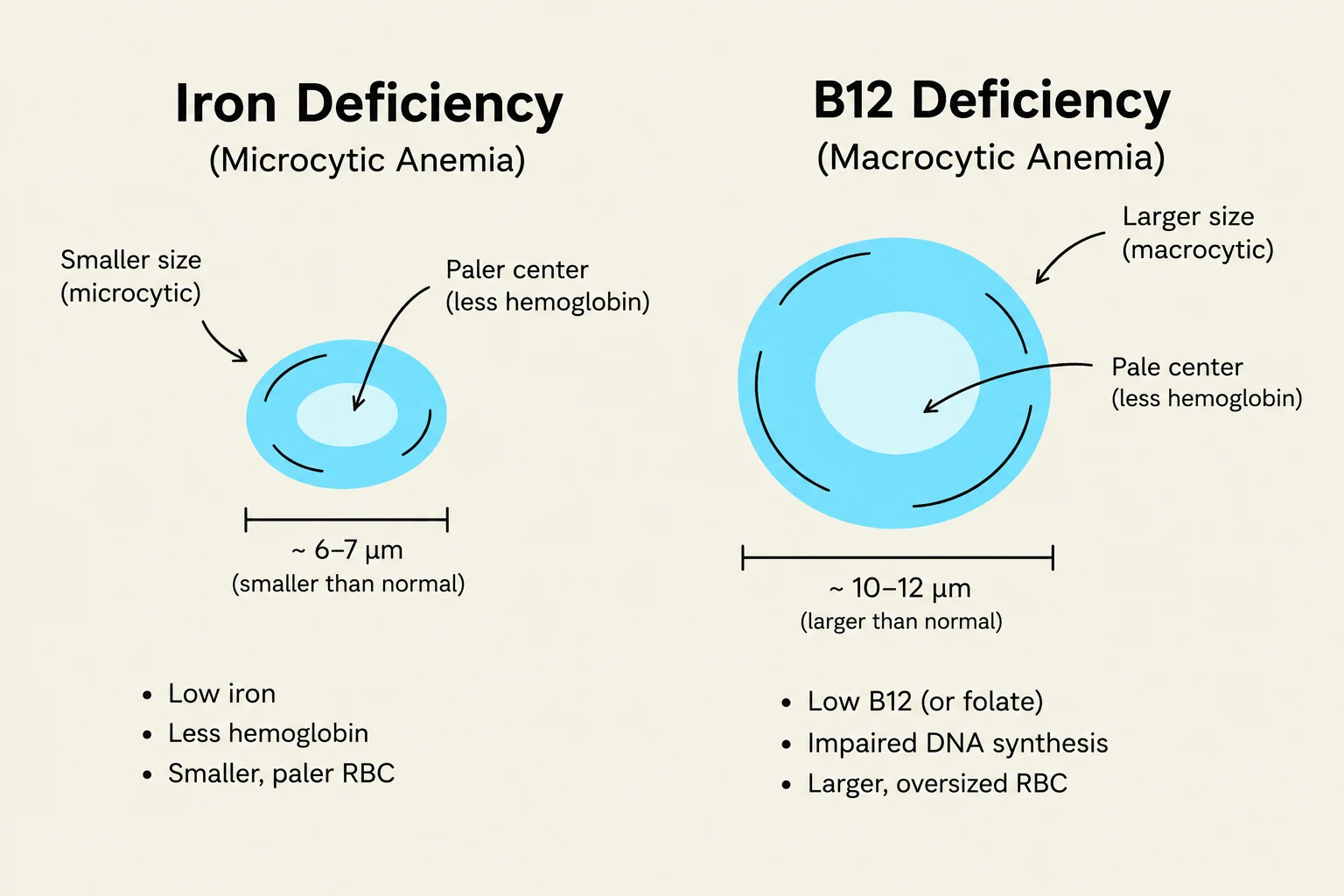
Anemia is a clinical condition characterized by a decrease in hemoglobin (Hb) concentration, which directly reduces the blood's capacity to transport oxygen to tissues. While anemia can stem from various causes—including chronic disease, hemolysis, or blood loss—nutritional deficiencies are among the most common drivers. To understand these deficiencies, one must first understand the distinction between the two primary ways they affect red blood cell (RBC) morphology: microcytic (small cells) and macrocytic (large cells).
The Fundamentals of RBC Development
The production of red blood cells, known as erythropoiesis, is a highly regulated process occurring in the bone marrow. When the body experiences hypoxia (low oxygen levels), the kidneys respond by secreting the cytokine erythropoietin (EPO), which stimulates the bone marrow to produce more erythrocytes.
The morphology of these cells depends on the availability of specific building blocks. If the cell lacks the components for hemoglobin, it will be small and pale (microcytic-hypochromic). If the cell lacks the components for proper DNA replication, the cell cycle is disrupted, leading to oversized, immature cells (macrocytic/megaloblastic).

Iron Deficiency Anemia (IDA)
Iron deficiency is the most common cause of anemia worldwide. Iron is the central component of the heme group within hemoglobin; without sufficient iron, the body cannot synthesize enough hemoglobin to fill the red blood cells.
Physiology and Absorption
Iron is absorbed in the small intestine, primarily in the ferrous () state. Once in the bloodstream, iron is transported by a protein called transferrin. The body stores excess iron in the form of ferritin.
Keep reading for free.
Create an account to finish this reading and make it part of your study routine.
Continue reading freeAlready have an account? Log in
Updated