Nutritional Assessment and Therapeutic Diets for Healthcare Professionals
This guide covers essential nursing responsibilities in nutrition management, including nutritional assessment techniques, understanding various therapeutic diets (texture-modified and disease-specific), and the administration of enteral and parenteral nutrition. It also addresses supplement-medication interactions and
Nutrition is a fundamental pillar of patient recovery and long-term health. For nurses, managing nutrition involves much more than simply ensuring a patient eats; it requires a comprehensive approach that includes assessing nutritional status, implementing prescribed therapeutic diets, managing specialized feeding methods like enteral and parenteral nutrition, and monitoring for dangerous supplement-medication interactions. Whether a client is recovering from surgery, managing a chronic disease like diabetes, or struggling with swallowing difficulties, the nurse's role is critical in preventing complications such as aspiration or malnutrition.
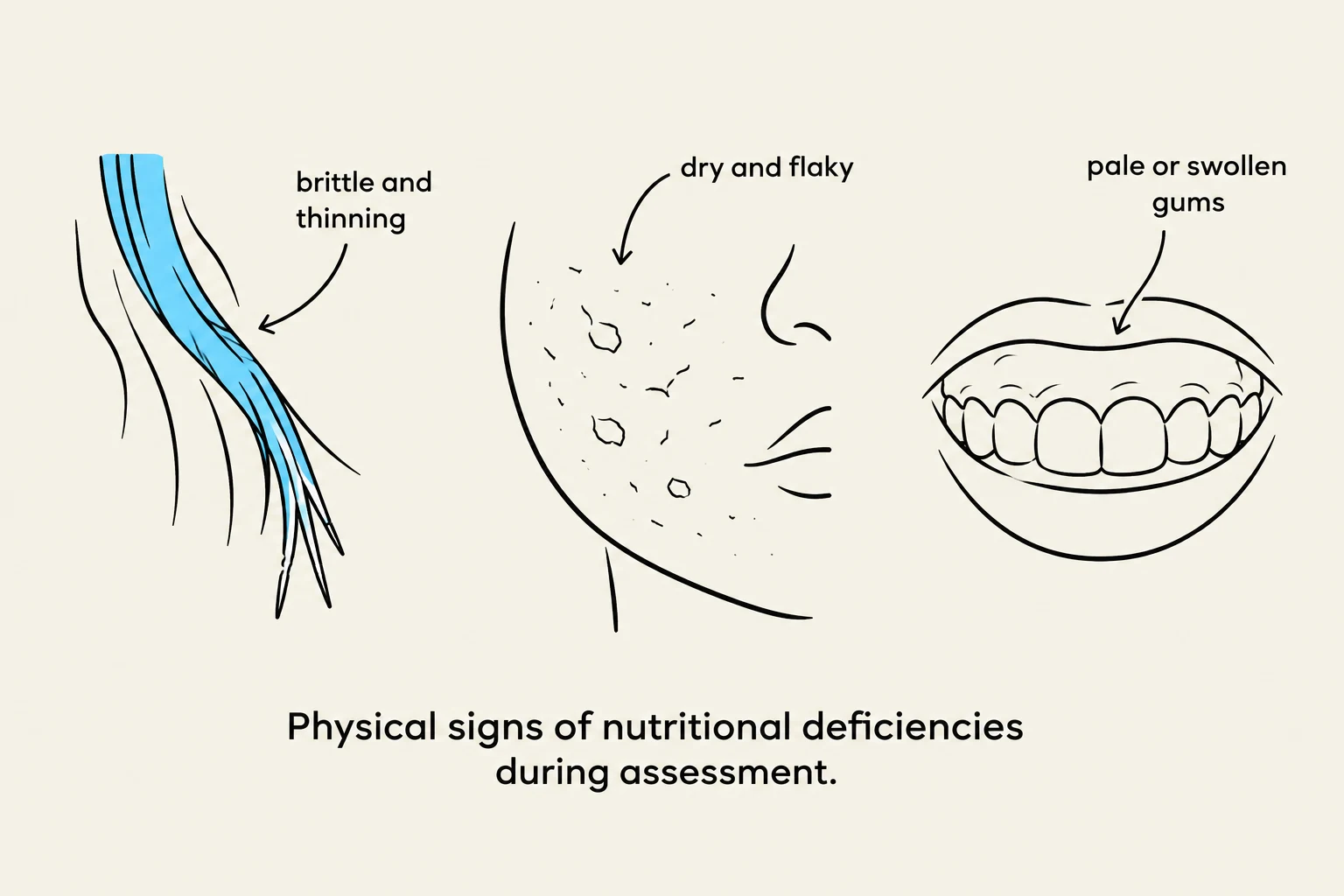
Physical signs of nutritional deficiencies during assessment, including brittle and thinning hair, dry and flaky skin, and pale or swollen gums.
Nutritional Assessment
To provide effective care, a nurse must first identify whether a client is meeting their nutritional needs. Nutritional assessment involves evaluating dietary habits, physical signs, and laboratory data to identify deficiencies or risks.
Subjective and Objective Data Collection
Nurses use several tools to understand a client's typical intake:
24-Hour Recall: This involves asking the client to describe everything they consumed over the previous 24 hours.
Food Frequency Questionnaire: This tool helps identify long-term dietary patterns rather than just a single day's intake.
Beyond what the client says, the nurse must perform physical inspections. Changes in hair (brittle or loss), skin (dryness or poor healing), and teeth/gums can indicate specific nutrient deficiencies. Monitoring weight trends and Body Mass Index (BMI) is also essential.
NCLEX Tip: If a client reports symptoms such as fatigue and poor wound healing, the nurse should prioritize evaluating protein status by checking laboratory markers like prealbumin.
Calculating BMI
BMI is a tool used to categorize a person's weight relative to their height. The formula is:
BMI=(height in inches2weight in lbs)⋅703
For example, a client who is 5'4" (64 inches) and weighs 170 lbs would calculate as follows:
170/642.6562/640.0415⋅703=2.6562=0.0415=29.17
A BMI of 29.17 falls into the overweight category.
Therapeutic Diets
Providers prescribe specific diets to manage medical conditions or physiological needs. Nurses must ensure the client receives the correct texture and nutrient composition to prevent complications.
Texture-Modified Diets
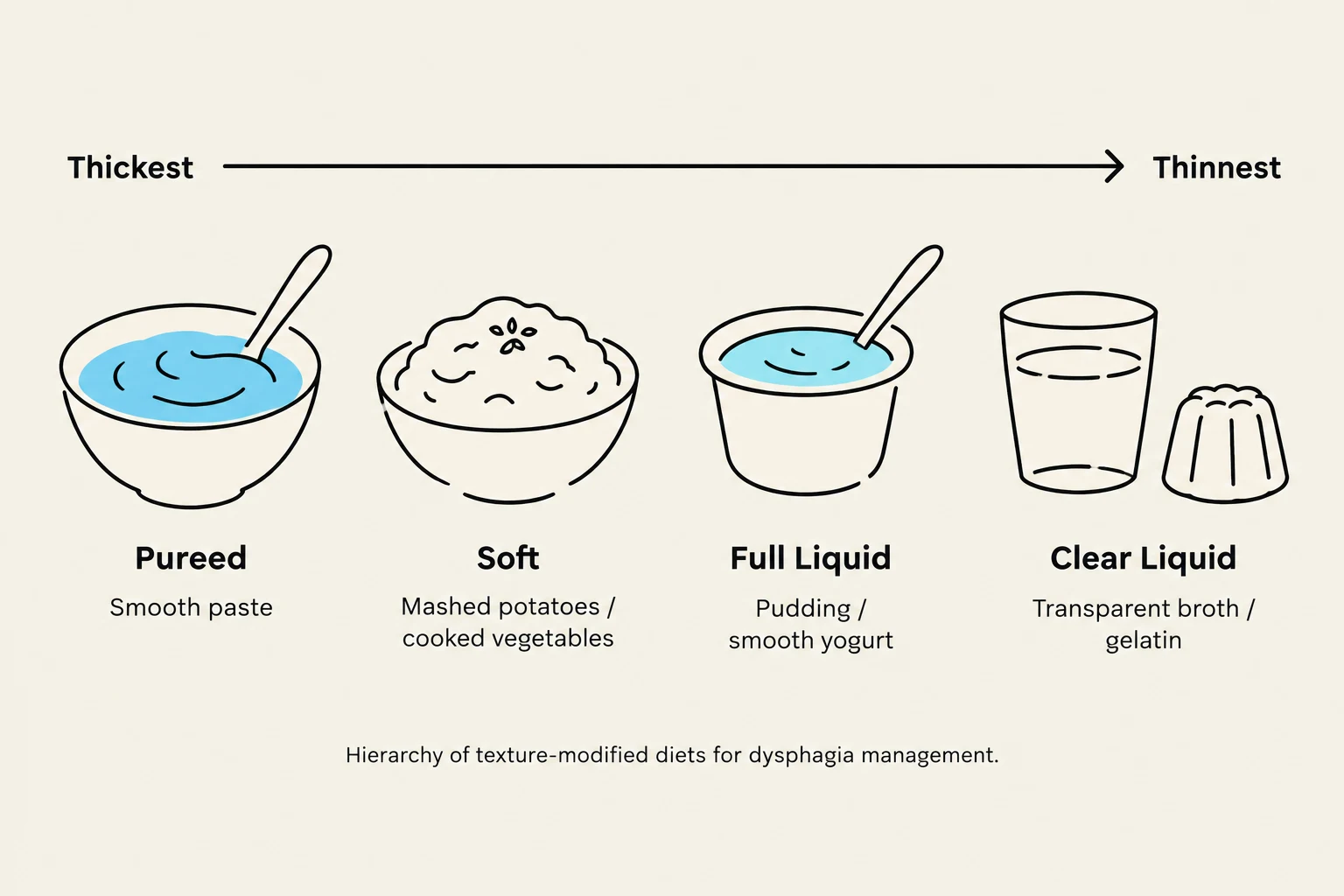
Hierarchy of texture-modified diets for dysphagia management, illustrating pureed, soft, full liquid, and clear liquid consistencies.
These are often used for clients with dysphagia (difficulty swallowing) to prevent aspiration (the passage of food/liquid into the lungs):
Regular Diet: A balanced diet with no restrictions.
Soft Diet: Low-fiber, easy-to-digest foods.
Pureed Diet: Smooth, texture-modified foods requiring no chewing (e.g., yogurt).
Full Liquid Diet: Includes liquids and foods that turn to liquid at room temperature (e.g., pudding).
Clear Liquid Diet: Transparent liquids like broth or gelatin. Note: Avoid red-colored liquids during certain procedures to prevent confusion with bleeding.
Disease-Specific Diets
Heart-Healthy Diet: Focuses on limiting sodium, saturated fats, and trans fats while increasing whole grains and lean proteins.
Renal Diet: Designed for kidney disease to prevent the buildup of sodium, potassium, and phosphorus. Excess potassium can lead to dangerous dysrhythmias, and excess phosphorus can pull calcium from the bones.
Fat-restricted Diet: Often prescribed for conditions like an inflamed gallbladder.
Diabetic Diet: Focuses on managing blood glucose through balanced carbohydrate intake and fiber.
Enteral and Parenteral Nutrition
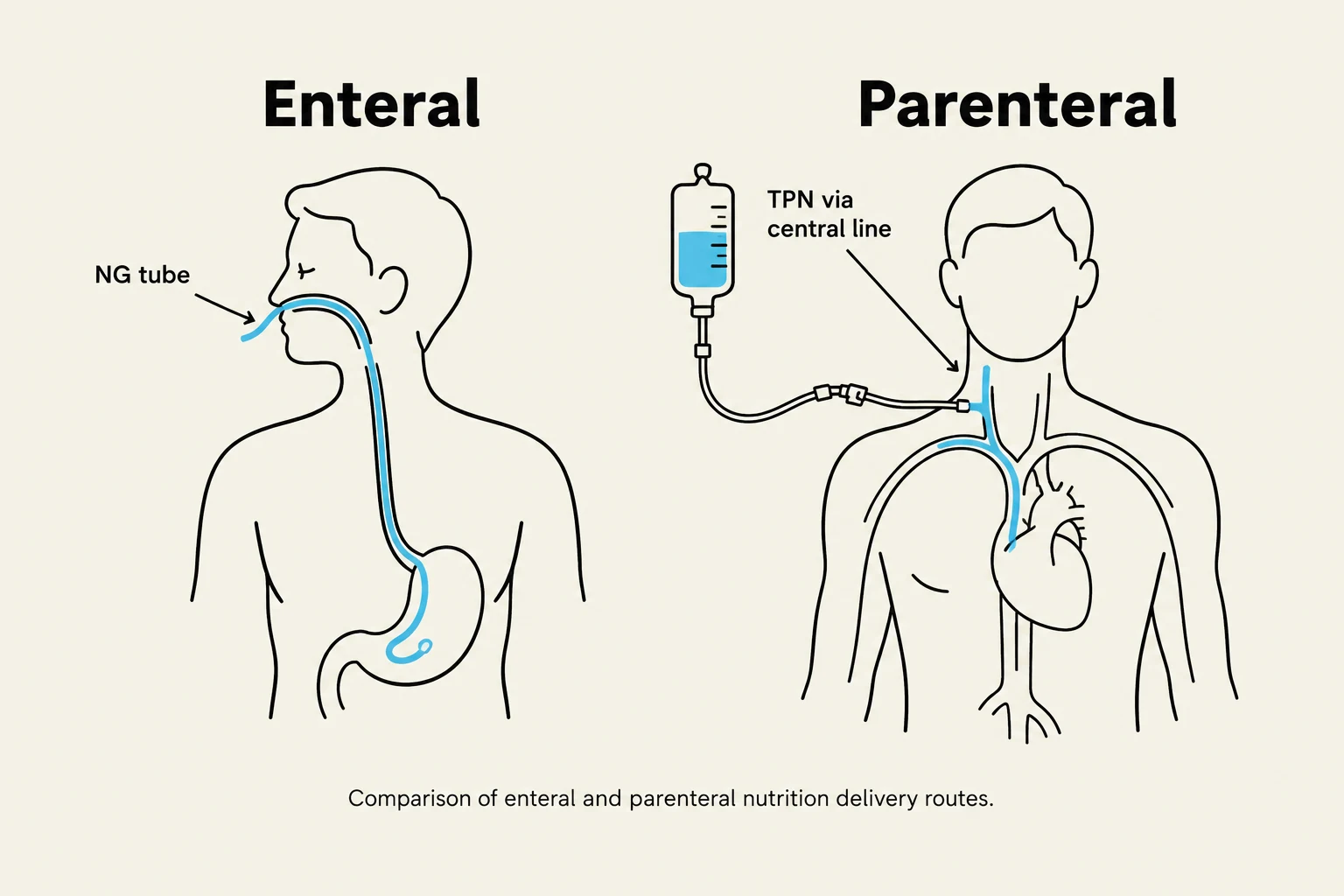
Comparison of enteral and parenteral nutrition delivery routes.
When oral intake is insufficient or unsafe, specialized feeding methods are required.
Enteral Nutrition (Tube Feeding)
Enteral nutrition is delivered via a tube into the gastrointestinal tract (e.g., NG, NJ, or G-tubes).
Priority Nursing Action: Before initiating an intermittent feeding via a nasogastric (NG) tube, the nurse's absolute priority is to verify tube placement to prevent aspiration.
Maintenance: Nurses should elevate the head of the bed (HOB) during feeding, monitor for bowel sounds, and check residual volumes.
Parenteral Nutrition (IV Feeding)
Parenteral nutrition is administered intravenously when the GI tract is non-functional. This can be Partial Parenteral Nutrition (PPN) via a peripheral vein or Total Parenteral Nutrition (TPN) via a central venous catheter.
Monitoring a patient on parenteral nutrition is intensive. Nurses must perform daily tracking of:
Weights
Electrolyte levels
Glucose levels (to monitor for hyperglycemia)
Protein markers (prealbumin, albumin, and total protein).
Nutritional Supplements and Nursing Care
Supplements can help address specific deficiencies, such as Folic acid for pregnancy or Omega-3 for heart and brain health. However, they are not a replacement for whole foods.
Supplement-Medication Interactions
Nurses must be vigilant regarding dangerous interactions:
Vitamin K: Can reduce the effectiveness of the anticoagulant warfarin.
St. John’s Wort: Can interfere with antidepressants and birth control.
Delegation and Safety
While the nurse is responsible for assessment and clinical judgment, certain tasks can be delegated. For example, assisting a patient with meals is a task that can be safely delegated to unlicensed assistive personnel (UAPs) or nursing assistants.
Keep reading for free.
Create an account to finish this reading and make it part of your study routine.