An overview of nutritional assessment within the nursing process, covering dietary intake, anthropometric data, biochemical data, and clinical observations. It also details nursing diagnoses, outcome planning, implementation, and evaluation of nutritional care.
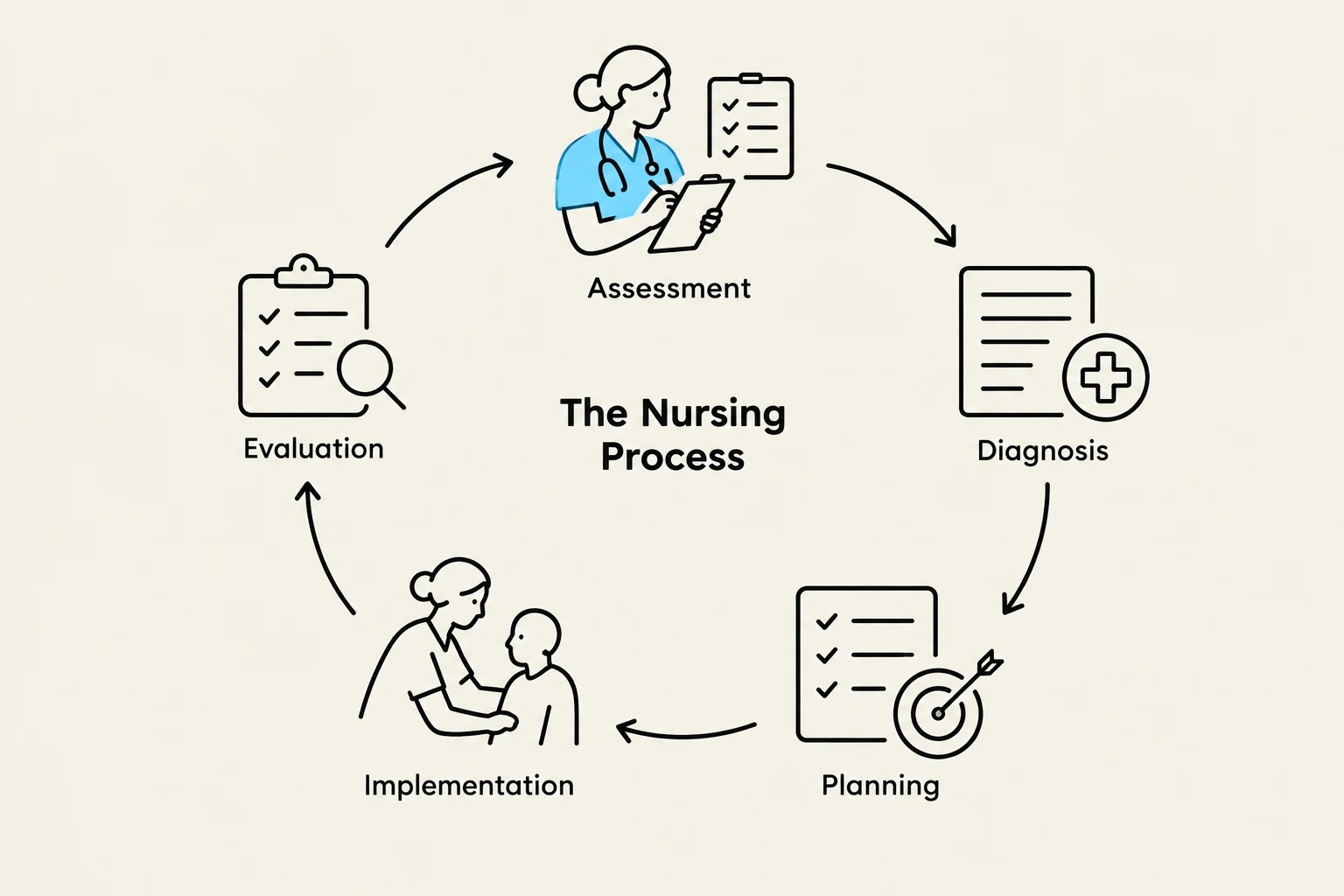
Nutrition is the study of how nutrients are handled by the body and how human behavior and the environment impact the process of nourishment. For nurses, managing a patient's nutritional status is a critical component of holistic care. To do this effectively, nurses utilize the nursing process—a systematic method of assessment, diagnosis, planning, implementation, and evaluation—to identify nutritional imbalances and implement life-sustaining interventions.
The Nursing Process is a systematic method of providing nursing care that includes assessment, diagnosis, planning, implementation, and evaluation.
Nutritional Assessment
The assessment phase is the foundation of nutritional care. A nurse must collect comprehensive data to form a complete picture of a patient's health. This involves several distinct categories of information:
Dietary Intake: Evaluating what the patient actually consumes.
Anthropometric Data: Physical measurements of the body.
Biochemical Data: Laboratory results that indicate internal nutritional status.
Medical and Socioeconomic Data: Understanding the patient's medical history as well as social and economic factors that may limit food access.
Anthropometric Data and BMI
Anthropometric data provides objective physical measurements, most notably height and weight. These measurements are used to calculate the Body Mass Index (BMI), a standard tool for screening weight categories.
In the United States, the formula for calculating BMI is:
BMI=height (in)2weight (lbs)×703
Study Tip: While BMI is a useful screening tool, always correlate it with clinical observations and biochemical data to get a full picture of the patient's nutritional health.
Biochemical Data
Laboratory values offer a "window" into the body's cellular nutrition that physical exams might miss. Key indicators include:
Lab Test
Normal Range
Clinical Significance
Prealbumin
19–38 mg/dL
Decreased: Indicates protein depletion or malnutrition.
Albumin
3.5–5.2 g/dL
Decreased: Indicates malnutrition.
Total Protein
6.0–8.0 g/dL
Decreased: Indicates reduced muscle mass or severe malnutrition.
Blood Urea Nitrogen (BUN)
6–20 mg/dL
Increased: Starvation, high protein, or dehydration. Decreased: Malnutrition, low-protein diet, or overhydration.
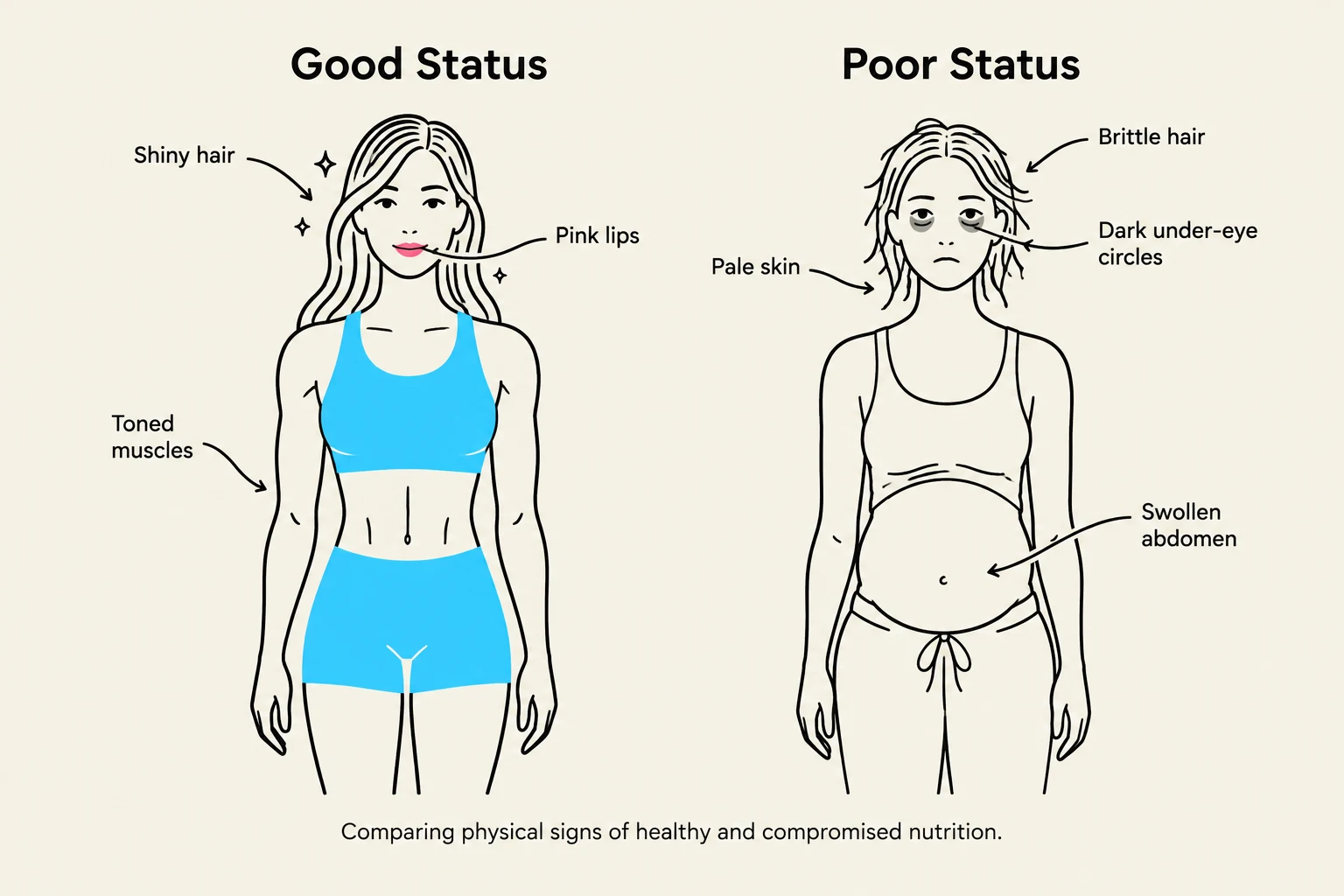
Comparison of physical signs indicating good and poor nutritional status, including hair condition, skin tone, lip color, muscle tone, and abdominal appearance.
A nurse's physical assessment can reveal immediate signs of nutritional status. By observing the patient's skin, hair, nails, and psychological state, the nurse can differentiate between healthy and compromised status.
Signs of Good Nutritional Status:
Alert and energetic with psychological stability.
Shiny, lustrous hair and smooth, uniform-colored skin.
Pink, moist lips and no dental cavities.
Firm nails and well-developed/toned muscles.
Normal vital signs (Heart Rate and Blood Pressure).
Signs of Poor Nutritional Status:
Listless or easily fatigued.
Dry, brittle hair and pale skin.
Dark skin under the eyes or a swollen abdomen.
Missing teeth or spoon-shaped nails.
Difficulty walking or experiencing depression.
Nursing Diagnoses
Once the assessment is complete, the nurse identifies the problem. In the context of nutrition, the imbalance can be either the primary problem or the etiology (the cause).
Nutrition as the Problem:
Imbalanced Nutrition: Less Than Body Requirements: The patient is not consuming enough nutrients.
Obesity: Excessive accumulation of body fat.
Risk for Overweight: A potential for gaining excessive weight.
Impaired Swallowing: A physical difficulty that prevents adequate intake.
Nutrition as the Etiology (The Cause):
A nutritional problem may be caused by other factors, such as:
The goal of the nursing care plan is to maintain or restore optimal nutritional status. Implementation involves several nursing interventions:
Nutritional Education: Teaching the patient about diet and nutrient importance.
Monitoring: Regularly checking weight, intake, and lab values.
Simulating Appetite: Using techniques to encourage hunger.
Assisting with Eating: Providing physical help during mealtimes.
Types of Diets
A diagram illustrating different types of diet orders, categorized into Modified Consistency and Therapeutic diets, with examples for each.
Nurses must be familiar with various diet orders to ensure patient safety and therapeutic efficacy:
Standard Diets: Regular or Vegetarian.
Modified Consistency Diets: These are used for patients with swallowing or chewing difficulties. They include Clear Liquid, Full Liquid, Pureed, or Mechanically Altered diets.
Therapeutic Diets: These are prescribed to manage specific medical conditions:
Consistent-Carbohydrate: For glucose management.
Fat-Restriction: For cardiovascular health.
High-Fiber / Low-Fiber: For GI management.
Sodium-Restricted: For hypertension or edema.
Renal Diet: For kidney disease.
NPO (Nothing by Mouth): Used when the patient must not ingest anything orally (e.g., before surgery).
Nutritional Evaluation
The final step of the nursing process is evaluation. The nurse must determine if the interventions were successful by assessing:
Progress: Is the patient meeting the established nutritional goals?
Tolerance: Is the patient able to tolerate and adhere to the prescribed diet?
Understanding: Does the patient comprehend the diet and the necessary interventions?
Communication: Is the patient communicating their needs effectively?
Revision: Based on the findings, does the care plan need to be revised?
Keep reading for free.
Create an account to finish this reading and make it part of your study routine.