


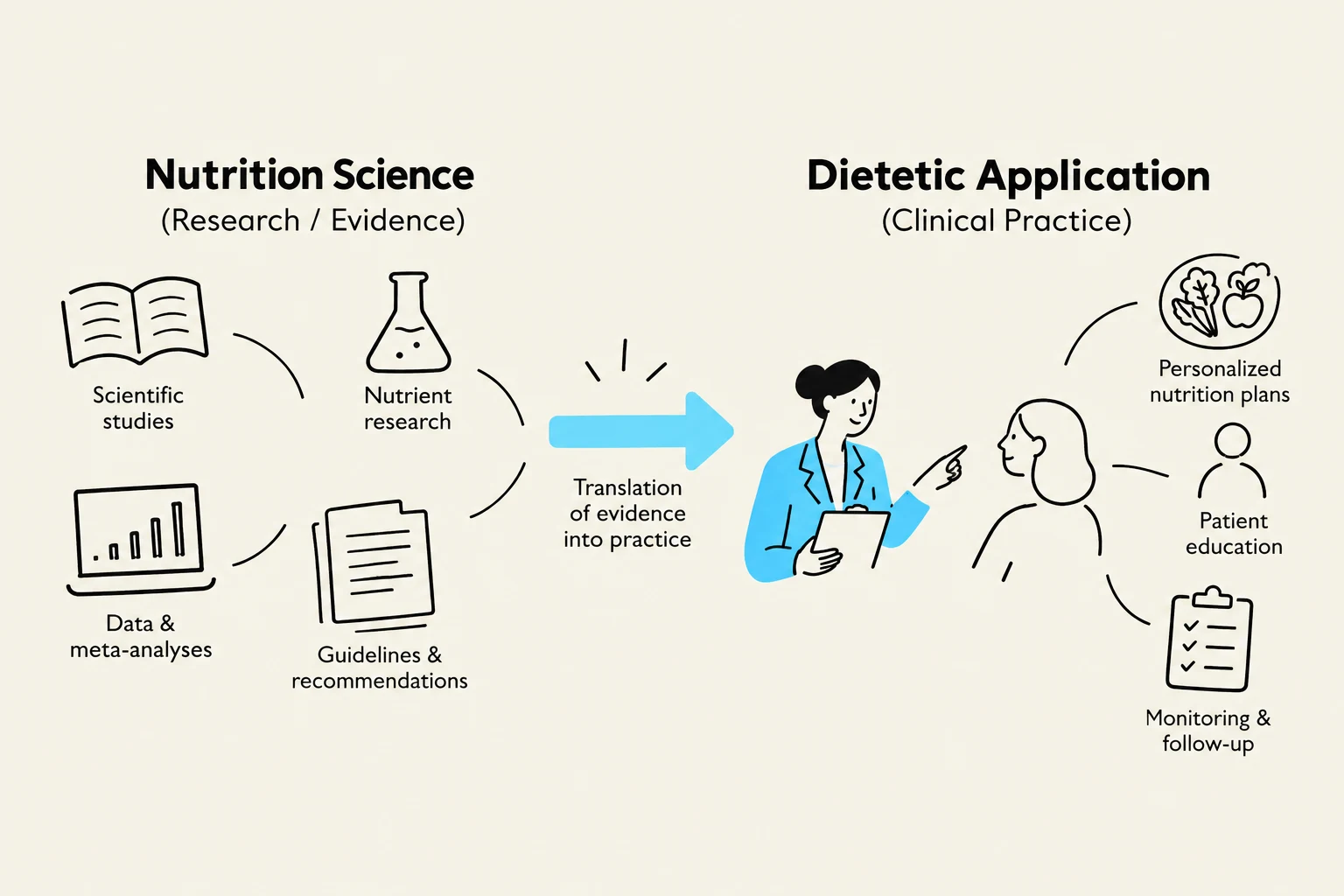
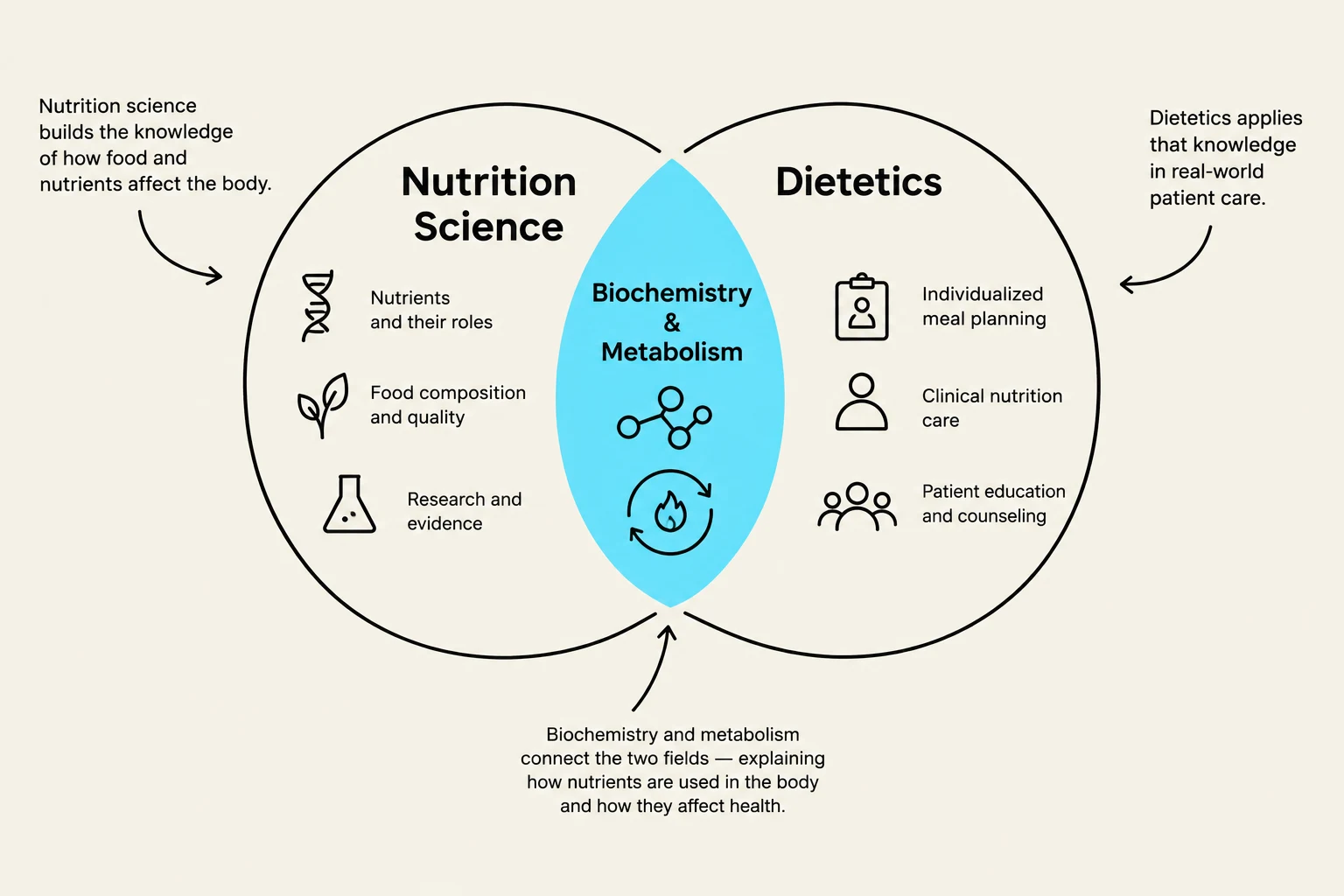
When students first enter the field of nutritional health, the terms "nutrition" and "dietetics" are often used interchangeably in casual conversation. However, in a professional and academic context, these two disciplines represent distinct stages of a single continuum. Understanding this distinction is fundamental to mastering the field: one provides the theoretical "why" behind human health, while the other provides the practical "how" of therapeutic intervention.
The Core of Nutrition Science
Nutrition science is the foundational, research-oriented discipline that seeks to understand the biological and chemical processes involved in how the body interacts with food. It is a rigorous scientific field that investigates how nutrients—such as macronutrients (carbohydrates, proteins, fats) and micronutrients (vitamins, minerals)—affect physiological functions at the cellular and systemic levels.
At its heart, nutrition science asks questions like:
- How does a specific amino acid influence muscle protein synthesis?
- What is the metabolic pathway of glucose during fasting?
- How do antioxidants mitigate oxidative stress in human cells?
This discipline relies heavily on the scientific method, utilizing controlled laboratory studies, epidemiological research, and biochemical analysis to build a body of evidence. It is the "discovery" phase of the field, where new truths about human metabolism are uncovered and validated through peer-reviewed research.
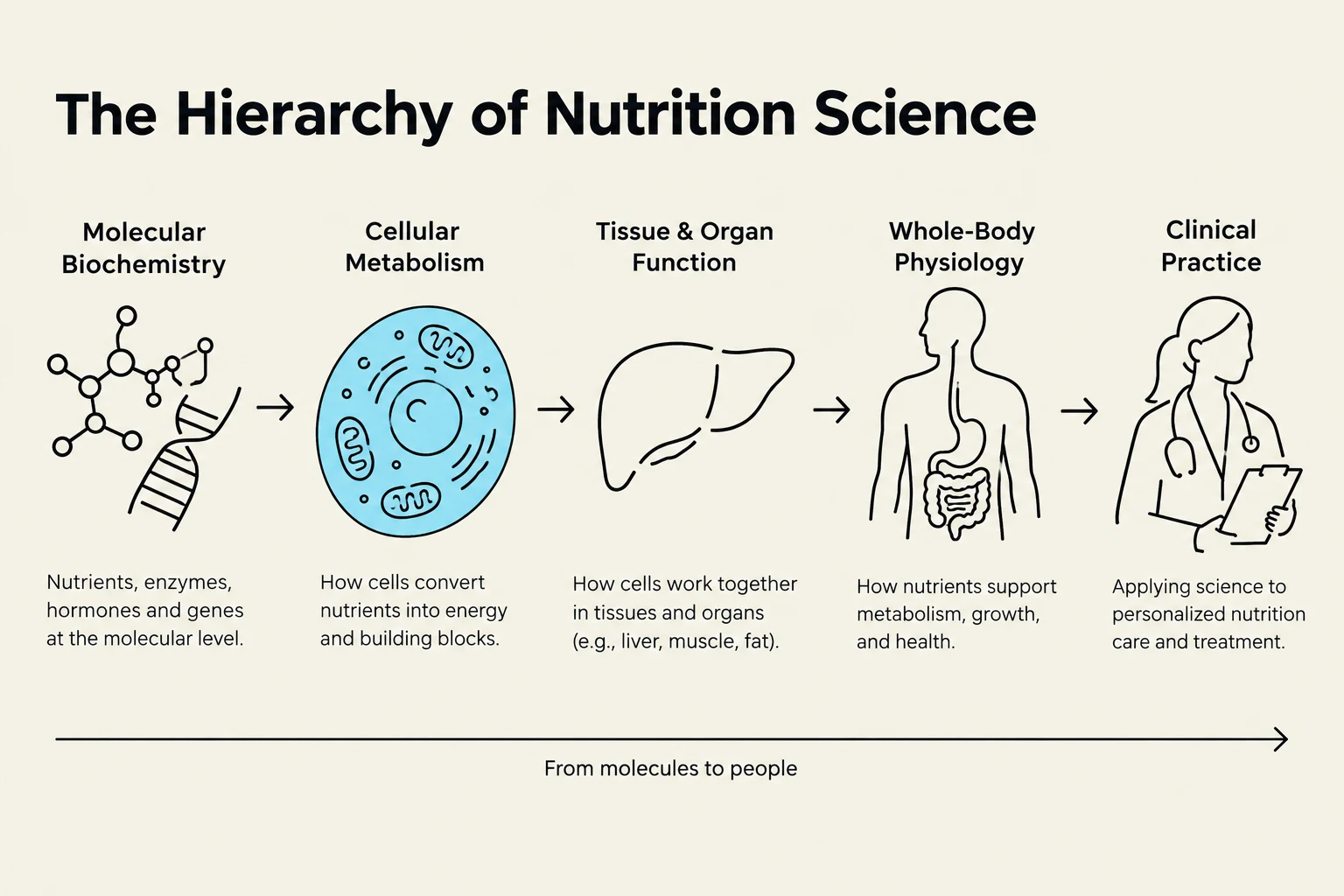
Exam Tip: If a question asks about the mechanism of a nutrient (e.g., "How does Vitamin D affect calcium absorption?"), it is referring to Nutrition Science. If it asks about the application of that knowledge (e.g., "How much Vitamin D should a patient with osteoporosis receive?"), it is referring to Dietetics.
Keep reading for free.
Create an account to finish this reading and make it part of your study routine.
Continue reading freeAlready have an account? Log in
Updated