


In the clinical environment, healthcare professionals use different types of diagnoses to guide patient care. While they are often discussed in the same breath, a medical diagnosis and a nursing diagnosis serve two distinct purposes. Understanding this distinction is fundamental to mastering the nursing process and developing the clinical judgment necessary for safe, effective patient care.
The Core Distinction: Pathology vs. Response
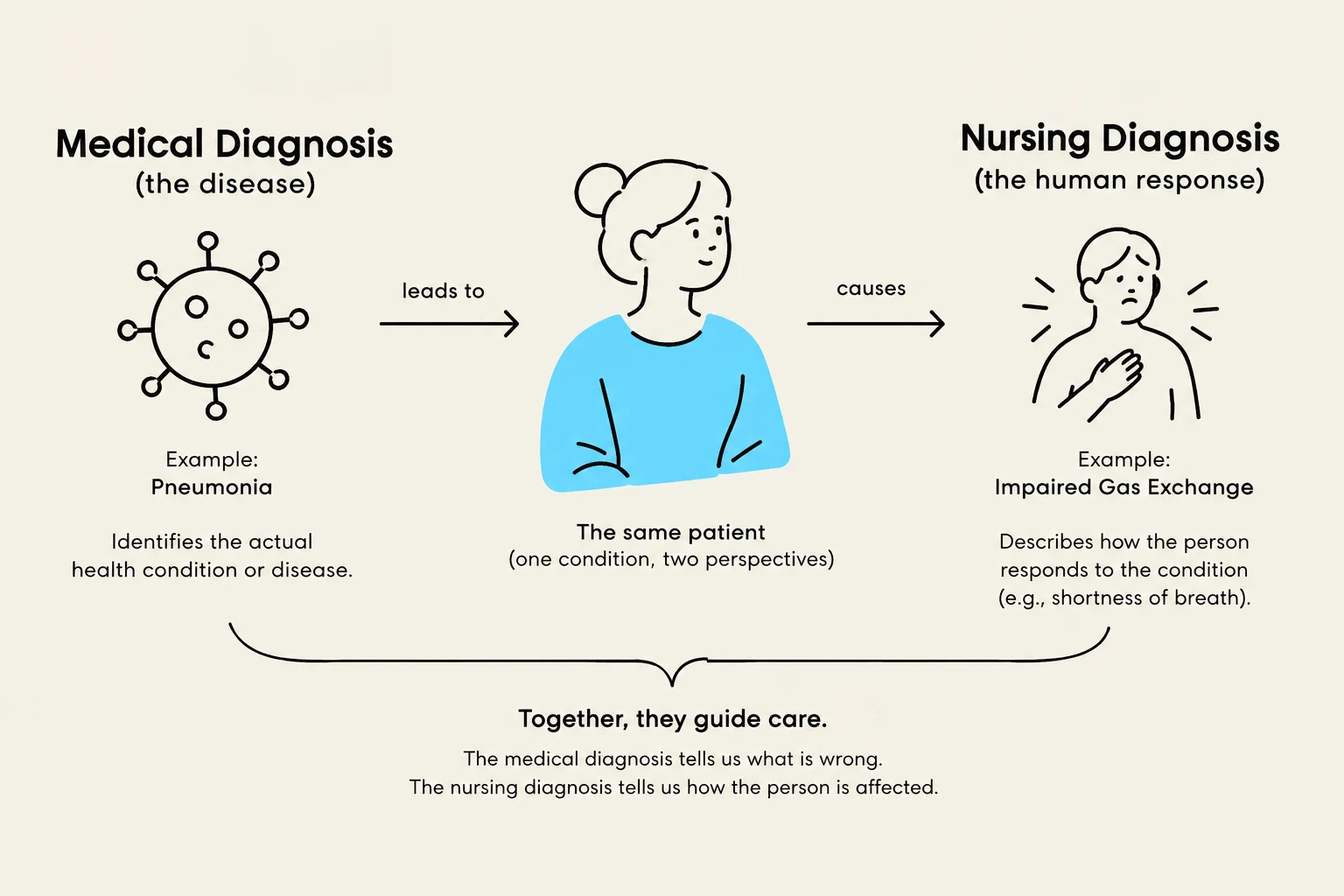
The primary difference between these two concepts lies in their focus. A medical diagnosis identifies a specific disease, condition, or pathology. It focuses on the biological or physiological malfunction within the body. For example, a medical diagnosis might be "Diabetes Mellitus" or "Pneumonia."
In contrast, a nursing diagnosis focuses on the human response to those health conditions or to existing life processes. A nurse does not treat the pneumonia itself—that is the role of the physician—but the nurse treats the patient's response to the pneumonia, such as "Ineffective Airway Clearance" or "Impaired Gas Exchange."
Exam Tip: When answering questions about the nursing process, remember that nursing diagnoses describe a client's response or vulnerability, whereas medical diagnoses identify the disease.
Categorizing Nursing Diagnoses
Nursing diagnoses are not all the same; they are categorized based on whether the patient is currently experiencing a problem or is at risk for one.
Keep reading for free.
Create an account to finish this reading and make it part of your study routine.
Continue reading freeAlready have an account? Log in
Updated