Nursing Theory and Objectives for Suicide Prevention
This content explains the nursing process for suicide prevention, emphasizing the distinction between suicide as a behavior versus a diagnosis. It covers assessment, risk factors, therapeutic communication, and collaborative safety planning for effective intervention and long-term management.
In the field of psychiatric-mental health nursing, one of the most critical distinctions a clinician must make is understanding the nature of suicide itself. Contrary to common misconceptions, suicide is not a clinical diagnosis, nor is it classified as a mental disorder. Instead, suicide is defined as a specific behavior. Because it is a behavior rather than a disease, nursing care focuses on the assessment of risk, the management of environmental safety, and the implementation of therapeutic interventions designed to mitigate that behavior.
Understanding the Landscape: Statistics and Risk
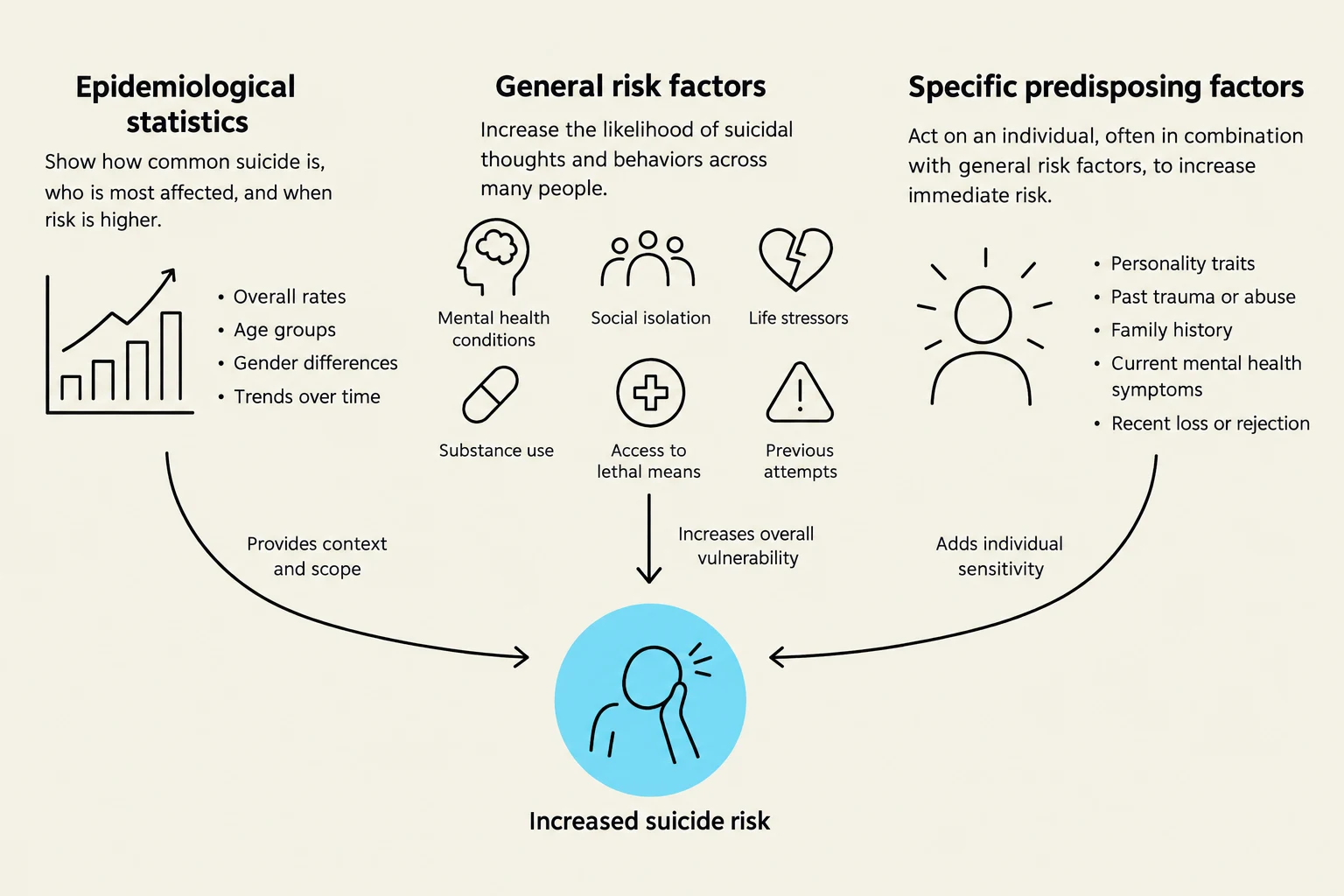
To provide effective care, a nurse must first understand the broader context of suicide through epidemiological statistics. These statistics provide a macro-level view of how frequently suicide occurs within specific populations, helping nurses identify which demographics may be at a higher statistical risk.
Beyond the numbers, nurses must differentiate between general risk factors and the specific predisposing factors that contribute to the etiology of suicide. While risk factors might include external stressors (such as job loss or relationship dissolution), predisposing factors often involve deeper, underlying elements such as genetic vulnerabilities, chronic mental illness, or neurobiological imbalances that set the stage for suicidal tendencies.
This diagram illustrates factors contributing to increased suicide risk, categorized into epidemiological statistics, general risk factors, and specific predisposing factors.
Exam Tip: If a question asks whether suicide is a diagnosis, the answer is No. It is a behavior. Always look for the distinction between a "disorder" (like Depression) and the "behavior" (Suicide) that may result from it.
The Nursing Process in Suicide Prevention
The core of nursing intervention is the application of the nursing process—a systematic method of assessment, diagnosis, planning, implementation, and evaluation—specifically tailored to individuals exhibiting suicidal behavior.
Assessment and Screening
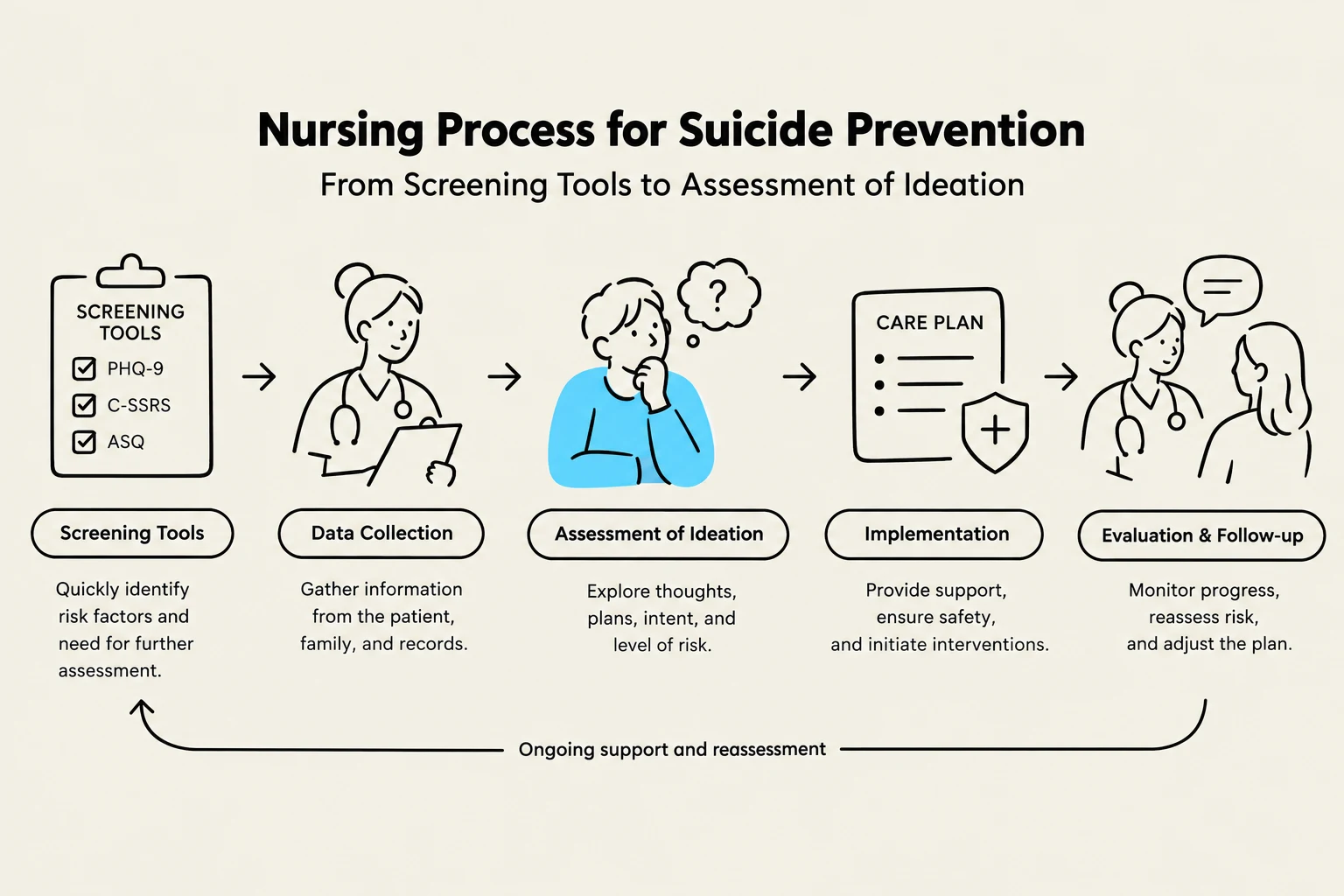
The first and most vital step is the recognition of suicidal ideation. Suicidal ideation refers to the thoughts, plans, or intentions a person has regarding ending their life. To move beyond subjective intuition, nurses must utilize validated screening tools. These tools provide a standardized way to quantify the severity of a client's thoughts and help the nurse determine the immediate level of risk.
During this phase, the nurse is looking for:
Ideation: Thoughts of death or self-harm.
Plan: A specific method the client intends to use.
Means: Access to the tools required to carry out the plan.
Intent: The actual desire or determination to act on the thoughts.
The nursing process for suicide prevention outlines steps from screening tools to assessment of ideation, including data collection, implementation, and evaluation & follow-up, with ongoing support and reassessment.
Therapeutic Interactions and Communication
Once a risk is identified, the nurse must establish a connection through therapeutic interactions. This is not merely "being nice"; it is a purposeful clinical tool used to build rapport and gather accurate information.
Effective interaction relies heavily on both verbal and non-verbal communication:
Verbal: Using direct, clear, and non-judgmental language. For example, instead of asking "You aren't thinking of hurting yourself, are you?" (which is a leading question), a nurse should ask, "Are you having thoughts of suicide?"
Non-verbal: Maintaining an open posture, appropriate eye contact, and a calm tone of voice to signal safety and presence.
Collaborative Safety and Long-Term Management
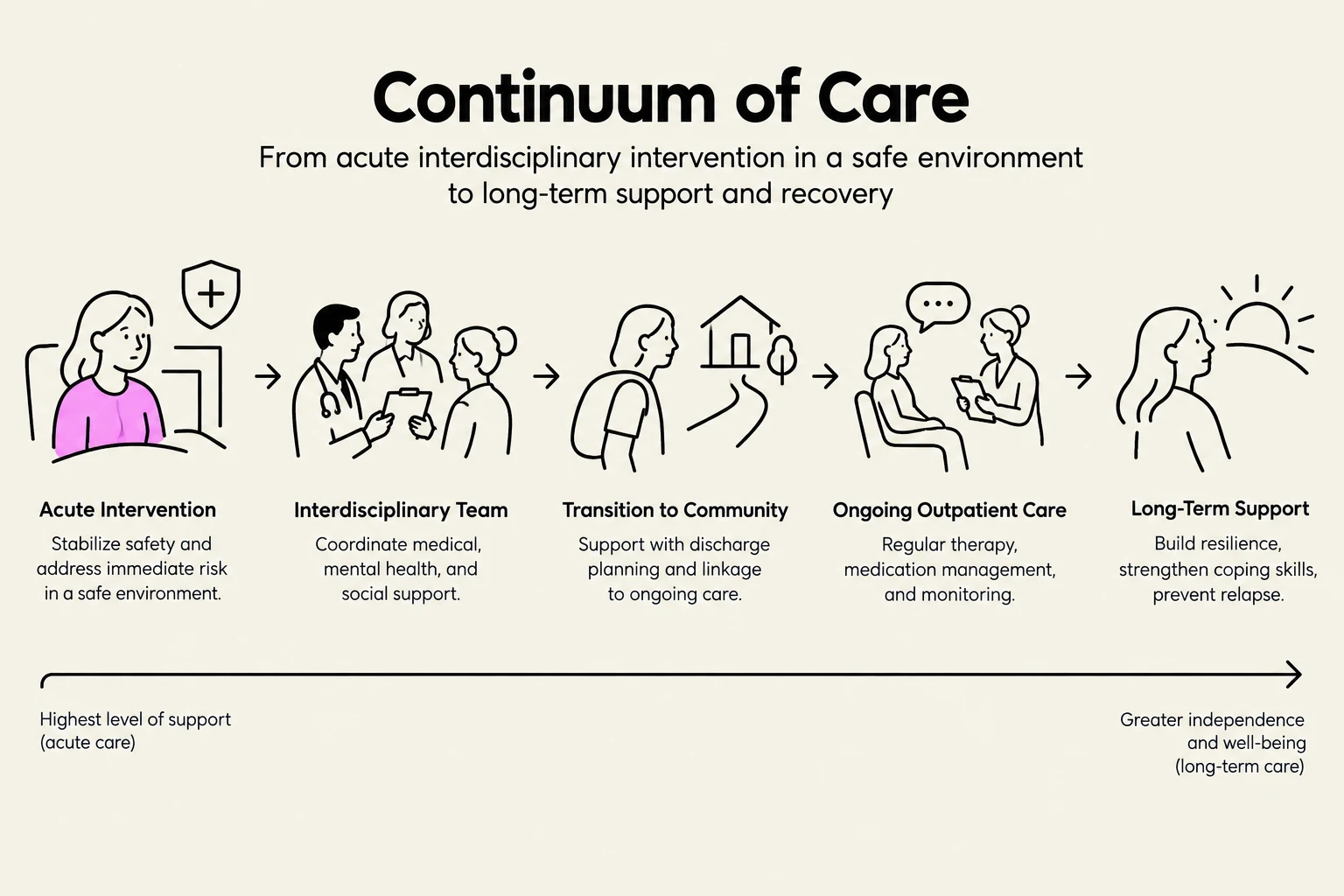
Suicide prevention is rarely a solo endeavor. To ensure a safe environment, the nurse must work closely with an interdisciplinary team. This team may include psychiatrists, social workers, case managers, and security personnel. Together, they work to mitigate access to lethal means—such as removing sharps, ligatures, or medications from the patient's immediate surroundings.
Transitioning to Community Care
The nurse's responsibility does not end when the acute crisis is stabilized. A key objective in the nursing process is preparing the client for life after the immediate intervention. This involves:
Evaluating Personal Abilities: Assessing what the client can do for themselves to maintain safety.
Identifying Assistive Resources: Determining what external supports (family, support groups, etc.) are available.
Referrals for Outpatient Services: Coordinating with the team to ensure the client has a follow-up plan with outpatient services to promote long-term mental health and successful community reintegration.
This diagram illustrates the continuum of care, starting from acute intervention and progressing through interdisciplinary team support, transition to the community, ongoing outpatient care, and finally long-term support, leading to greater independence and well-being.
Clinical Note: When planning for discharge, always ensure the client has a concrete "Safety Plan" rather than just a "No-Suicide Contract." A safety plan identifies specific coping strategies and contact numbers for outpatient services and crisis lines.
By integrating rigorous assessment, skilled communication, and collaborative planning, the nurse plays a pivotal role in moving a client from a state of high-risk behavior toward stability and psychological well-being.
Keep reading for free.
Create an account to finish this reading and make it part of your study routine.