Nursing Prioritization and Time Management Strategies
This guide covers essential nursing skills in time management, patient prioritization, and effective delegation. Learn to identify common time wasters, apply core prioritization frameworks like ABCs and Maslow's Hierarchy, and understand strategies for answering priority questions in nursing exams. It also addresses cl
In the fast-paced environment of healthcare, a nurse's ability to manage time and prioritize care is just as critical as their clinical knowledge. Effective nursing practice requires a dual focus: mastering the art of time management to maintain productivity and applying systematic assessment strategies to ensure patient safety. By distinguishing between stable and unstable patients and recognizing the "big picture," nurses can prevent being overwhelmed and provide high-quality, evidence-based care.
This diagram illustrates the shift in focus from task completion to patient outcomes in healthcare, emphasizing patient stability and safety.
Common Time Wasters
Time management is not about "managing" time itself—since time is constant—but rather about how a nurse chooses to use it. Poor time management leads to increased stress, feelings of being overwhelmed, and the dangerous omission of important tasks. To improve productivity, nurses must identify and mitigate common "time wasters":
Management by Crisis: Reacting only to emergencies rather than following a proactive plan.
Interruptions: Frequent telephone calls, unexpected visitors, or staff questions that break concentration.
Inadequate Planning: Failing to prepare supplies or failing to set clear goals and objectives.
Ineffective Delegation: Attempting to do everything personally instead of utilizing the skills of the healthcare team.
Personal Delegation and Lack of Self-Discipline: Allowing personal tasks or a lack of focus to interfere with professional responsibilities.
Pro-Tip: To combat these issues, shift from a "task orientation" to an "outcome orientation." Instead of just checking off tasks, focus on the results you want to achieve for your patients.
Patient Prioritization Strategies
When faced with multiple patients or tasks, nurses must use established frameworks to determine the order of care. Prioritization is the ordering of nursing problems based on urgency and importance.
Core Frameworks
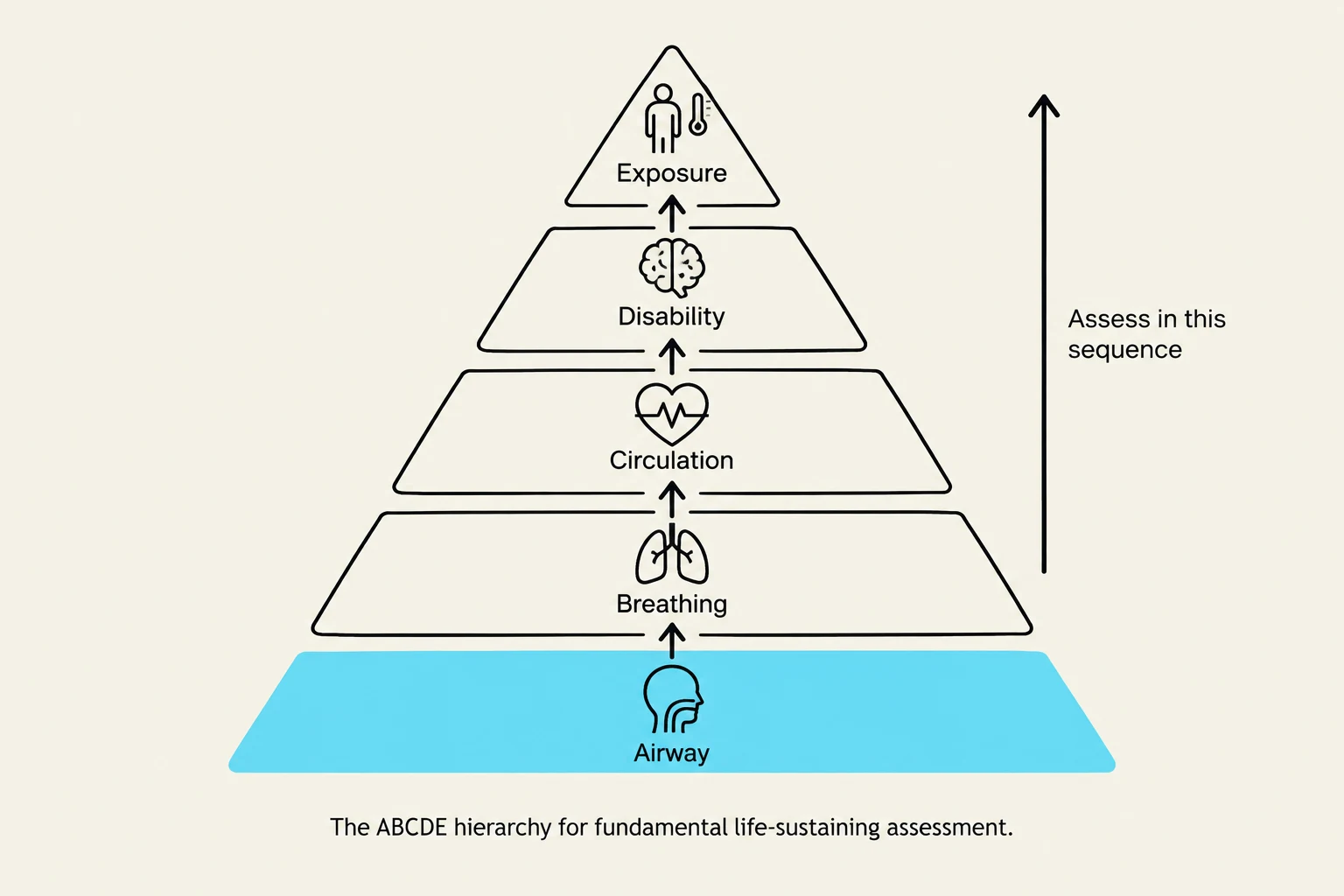
The ABCDE hierarchy for fundamental life-sustaining assessment.
ABCs (Airway, Breathing, Circulation): This is the fundamental hierarchy for sustaining life. While a severe circulation problem may sometimes take precedence over a minor breathing issue, the general order remains Airway → Breathing → Circulation → Disability → Exposure.
Maslow’s Hierarchy of Needs: Prioritize physiological needs (oxygen, food, water) before higher-level needs like safety or psychosocial needs.
Acute vs. Chronic: Always prioritize acute, sudden changes over chronic, stable conditions. An unstable patient takes priority over a stable one.
Systemic vs. Local: Prioritize problems affecting the whole body (systemic) over those affecting a single body part (local).
Life Before Limb: In emergency situations, prioritize interventions that preserve life over those that preserve a limb.
Exam Strategy: How to Answer Priority Questions
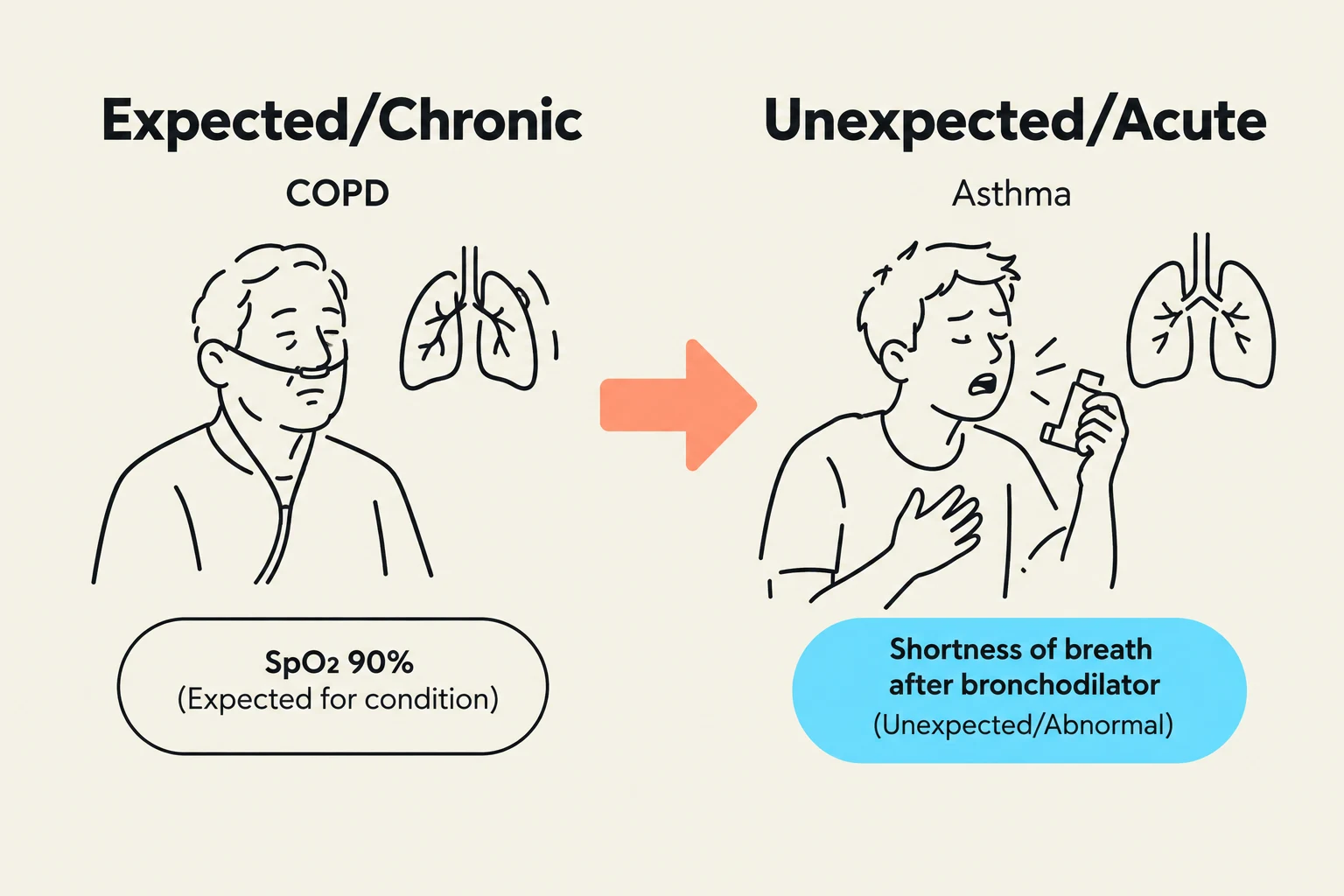
This illustration compares expected symptoms of Chronic Obstructive Pulmonary Disease (COPD) with unexpected symptoms of Asthma. For COPD, a patient with oxygen support shows an SpO2 of 90%, considered expected for the condition. For Asthma, a patient experiences shortness of breath after using a bronchodilator, which is unexpected and abnormal.
When answering NCLEX-style priority questions, do not simply pick the "sickest" sounding patient. Instead, examine each option by asking these specific questions:
Is the situation life-threatening or life-altering?
Is the data presented abnormal?
Is the situation unexpected for this specific disease process?
Is the situation/data normal or expected for this disease?
Example Analysis: If a patient with asthma complains of shortness of breath after using a bronchodilator, this is an unexpected and abnormal response, making it a high priority. Conversely, a patient with COPD having a pulse oximetry of 90% may be an expected finding for their chronic condition, making them a lower priority.
Clinical Assessment Priorities
Clinical priorities change depending on the patient population. A nurse must apply clinical knowledge to distinguish between transient findings and significant trends.
Pediatric and Newborn Priorities
In pediatrics, airway and swallowing issues are paramount. For example, a child who is drooling and unable to swallow takes precedence over a child with localized pain or chronic thirst. In a newborn setting, signs of respiratory distress—such as nasal flaring and grunting—are critical indicators that require immediate assessment over expected newborn behaviors like a positive startle reflex.
Acute Care Priorities
In acute settings, the nurse must look for the greatest imminent risk to physical well-being. This includes identifying respiratory distress, sudden changes in neurological status, or signs of hemorrhage.
Staff Assignment and Delegation
Effective management extends beyond individual patient care to the oversight of the entire unit.
Making Assignments
When making assignments, managers must match patient acuity with nurse experience. For instance, a nurse who has been "floated" from a surgical unit to a medical unit may have less experience with complex medical needs (like ventilator-dependent patients) and should be assigned more stable patients, such as those requiring teaching on incentive spirometry.
Nursing Management Actions
Charge nurses and managers must act when they observe concerning staff behaviors. If a staff member exhibits unpredictable mood swings or shows patterns of behavior that suggest potential substance misuse (such as volunteering exclusively for patients requiring narcotics), the charge nurse's priority action is to implement professional oversight, which may include discussing the behavior with the unit manager.
Summary of Prioritization Principles
To maintain safety and efficiency, always remember these guiding principles:
Principle
Application
Assessment First
Use the nursing process to gather data before deciding on a plan of action.
Least Invasive
Select the least restrictive and least invasive interventions that maintain safety.
Survival Potential
In resource-limited settings, prioritize those with a reasonable chance of survival with prompt intervention.
Flexibility
Be prepared to set and reset priorities as patient needs change throughout the shift.
Keep reading for free.
Create an account to finish this reading and make it part of your study routine.