


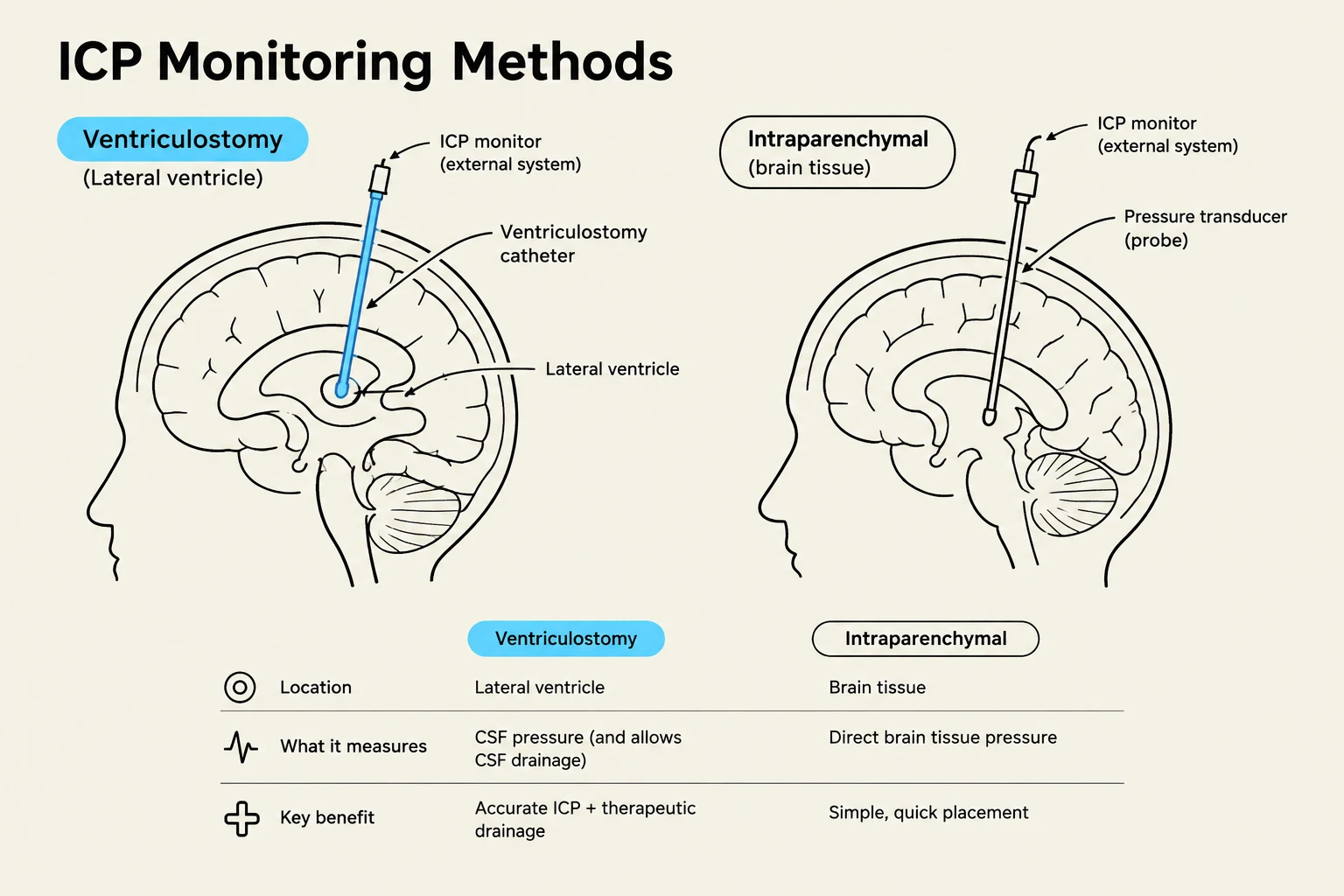
Head injuries, ranging from mild concussions to severe traumatic brain injuries (TBI), represent a significant clinical challenge due to their high potential for poor outcomes. Whether the injury is focal (specific to one area) or diffuse (generalized), the primary goal of nursing care is to prevent secondary brain injury by managing intracranial pressure (ICP) and ensuring adequate cerebral perfusion. This article explores the physiological principles of intracranial pressure, the methods used to monitor it, and the nursing priorities essential for patient survival and recovery.
Intracranial Adaptive Capacity and the Monro-Kellie Doctrine
The skull is a rigid container holding three essential components: brain tissue, blood, and cerebrospinal fluid (CSF). Because the skull cannot expand, the relationship between these components is governed by the Monro-Kellie Doctrine: if the volume of one component increases (e.g., a hematoma or edema), another must decrease (e.g., CSF or blood) to maintain a stable pressure.
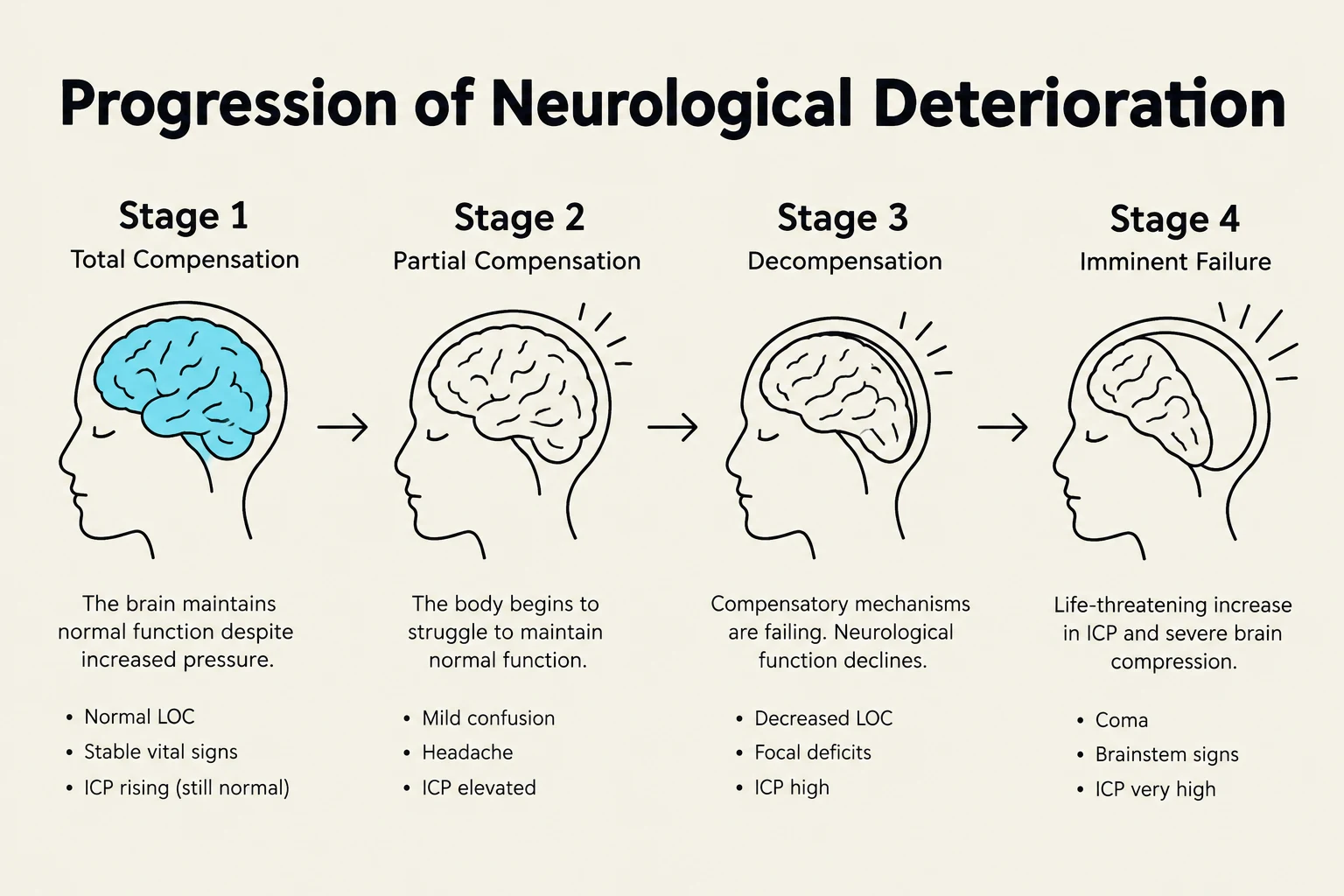
This ability to adjust is known as intracranial adaptive capacity. Under normal conditions, the body compensates for small increases in volume by displacing CSF or venous blood. However, this compensation is limited. If the volume continues to increase, the compensatory mechanisms fail, leading to a rapid rise in ICP, cerebral compression, and eventually ischemia or herniation.
Clinical Note: Normal vs. Elevated ICP
- Normal ICP: 5–15 mmHg
- Elevated ICP: Sustained pressure > 20 mmHg
Cerebral Perfusion Pressure (CPP)
While monitoring ICP is vital, it is only half of the equation. The brain requires a constant supply of oxygenated blood. This is measured via Cerebral Perfusion Pressure (CPP), which is the pressure gradient that drives blood flow into the brain tissue.
Keep reading for free.
Create an account to finish this reading and make it part of your study routine.
Continue reading freeAlready have an account? Log in
Updated