


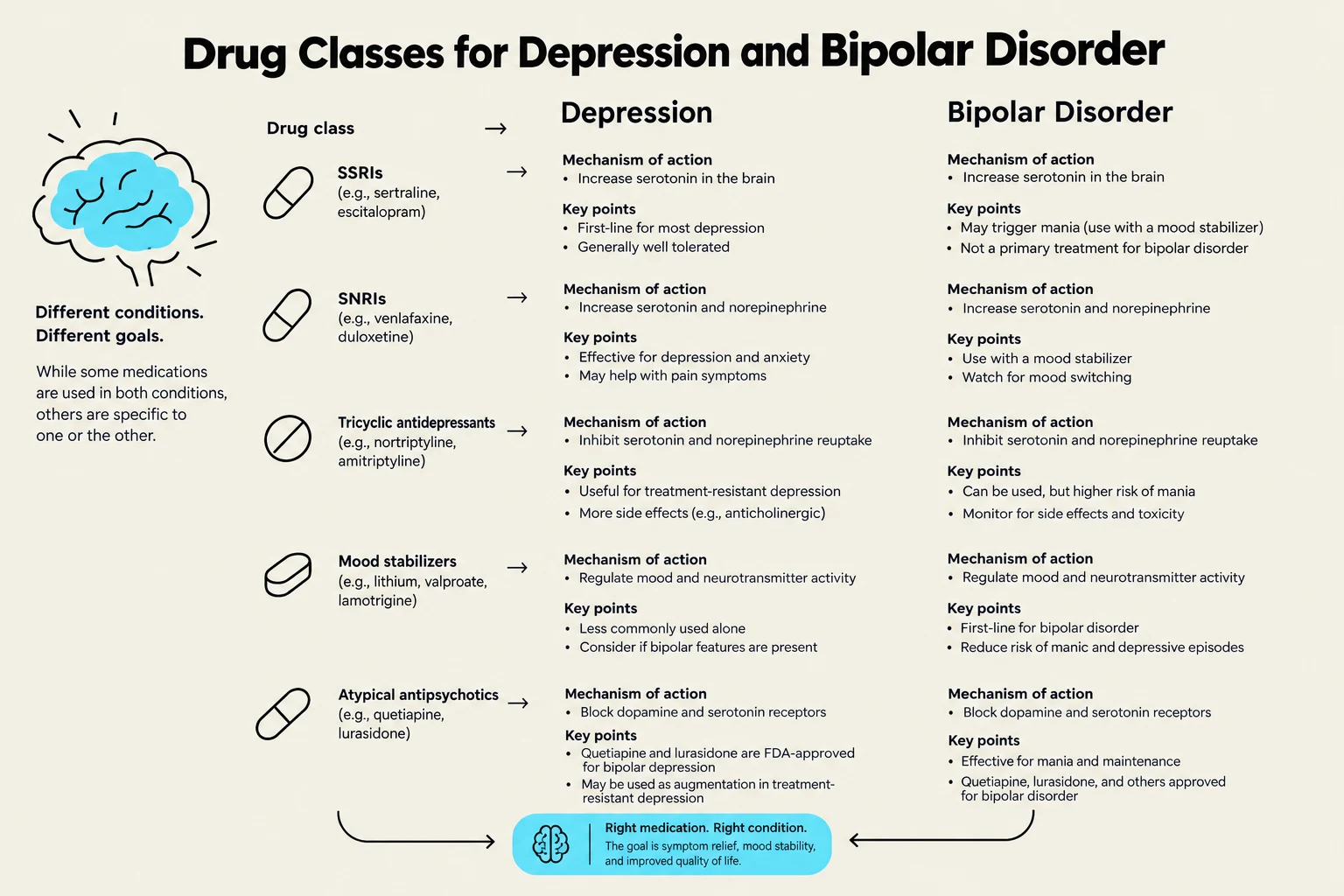
Mental health nursing requires a sophisticated understanding of how biological, psychological, and social factors intersect to influence a client's perception and thought processes. When managing clients with depressive disorders or bipolar and related disorders, nurses do not merely treat symptoms; they facilitate adaptation to life challenges and promote mental health stability. This article explores the comprehensive nursing management required to care for these populations, from initial assessment to complex pharmacologic interventions.
Understanding Depressive and Bipolar Disorders
Depressive disorders involve a significant alteration in mood, thought, and physical function. To ensure diagnostic accuracy, clinicians utilize the DSM-V criteria, which provide standardized guidelines for identifying specific types of depressive and bipolar disorders.
The epidemiology of these disorders reveals significant patterns in how they affect different populations, often necessitating different nursing approaches based on the client's developmental stage. For instance, the manifestation of depression in an adolescent may differ significantly from that in an older adult. Understanding predisposing factors—such as genetic vulnerability, biological imbalances, or environmental stressors—is essential for creating a personalized care plan.
Symptomatology and Assessment
Assessment is the foundation of the nursing process. For depressive disorders, nurses look for changes in mood (sadness, hopelessness), thought processes (guilt, worthlessness), and physical functions (sleep, appetite, energy). In bipolar disorders, the assessment must also capture the spectrum of mania, characterized by heightened energy, pressured speech, and decreased need for sleep.
CRITICAL SAFETY ALERT: Suicide Prevention A primary responsibility in assessing clients with depressive disorders is rigorous suicide risk screening. Nurses must evaluate for suicidal ideation, intent, and plan, as this is a life-threatening complication of depression.

Keep reading for free.
Create an account to finish this reading and make it part of your study routine.
Continue reading freeAlready have an account? Log in
Updated