Nursing Guide to Neurological, Respiratory, and Pharmacological Management
This study guide covers critical nursing considerations for neurological assessment, increased intracranial pressure, seizures, headaches, respiratory distress, anemia, perioperative safety, isolation precautions, and dosage calculations. It emphasizes prioritization of interventions for patient safety.
This study guide integrates critical nursing considerations for neurological, respiratory, and pharmacological management. Whether you are preparing for a clinical rotation or a major exam, understanding the prioritization of interventions—moving from airway to infection—is essential for patient safety.
Neurological Assessment and Increased ICP
In neurological nursing, the most sensitive and earliest sign of increased intracranial pressure (ICP) is a change in the Level of Consciousness (LOC). When assessing a patient, always follow the priority order: LOC first, followed by pupil reaction, speech, and then motor strength.
Increased ICP (IICP) can be caused by brain tumors, meningitis, or encephalitis. When managing these patients, the priority is to decrease pressure. This is achieved by elevating the Head of Bed (HOB) to 45–60° and minimizing environmental stimuli (a dark, quiet room). Nurses must also prevent patients from straining during bowel movements, as this can further increase ICP; stool softeners are often indicated.
Exam Tip: Cushing's Triad
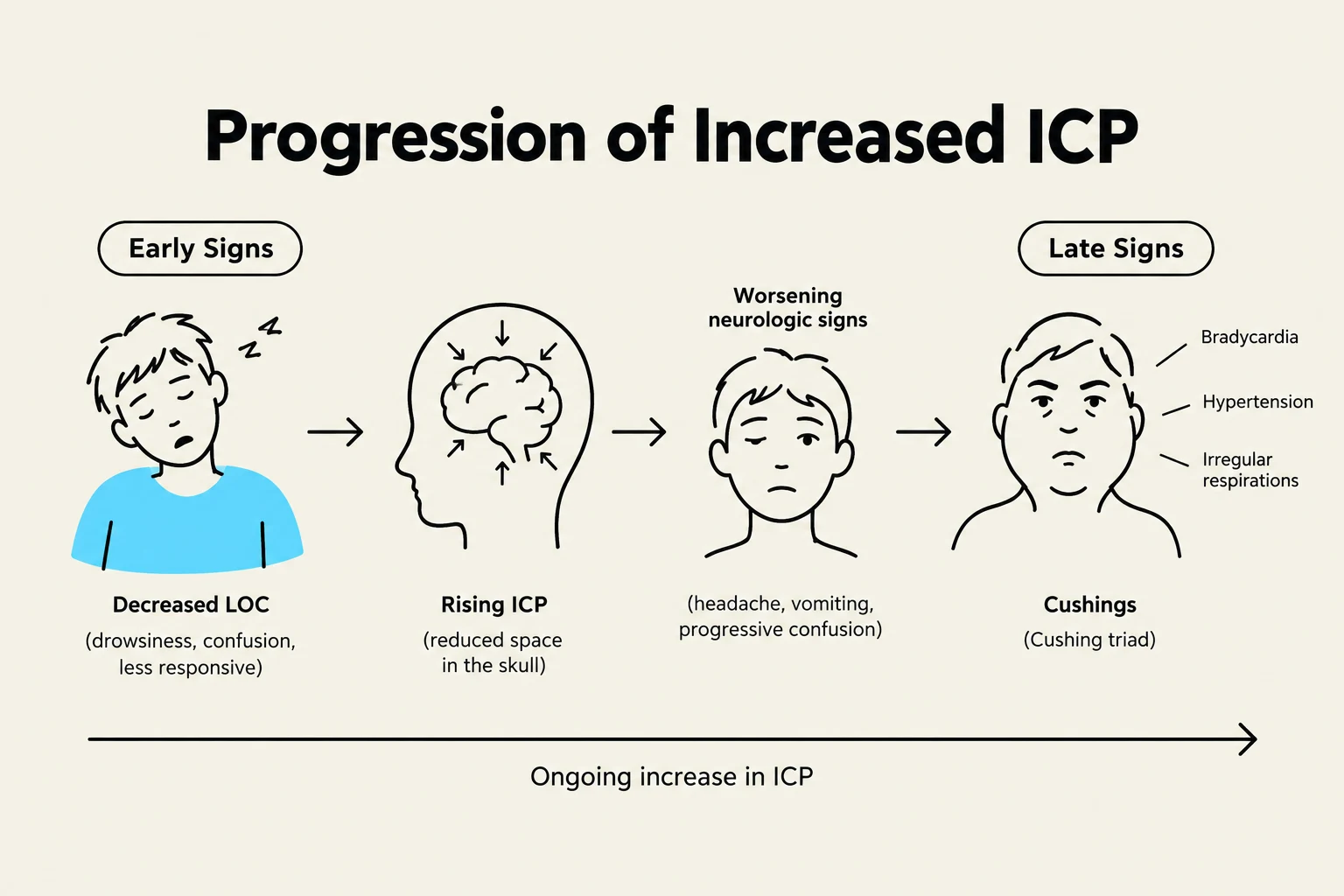
Cushing's triad is a late sign of increased ICP. It consists of:
This diagram illustrates the progression of increased intracranial pressure (ICP), detailing early signs such as decreased level of consciousness and rising ICP, and late signs including worsening neurologic symptoms and Cushing's triad (bradycardia, hypertension, and irregular respirations).
Seizures and Epilepsy Management
A seizure is a brief episode of abnormal electrical activity, whereas epilepsy is a chronic pattern of recurrent seizures. During an active seizure, the nurse's priority is safety and airway patency. Turn the patient to their side to prevent aspiration and protect them from injury by padding side rails. Never restrain a patient or force anything into their mouth.
Pharmacological management often involves anticonvulsants like Phenytoin (Dilantin). Nurses must monitor for side effects such as gum hyperplasia and changes in blood counts. If a patient experiences status epilepticus (continuous seizures without regaining consciousness), the priority is to administer IV benzodiazepines like diazepam or lorazepam.
Headaches and Migraines
Headaches are categorized primarily into tension, migraine, and cluster types.
Tension headaches are the most common and present as a dull, band-like pressure.
Migraines are vascular headaches often preceded by an "aura" (sensory changes like flashing lights or smells) and are triggered by tyramine-rich foods like aged cheese or processed meats.
Cluster headaches are severe, unilateral, and often associated with alcohol use.
For acute migraine attacks, sumatriptan is a common treatment. However, because it is a vasoconstrictor, it is strictly contraindicated in patients with a history of angina or cardiovascular disease.
Respiratory Distress and Airway Clearance
In any clinical scenario, the priority follows the hierarchy: Airway → Hemorrhage → Infection → Knowledge Deficit. Therefore, respiratory distress is a top-tier priority.
When a patient presents with ineffective airway clearance (difficulty clearing secretions), nursing interventions should include:
Positioning the patient upright.
Encouraging deep breathing and coughing.
Maintaining hydration to thin secretions.
Suctioning as ordered.
For patients with dysphagia (difficulty swallowing), thickened liquids (nectar or honey consistency) are used to provide better control and reduce the risk of choking.
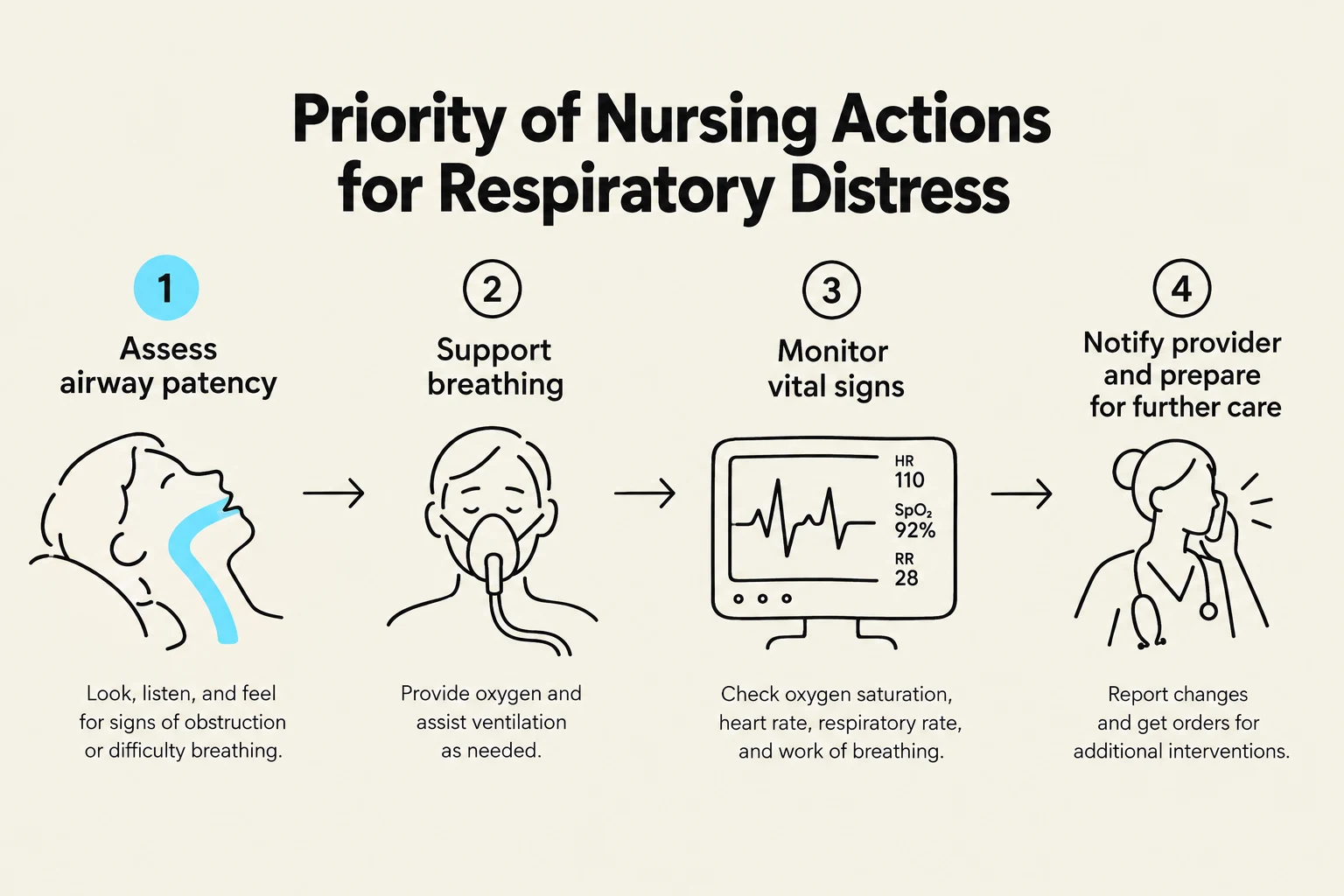
This diagram outlines the priority of nursing actions for respiratory distress, including assessing airway patency, supporting breathing, monitoring vital signs, and notifying the provider for further care.
Anemia and Pharmacological Interventions
Anemias are characterized by low oxygen-carrying capacity, leading to symptoms like fatigue, shortness of breath, and tachycardia. Different types require specific considerations:
Iron deficiency: Requires iron supplementation.
Pernicious anemia: Associated with B12 deficiency and may present with a "beefy red tongue".
Folate deficiency: Can lead to neurological symptoms.
Sickle cell anemia: The priority is often pain management.
Regarding infection treatments, certain drugs have unique side effects. For example, the antifungal Griseofulvin is an exception to the "-zole" naming convention. For Tuberculosis (TB) regimens, patients taking Rifampin must be taught that their urine, tears, and sweat may turn a red-orange color, and they should avoid wearing contact lenses as they may be permanently stained.
Perioperative Safety and Malignant Hyperthermia
Perioperative care focuses on safety and the prevention of complications from anesthesia. A rare but life-threatening complication is Malignant Hyperthermia. This is a hypermetabolic state triggered by certain anesthetic agents.
The gold standard treatment for malignant hyperthermia is Dantrolene. Nurses must be vigilant for signs of this emergency, which include muscle rigidity and a rapid rise in body temperature.
Isolation Precautions
Proper infection control is vital to prevent the spread of pathogens.
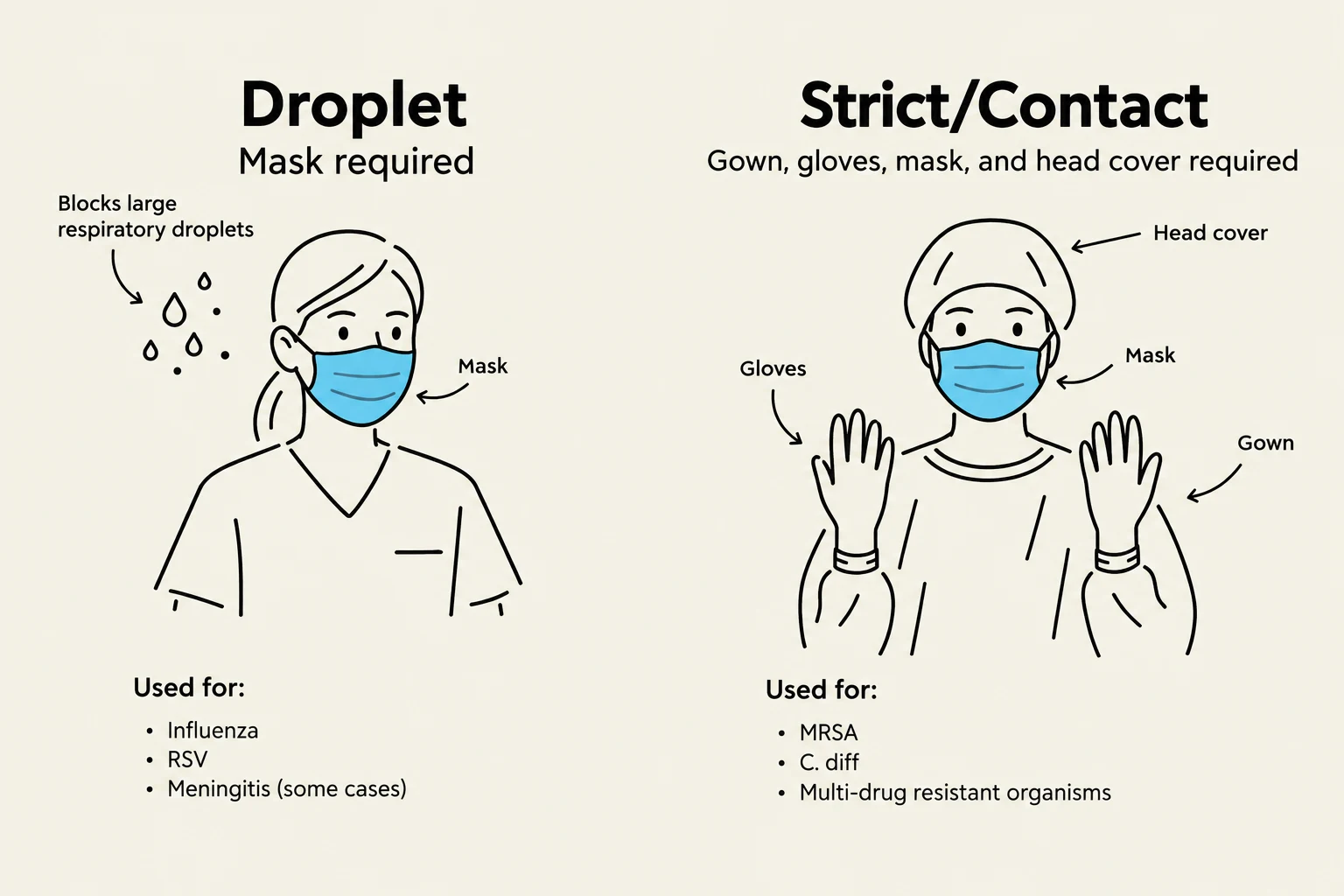
Droplet Precautions: Required for infections like meningitis or COVID-19. For COVID-19, the nurse should place a mask on the patient first.
Strict Isolation: Used for highly contagious or severe infections, requiring the broadest range of Personal Protective Equipment (PPE), including gowns, gloves, masks, and head covers.
This illustration shows the difference between droplet and strict/contact precautions for preventing the spread of infections. Droplet precautions involve wearing a mask to block large respiratory droplets, and are used for illnesses like influenza, RSV, and meningitis. Strict/contact precautions require a gown, gloves, mask, and head cover, and are used for infections such as MRSA, C. diff, and multi-drug resistant organisms.
Mathematical Review: Dosage Calculations
When calculating infusion rates for medications like antibiotics, use the following formula:
Rate (mL/hr)=Time (hr)Total Volume (mL)
Example:
If a patient is prescribed 250 mL of an antibiotic to run over 1.5 hours, the calculation is:
\text{Rate} &= \frac{250 \text{ mL}}{1.5 \text{ h}} \\
\text{Rate} &\approx 166.7 \text{ mL/hr}
\end{aligned}$$
> **Note:** Always use the total volume of the bag for the calculation, not the milligram dose of the drug itself.
$$$
$$$
Keep reading for free.
Create an account to finish this reading and make it part of your study routine.