


Success in nursing school requires more than just memorizing facts; it requires understanding how different clinical concepts intersect to ensure patient safety. When preparing for exams, students often encounter broad categories that are broken down into specific "exemplars"—the practical applications of those theories. This article breaks down three critical domains: Communication, Documentation, and Asepsis & Infection Control, providing a roadmap for your study sessions.
Communication in Clinical Practice
Communication is the backbone of nursing care. It is not merely "talking" to a patient; it is a multi-layered process that involves self-awareness, professional boundaries, and the ability to navigate complex social dynamics.
Therapeutic and Assertive Modalities
In the clinical setting, you will distinguish between different styles of interaction. Therapeutic Communication is goal-oriented and specifically designed to support the patient's emotional and physical well-being. Unlike casual conversation, every therapeutic interaction should have a purpose, such as reducing anxiety or gathering assessment data.
In contrast, Assertive Communication is a professional skill used to express needs, boundaries, or clinical observations clearly and respectfully. This is vital when communicating with physicians or other team members to ensure patient orders are correct and safety is maintained.
Levels of Interaction and Barriers
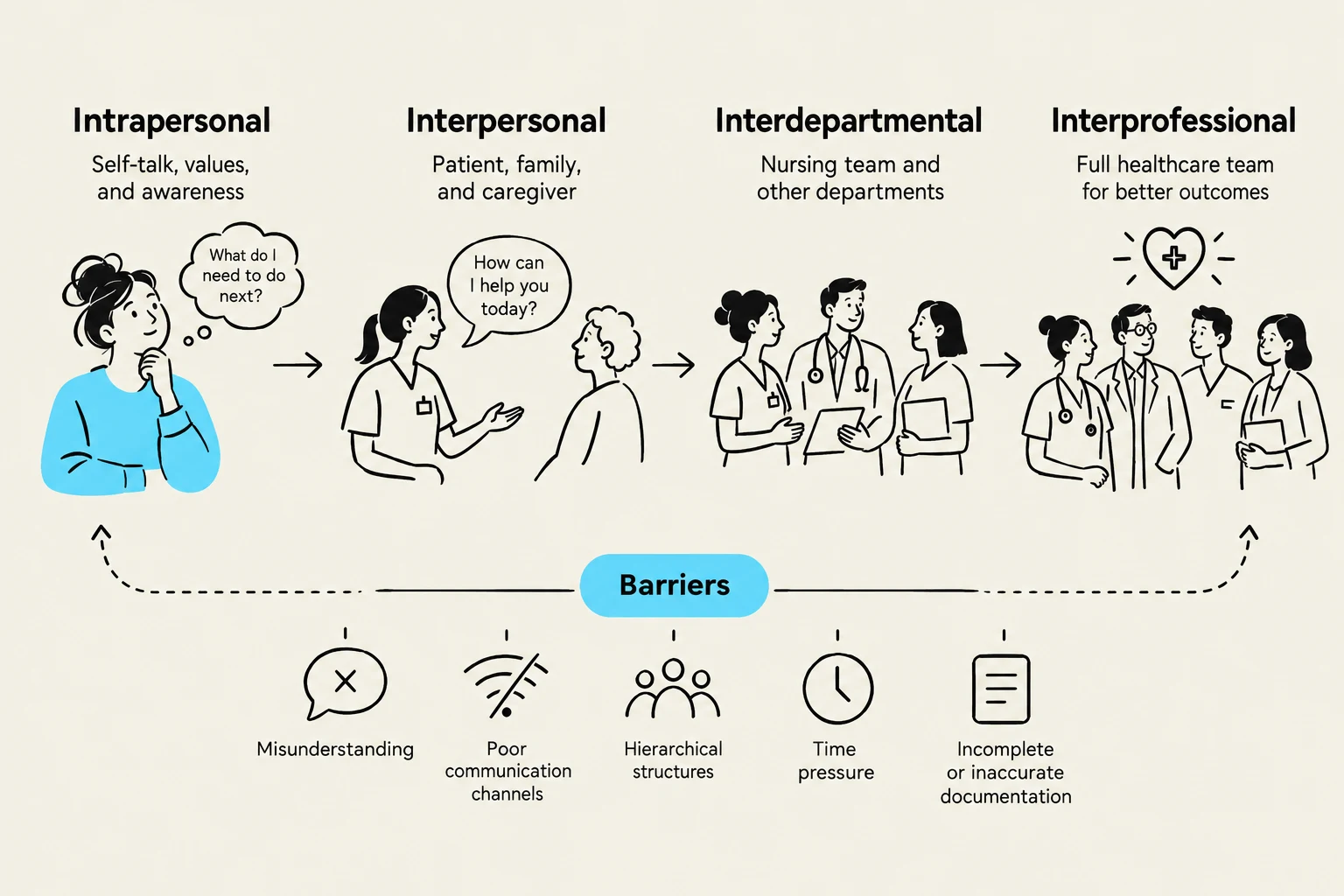
Communication occurs at various levels. Intrapersonal communication involves your own internal thought processes (self-talk), while Interpersonal communication occurs between two people (nurse and patient). On a broader scale, Interprofessional communication involves the exchange of information among the entire healthcare team, such as doctors, therapists, and nurses.
A critical component of this exchange is the Hand-Off/Reporting process. This clinical handoff ensures that vital information is transferred during shift changes to maintain continuity of care. However, several factors can disrupt this flow:
Keep reading for free.
Create an account to finish this reading and make it part of your study routine.
Continue reading freeAlready have an account? Log in
Updated