This guide provides essential information for nursing students on the classification, administration, adverse reactions, and patient teaching related to anti-infective medications.
Anti-infective medications are a cornerstone of modern medicine, used to treat a wide variety of infections caused by bacteria, viruses, fungi, protozoa, and helminths. For nursing students, mastering these medications requires more than just memorizing names; it requires an understanding of how these drugs interact with the body, how to identify life-threatening allergic reactions, and how to ensure patient compliance to prevent the rise of resistant microorganisms.
Classification of Anti-Infectives
Anti-infective agents are categorized based on the type of microorganism they target:
Antibacterials (Antibiotics): Used to treat systemic bacterial infections by either killing the bacteria (bactericidal) or inhibiting their growth (bacteriostatic).
Antivirals: Used to treat viral infections.
Antifungals: Used to treat fungal infections.
Antiparasitics: Includes antiprotozoals (targeting protozoa like Giardia or Trichomonas), antimalarials (targeting the Plasmodium parasite), and antihelminthics (targeting worms like tapeworms or pinworms).
Pre-Administration: The Importance of Cultures
Correct identification of aerobic and anaerobic blood culture bottles.
Before initiating anti-infective therapy, it is critical to identify the specific microorganism causing the infection. Nurses must ensure that a culture and sensitivity (C&S) test is performed before the first dose is administered. This allows the healthcare provider to determine the susceptibility of the microorganism to specific drugs, ensuring the most effective treatment is selected.
Blood Culture Collection
When a systemic infection is suspected, blood cultures are essential. Proper collection technique is vital to avoid contamination. Blood is collected into specific bottles:
Aerobic bottles: Typically identified by a blue cap.
Anaerobic bottles: Typically identified by a burgundy/red cap.
Nursing Tip: Always ensure the culture is obtained before the first dose of antibiotics to ensure the most accurate results.
Nursing Assessment and Clinical Judgment
When caring for a patient on anti-infectives, nurses must utilize a systematic assessment approach:
Baseline Vitals & Allergies: Always assess for existing allergies, especially to penicillins.
Infection History: Note the signs and symptoms of the current infection.
Renal and Hepatic Function: Many anti-infectives are excreted by the kidneys or metabolized by the liver. Monitor BUN, creatinine, and liver function tests (LFTs).
Neurological Status: For high-dose antibiotics, monitor for changes in consciousness, confusion, or hallucinations.
Laboratory Monitoring: Monitor prothrombin time (PT), INR, and platelet counts, especially when using penicillins that may prolong bleeding time.
Major Antibacterial Classes and Nursing Considerations
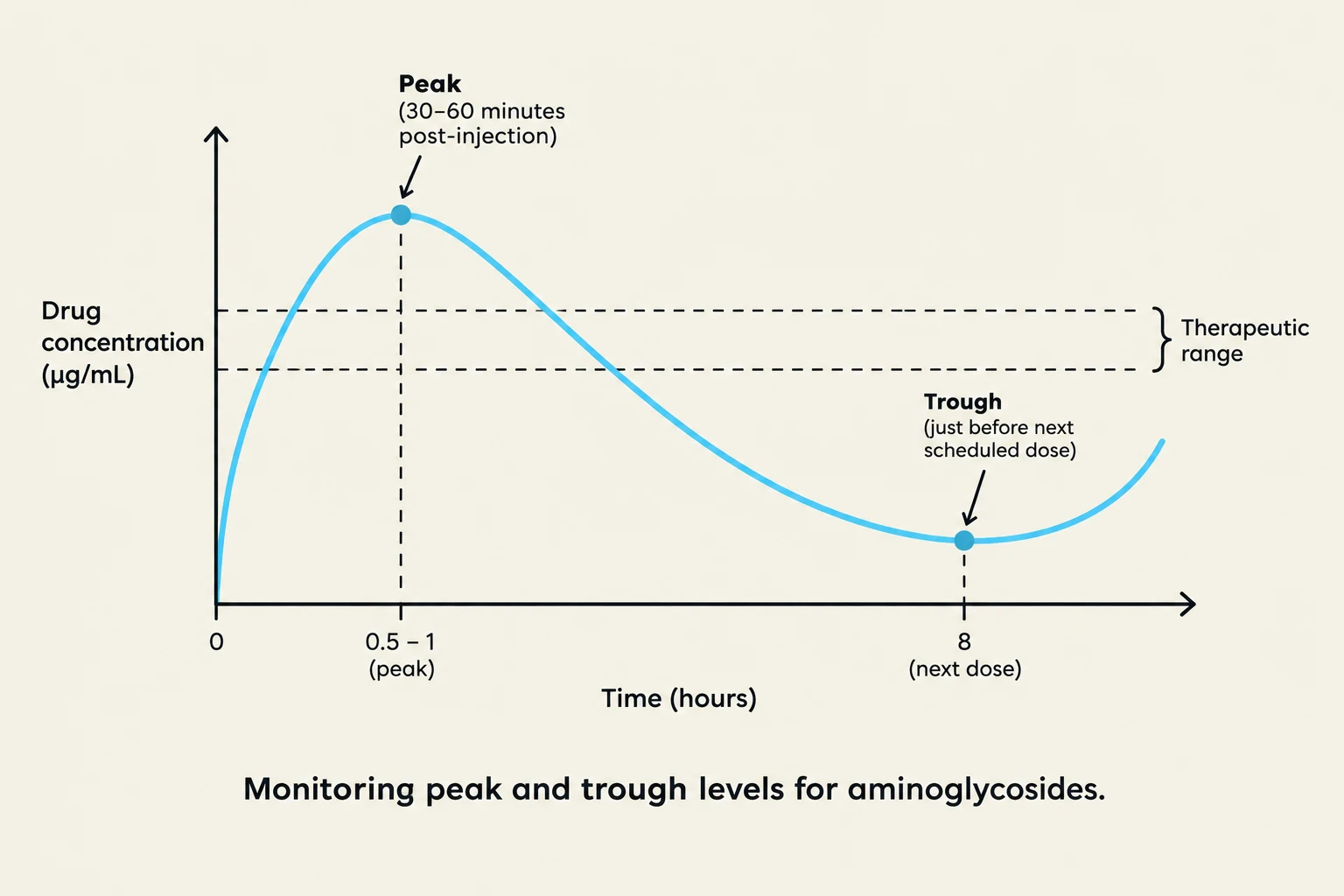
Monitoring peak and trough levels for aminoglycosides.
Penicillins and Cephalosporins
Penicillins are widely used and often bactericidal, working by preventing bacterial cell-wall synthesis. Cephalosporins work similarly but have different "generations"; as the generation increases, the spectrum of activity generally becomes broader.
Precautions: There is a 3% to 16% cross-sensitivity risk; patients allergic to penicillin may also react to cephalosporins.
Alcohol Warning: For cephalosporins, avoid alcohol within 72 hours of administration to prevent acute alcohol intolerance (headache, nausea, flushing).
Glycopeptides (Vancomycin)
Vancomycin is a potent bactericidal drug used for serious infections like MRSA.
Warning: Red Man Syndrome: This is a rate-dependent infusion reaction (not a true allergy) characterized by flushing, erythema, and pruritus, usually affecting the upper body, neck, and face.
Management: Stop the infusion, administer an antihistamine (e.g., diphenhydramine), and restart at a slower rate once symptoms resolve.
Aminoglycosides (e.g., Gentamicin)
These are bactericidal but carry a high risk of ototoxicity (hearing loss) and nephrotoxicity (kidney damage).
Peak and Trough: Nurses must monitor drug levels. The trough level is drawn just before the next dose, and the peak level is drawn 30 minutes to 1 hour after IV injection.
Tetracyclines
These are bacteriostatic and broad-spectrum.
Contraindications: Do not give to children under 8 years old, as they can cause permanent tooth discoloration.
Interactions: Avoid administration with milk, antacids, or iron salts, as these prevent absorption.
Adverse Reactions and Complications
Diagram illustrating the progression from a healthy gut microbiome to a state of superinfection after the use of anti-infectives, which can eliminate normal flora and allow opportunistic organisms to multiply.
Anaphylaxis and Stevens-Johnson Syndrome (SJS)
Allergic reactions can range from mild rashes to life-threatening anaphylaxis. A rare but severe reaction is Stevens-Johnson Syndrome (SJS), a medical emergency where the upper layers of the skin die off, causing reddish-purple rashes, blisters, and skin sloughing.
Superinfection
A superinfection occurs when the anti-infective kills the target pathogen but also destroys the body's normal flora, allowing other organisms to overgrow.
Signs to watch for: Black furry growth on the tongue (oral candidiasis), vaginal itching or discharge, loose/foul-smelling stools (C. diff), or mouth ulcers.
Crystalluria
Some medications, such as fluoroquinolones and sulfonamides, can cause crystals to form in the urine (crystalluria), which may lead to kidney stones.
Prevention: Instruct the patient to drink plenty of fluids to maintain hydration and prevent crystal formation.
Patient Teaching for Medication Success
To ensure safety and efficacy, provide the following education to patients:
Compliance: Complete the entire regimen, even if symptoms disappear. Never take leftover medications or someone else's prescriptions.
Administration: Take on an empty stomach (unless otherwise directed) and with a full glass of water.
Safety: Check expiration dates (especially with tetracyclines, as outdated versions can be nephrotoxic) and store medications correctly.
Contraception: If taking certain antibiotics, use an additional form of birth control, as some may interfere with hormonal contraceptives.
Sun Safety: Many antibiotics (tetracyclines, sulfonamides, fluoroquinolones) cause photosensitivity. Advise patients to use sunblock and avoid direct sun exposure.
Keep reading for free.
Create an account to finish this reading and make it part of your study routine.