This guide covers nursing responsibilities in identifying and managing cases of interpersonal violence, including child abuse, domestic violence, and sexual assault. It emphasizes trauma-informed care, mandated reporting, evidence preservation, and patient advocacy.
In the clinical setting, nurses are often the first line of defense for individuals experiencing interpersonal violence. Whether it is a child presenting with unexplained bruising, an older adult showing signs of neglect, or a victim of sexual assault, the nurse's role spans from rapid physiological stabilization to legal advocacy. Understanding the nuances of trauma-informed care, mandated reporting, and evidence preservation is essential for both patient safety and passing the NCLEX.
Understanding Interpersonal Violence and Trauma
Interpersonal violence includes a wide spectrum of behaviors, such as family violence, intimate partner violence (IPV), and community violence. These incidents can result in various types of physical trauma:
Minor Trauma: Injuries to a single part of the body, such as a laceration or a burn.
Minor/Major Trauma: Serious single-system or multi-system injuries, such as those from vehicular crashes or physical assaults.
Blunt Trauma: Occurs when there is no communication between the damaged tissues and the outside environment (e.g., falls or assaults).
Penetrating Trauma: Occurs when an object enters the body, such as gunshot or stab wounds.
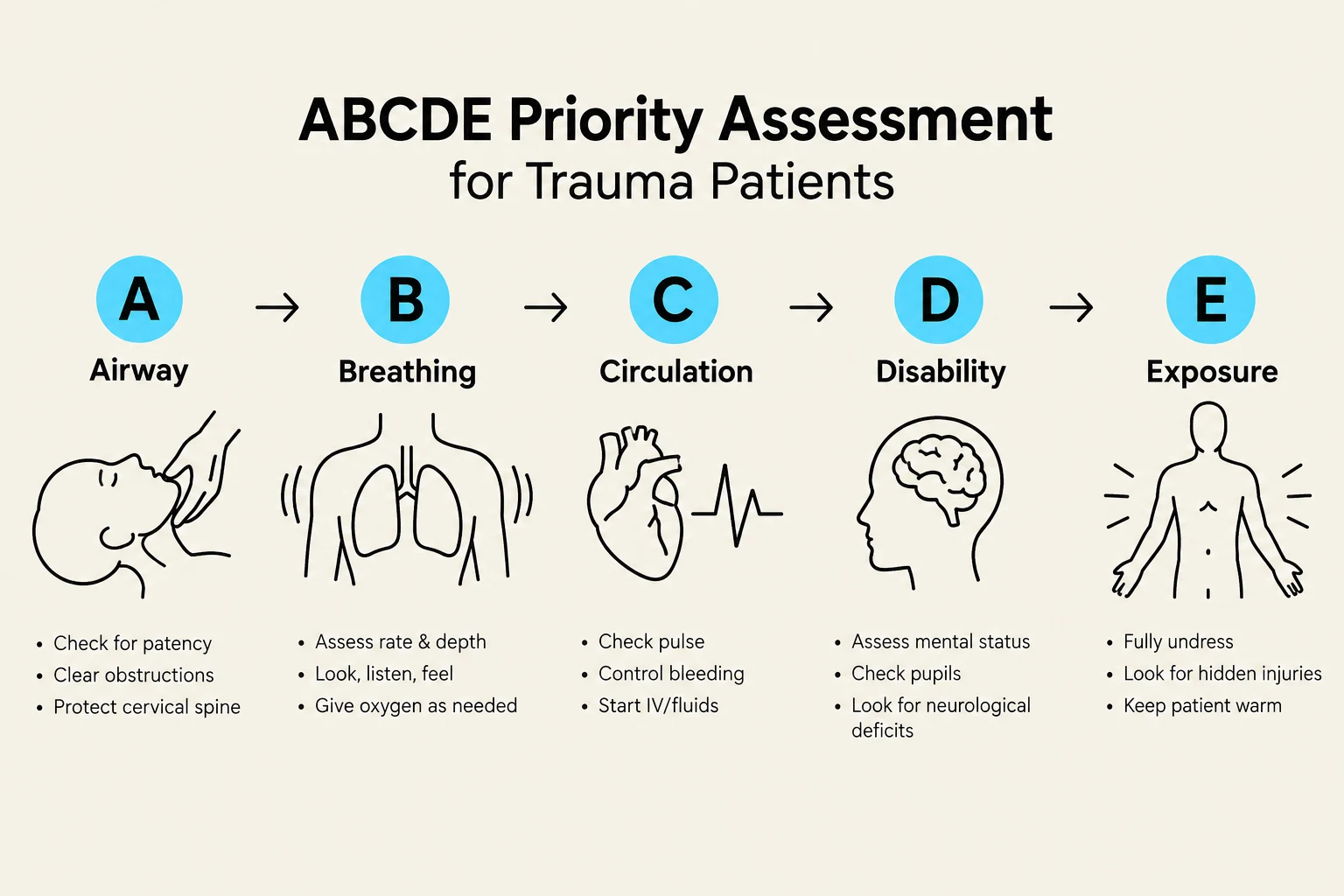
When treating any trauma victim, nurses must prioritize the ABCDE mnemonic to ensure physiological stability:
Airway (with cervical spine protection)
Breathing and ventilation
Circulation (with hemorrhage control)
Disability (neurologic assessment)
Exposure (environmental control)
The ABCDE assessment is a systematic approach used in emergency medicine to prioritize the assessment and management of critically ill or injured patients, particularly in trauma cases. It stands for Airway, Breathing, Circulation, Disability, and Exposure.
Mandated Reporter Responsibilities and Child Abuse
One of the most critical legal responsibilities for a nurse is mandated reporting. If a nurse suspects abuse or neglect, they are legally required to follow state and facility policies to report the situation to the appropriate authorities.
Child Abuse and Neglect
Child abuse involves the intentional mistreatment of a child under the age of 18 by someone in a custodial role. This can manifest as physical, sexual, emotional abuse, or neglect.
Signs to watch for in children include:
Unexplained injuries, such as bruises, fractures, or cigarette burns.
Injuries in various stages of healing.
Behavioral changes, depression, or isolation.
Signs of neglect, such as poor hygiene, lack of medical/dental care, or poor growth and development.
NCLEX Tip: If you suspect child abuse, your priority is to report the suspicion to the local authorities or follow your facility's protocol. Do not attempt to investigate the situation yourself by interrogating the parents or the child, as this can compromise a legal investigation.
Domestic Violence and Social History
Domestic violence, often categorized as Intimate Partner Violence (IPV), requires a sensitive approach to assessment. When a patient presents with injuries that suggest domestic abuse—such as bruises in various stages of healing around the eyes or chest—the nurse must prioritize safety and privacy.
Assessing the Social History
When evaluating a victim of domestic violence, certain patterns may emerge in their social history. While anyone can be a victim, certain risk factors may be present:
A history of being in past abusive relationships.
A history of childhood abuse.
Age factors (e.g., being under 30 years old).
The nurse's communication should be nonjudgmental. Avoid asking "Why" questions (e.g., "Why do you stay with him?"), which can imply blame. Instead, focus on immediate safety and support:
"Are you in need of an immediate place for safety?"
Validate the patient's decision to disclose and emphasize that they are not to blame.
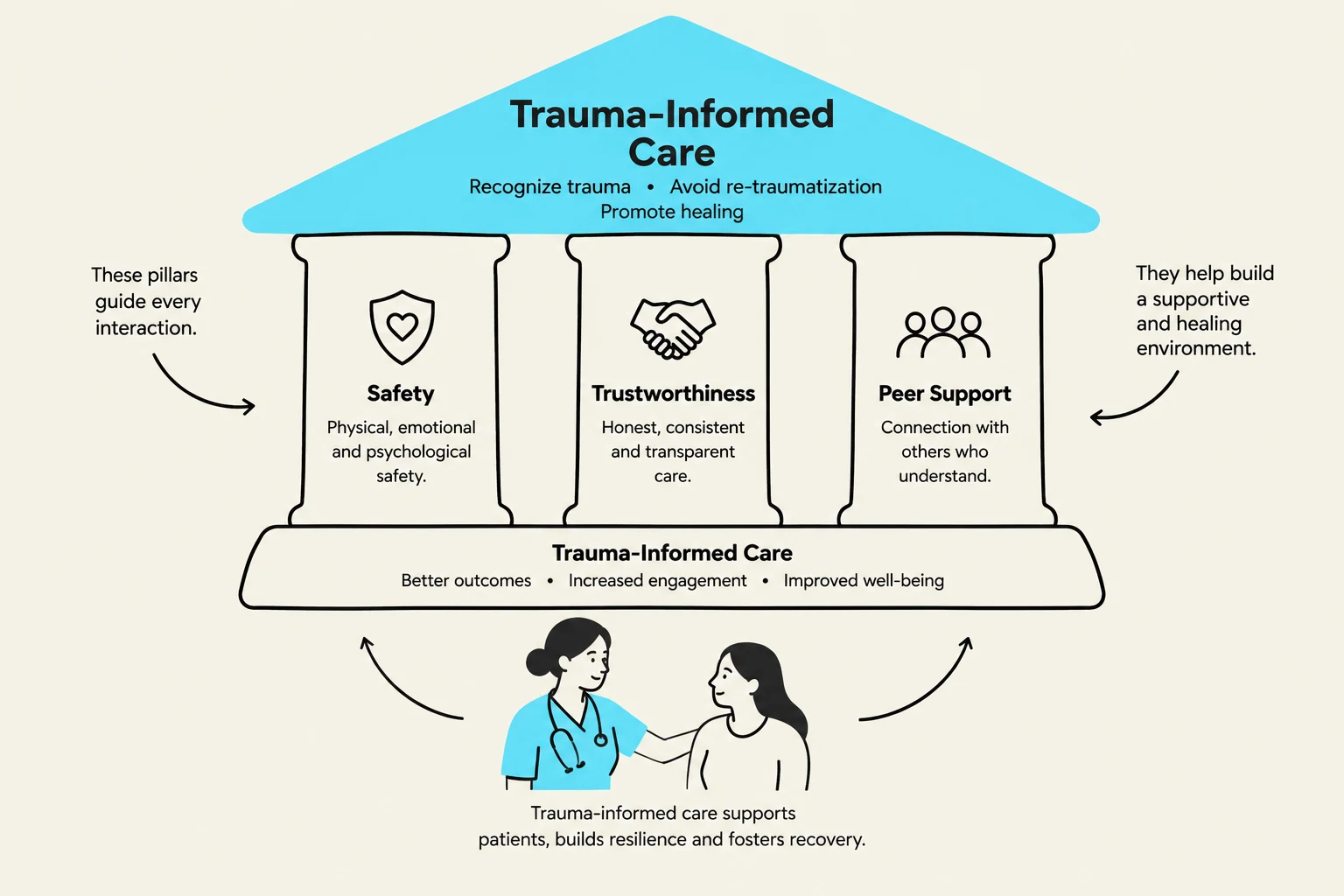
This diagram illustrates the core principles of Trauma-Informed Care, emphasizing Safety, Trustworthiness, and Peer Support as foundational pillars for promoting healing and well-being.
Sexual Assault Nursing Interventions
Sexual assault is a form of violence that causes profound physical and psychological trauma, and may lead to STIs or unwanted pregnancy. Nursing care for these patients must be highly specialized and focused on both medical care and evidence preservation.
Evidence Preservation and Clinical Care
When a patient presents following a sexual assault, the nurse must follow specific protocols to ensure that legal evidence is not lost:
Preserve Evidence: Do not allow the client to bathe or change into fresh clothing before the examination begins, as this can destroy biological evidence.
Documentation: Use a sexual assault evidence collection kit and take photographs of injuries as appropriate.
Medical Interventions: Provide education regarding options for preventing unwanted pregnancy and testing for STIs.
Psychological Support: Take the client to a quiet, private room to assess stress levels and provide a sense of security.
This diagram outlines nursing priorities for different types of abuse: physical abuse, neglect, and emotional/psychological abuse, with a common goal of keeping the patient safe, healthy, and supported.
Trauma-Informed Care and Advocacy
The overarching framework for caring for victims of violence is Trauma-Informed Care. This is a framework designed to recognize and respond to the effects of trauma while preventing re-traumatization.
The goals of trauma-informed care include:
Developing a trusting rapport between the patient and staff.
Encouraging active participation in care.
Ensuring interventions are person-centered and based on empowerment and safety.
As an advocate, the nurse must also consider cultural and religious preferences. For example, if a patient's religion prohibits certain life-saving procedures, the nurse must honor those wishes while ensuring the patient and family are fully educated on the risks and alternative options.
NCLEX Summary Table: Nursing Actions
Scenario
Primary Nursing Action
Suspected Child Abuse
Report to authorities/follow facility protocol
Domestic Violence
Assess immediate safety and provide nonjudgmental support
Sexual Assault
Preserve evidence (clothing/body) and provide STI/pregnancy education
Keep reading for free.
Create an account to finish this reading and make it part of your study routine.