


Nucleotides are indispensable molecules in biological systems. Beyond serving as the fundamental building blocks of DNA and RNA, they play critical roles in energy storage (ATP), muscle contraction, active transport, and the maintenance of ion gradients. They also function as activated intermediates in biosynthesis (such as UDP-glucose) and act as essential components of coenzymes like , , and . Because of these diverse roles, the metabolic pathways governing their synthesis and degradation are tightly regulated.
Pyrimidine Synthesis: The De Novo Pathway
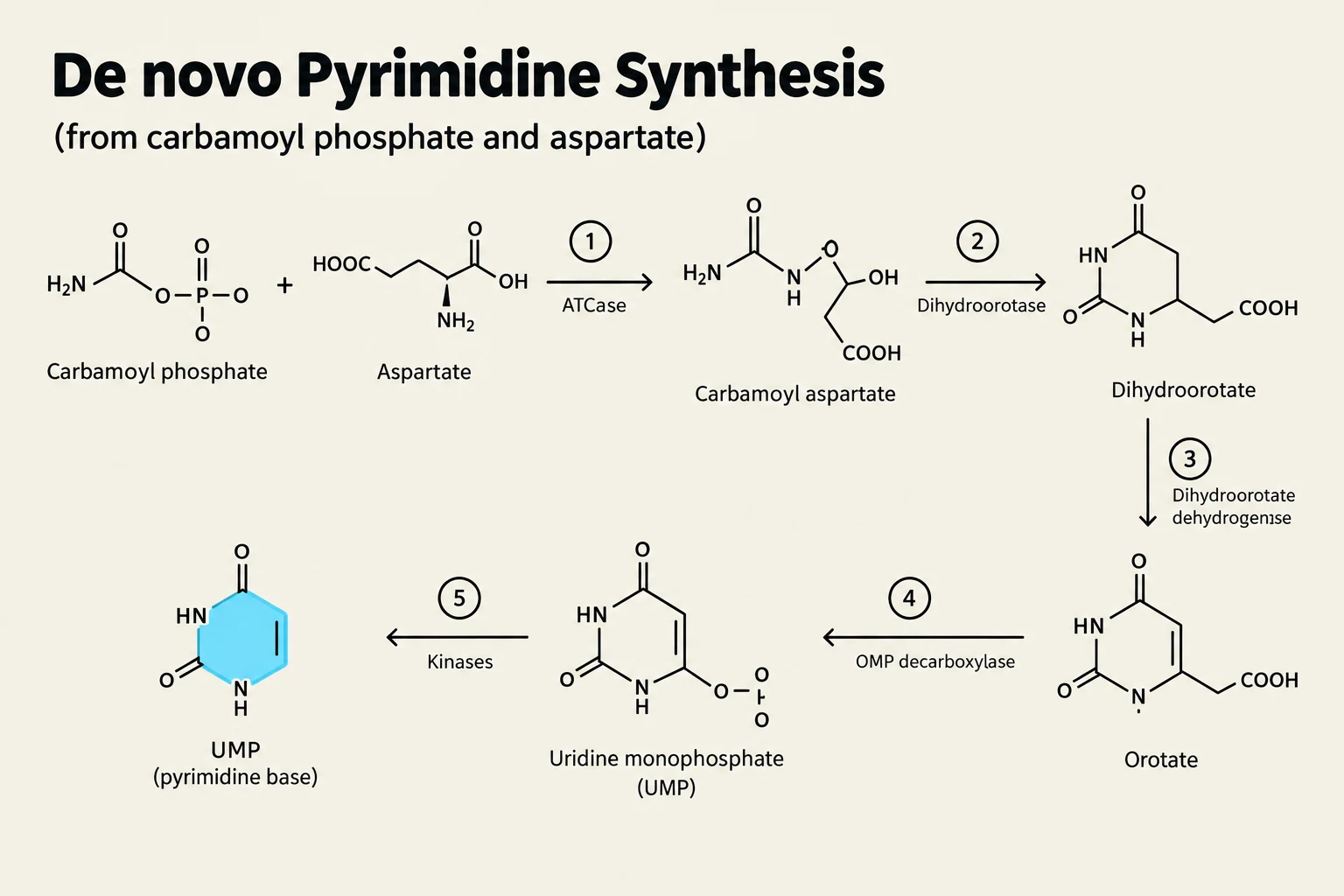
Unlike purine synthesis, where the ring is built directly onto a ribose sugar, pyrimidine synthesis follows a distinct logic: the pyrimidine ring is completed first and only then attached to the activated pentose, 5-phosphoribosyl-1-pyrophosphate (PRPP).
The process begins with the formation of carbamoyl phosphate. In mammals, this is catalyzed by Carbamoyl Phosphate Synthetase II (CPS-II), a cytosolic enzyme. This reaction represents the committed step in the pyrimidine biosynthetic pathway. The precursors for the six atoms of the pyrimidine ring are carbamoyl phosphate and aspartate.
Following the formation of carbamoyl phosphate, the enzyme Aspartate Transcarbamoylase (ATCase) converts carbamoyl phosphate into carbamoyl aspartate. This sequence of reactions eventually leads to the formation of the pyrimidine ring structure.
Keep reading for free.
Create an account to finish this reading and make it part of your study routine.
Continue reading freeAlready have an account? Log in
Updated