This article explores the systematic rules for naming elements, individual ions, and binary ionic compounds, which is a fundamental skill in chemistry for navigating chemical formulas and reactions.
In chemistry, names are more than just labels; they are a precise language that describes the identity and composition of matter. Understanding how to name elements and the compounds they form is a fundamental skill required to navigate chemical formulas and reactions. This article explores the systematic rules for naming elements, individual ions, and binary ionic compounds.
Nomenclature of Elements
The foundation of chemical naming begins with the elements themselves. Every element is identified by a unique name and a chemical symbol. For instance, Iron is represented by the symbol Fe.
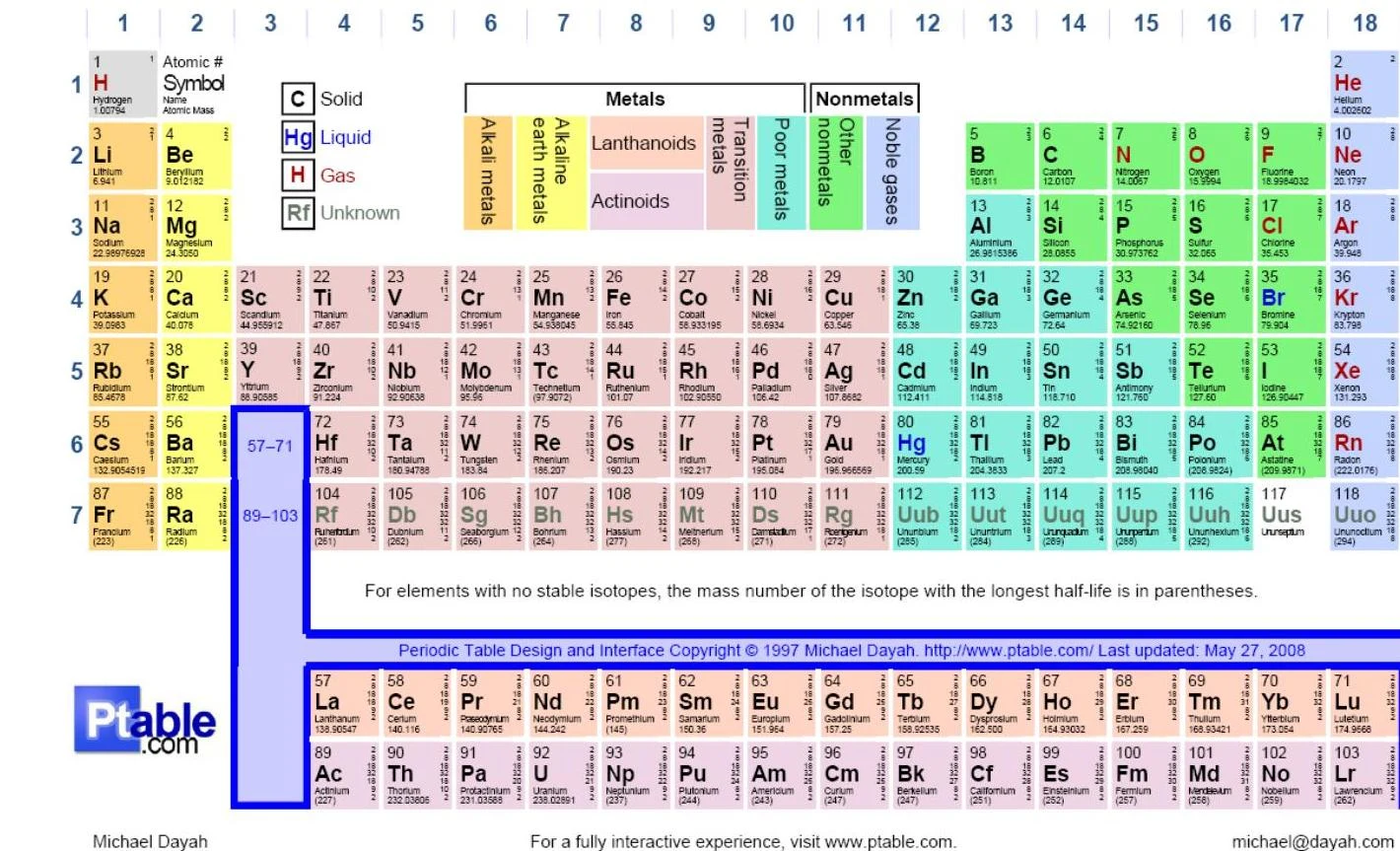
To navigate these names, chemists rely on the periodic table, which organizes elements by their atomic number, symbol, and atomic mass. For elements that do not have stable isotopes, the mass number of the isotope with the longest half-life is typically placed in parentheses.
A periodic table of elements showing atomic number, symbol, name, and atomic mass. It also indicates the state of matter for some elements and categorizes them by chemical properties.
Understanding Ions
When atoms gain or lose electrons, they become ions—charged particles that are essential for forming ionic bonds.
Positive Ion Nomenclature
Positive ions are known as cations. In many cases, they are simply referred to as the "metal ion". For example, Na+ is called the sodium ion and Mg2+ is called the magnesium ion. In these instances, the specific charge does not change the name of the ion.
However, some metals are "variable charge" metals, meaning they can form more than one type of positive ion. For these elements, the charge must be specified in the name using Roman numerals in parentheses.
Example:Cu+ is the copper (I) ion, while Cu2+ is the copper (II) ion.
Negative Ion Nomenclature
Negative ions, or anions, follow different naming conventions. Single-atom negative ions are named by taking the stem of the element's name and adding the suffix -ide.
Polyatomic ions are groups of atoms that carry an overall charge and act as a single unit. Unlike single-atom ions, polyatomic ions have unique names that must be memorized, as there are very few predictable patterns.
Some patterns do exist, particularly for oxygen-containing ions. For halogens, the names follow a specific sequence based on the number of oxygen atoms: hypo-ite, -ite, -ate, and per-ate.
Exam Tip: When naming compounds containing polyatomic ions, treat the entire polyatomic group as a single unit. For example, in NaOH, the name is sodium hydroxide; you do not change the name of the hydroxide ion.
Binary Ionic Compounds
A binary ionic compound is composed of exactly two different elements: a metal and a nonmetal. The naming process depends on whether the metal involved has a fixed or variable charge.
Fixed Charge Metal Ions
There are 15 specific elements that are classified as fixed charge metal ions. These metals always carry the same charge regardless of the compound they form. Examples include:
Group 1 metals:Li+, Na+, K+, Rb+, Cs+
Group 2 metals:Be2+, Mg2+, Ca2+, Sr2+, Ba2+
Others:Ag+, Zn2+, Cd2+, Al3+, Ga3+
For these metals, the naming is straightforward: [Name of Metal] + [Name of Nonmetal with "-ide" suffix].
Example:NaCl is sodium chloride.
Variable Charge Metal Ions
Most other metals are variable charge metals, meaning they can exist in multiple oxidation states. When naming compounds with these metals, you must use one of two methods:
Roman Numeral Convention (Modern): Use the metal name followed by the charge in Roman numerals.
FeCl2 is iron (II) chloride.
Systematic Suffixes (Older): Use the suffix -ous for the ion with the lower charge and -ic for the ion with the higher charge.
To name any binary ionic compound, follow these steps:
Identify the metal (cation) and the nonmetal (anion).
Name the metal first. If it is a variable charge metal, add the charge in Roman numerals.
Name the nonmetal second. Change its ending to -ide.
Do not include the number of ions in the name. The ratio of ions is inferred from the chemical formula.
Note: While the name does not include numbers, you must be able to work backward from a name to a formula. For example, knowing that Fe2+ and Cl− form a compound requires you to balance the charges to write FeCl2.
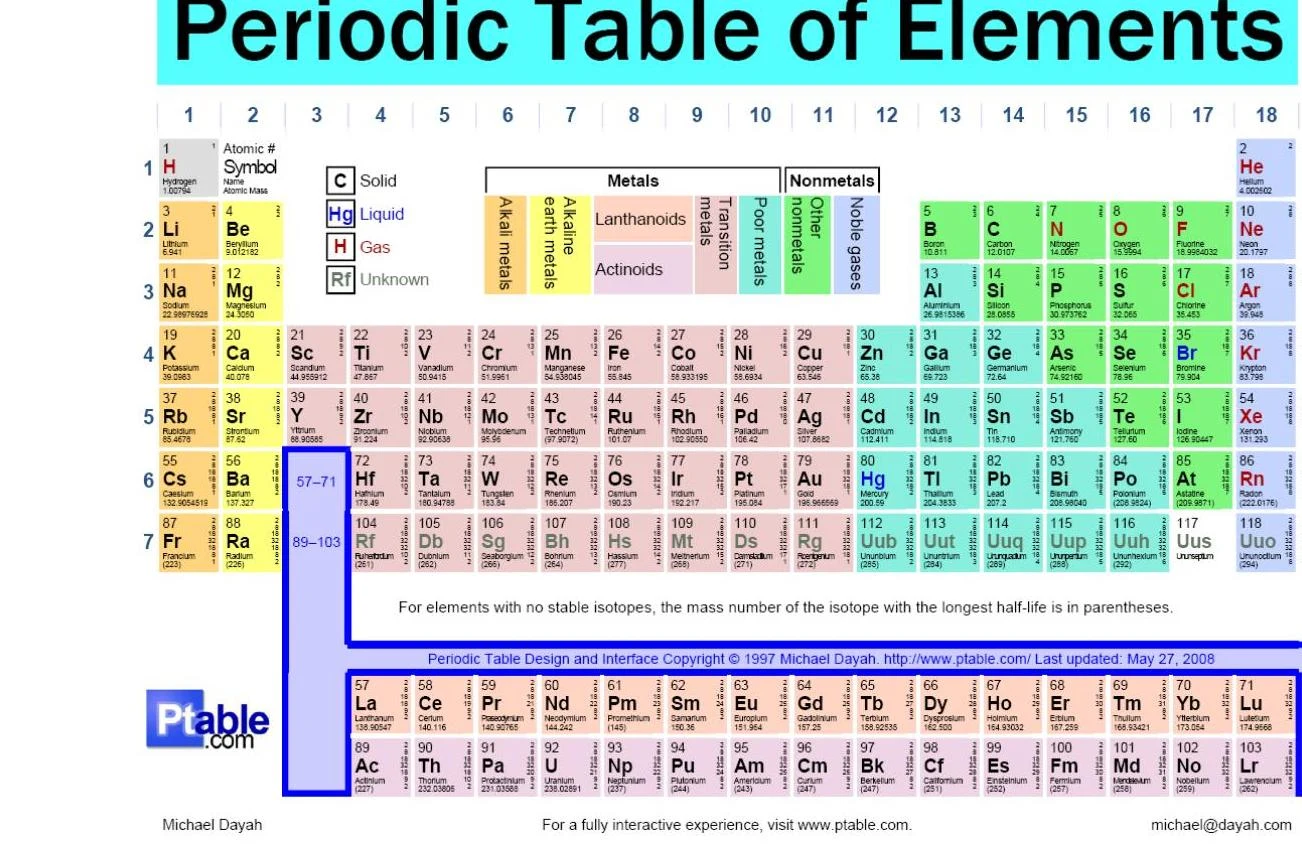
A periodic table of elements showing atomic number, symbol, name, and atomic mass.
Keep reading for free.
Create an account to finish this reading and make it part of your study routine.