


In the study of classical mechanics, understanding how objects interact is fundamental to predicting their motion. While Newton's first two laws describe how an individual object responds to forces, the third law reveals the reciprocal nature of all physical interactions. This article explores the concept of action-reaction pairs, identifies common types of forces, and provides the mathematical tools necessary to resolve these forces in complex scenarios.
Newton's Third Law of Motion
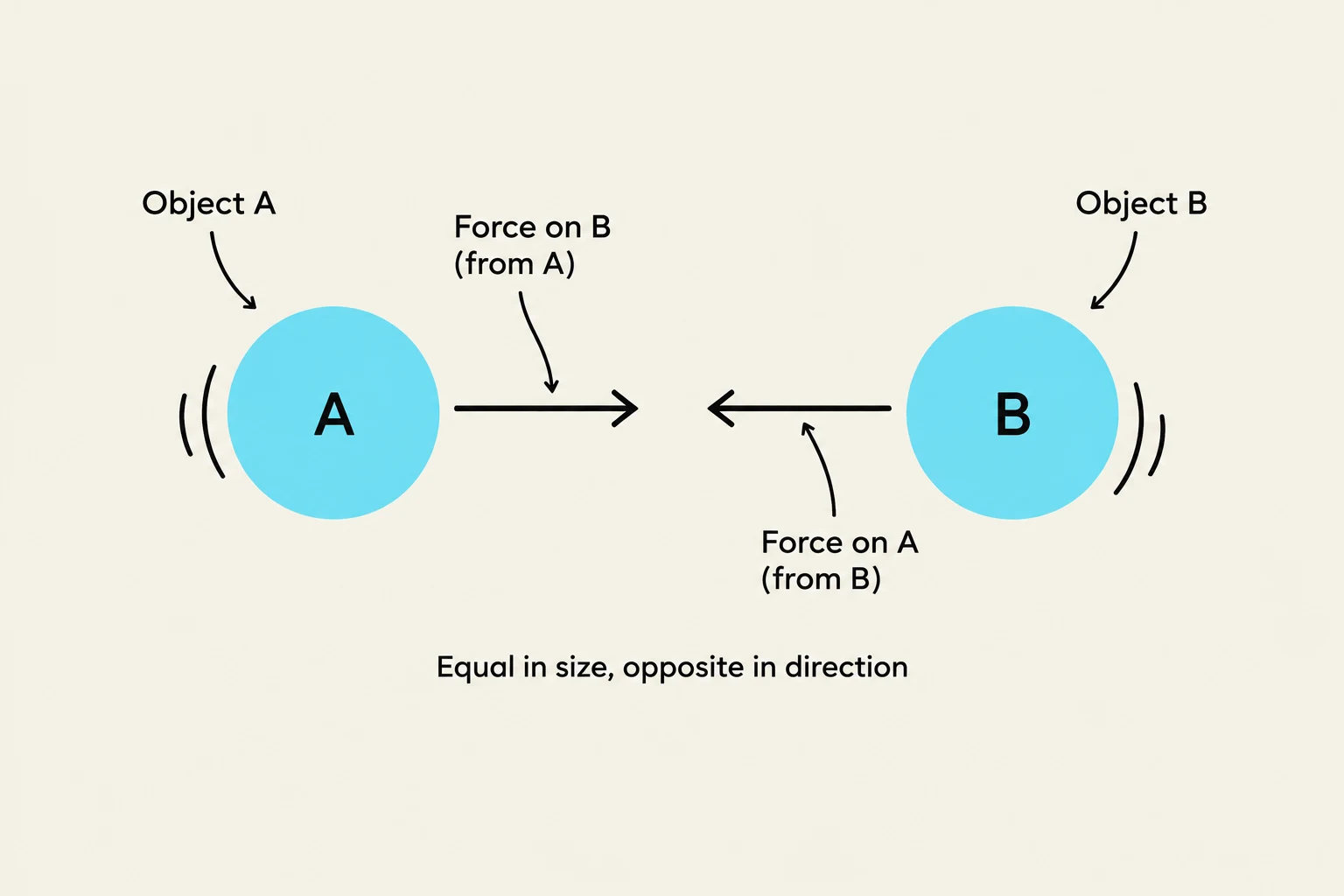
Newton's third law of motion states that whenever one body exerts a force on a second body, the first body experiences a force that is equal in magnitude and opposite in direction to the force that the first body exerts.
This is often summarized as "for every action, there is an equal and opposite reaction." It is crucial to understand that these forces always exist in pairs. If Object A pushes Object B, Object B simultaneously pushes Object A with the exact same amount of force, but in the opposite direction.
Newton's Third Law Pairs
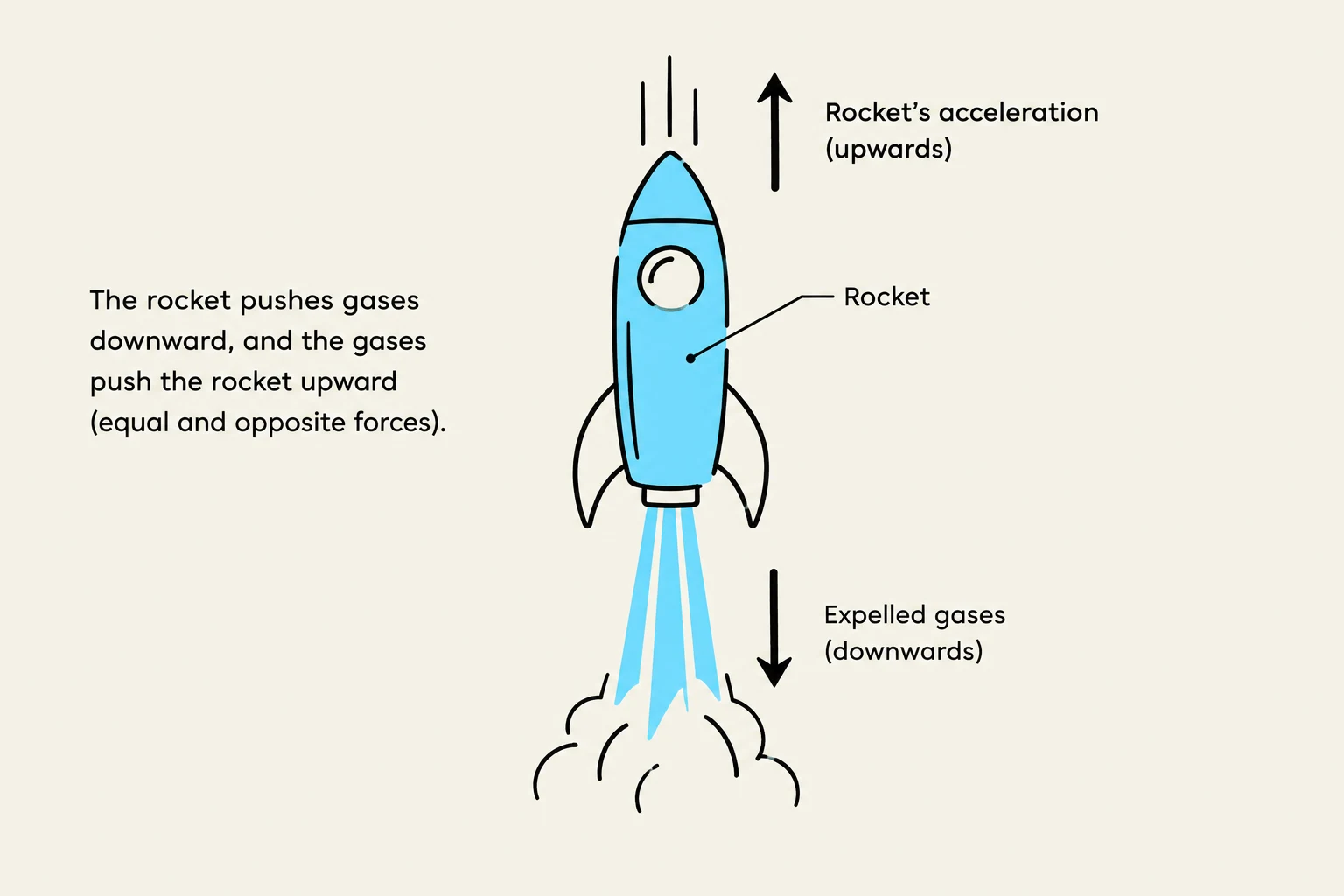
A common mistake in physics is thinking that "action-reaction" pairs cancel each other out. However, they never cancel because they act on different objects. For example, if you push against a wall, the "action" is your hand pushing the wall, and the "reaction" is the wall pushing back on your hand. Because the forces are applied to different bodies, they cannot sum to zero within a single object's free-body diagram.
Keep reading for free.
Create an account to finish this reading and make it part of your study routine.
Continue reading freeAlready have an account? Log in
Updated