


Understanding how objects move requires a deep dive into the concept of force. In physics, a force is not just a "push" or a "pull," but a vector quantity characterized by both magnitude and direction. To master mechanics, we must distinguish between the laws that govern motion and the specific types of forces that act upon objects in our daily lives.
Newton's Second Law: The Math of Motion
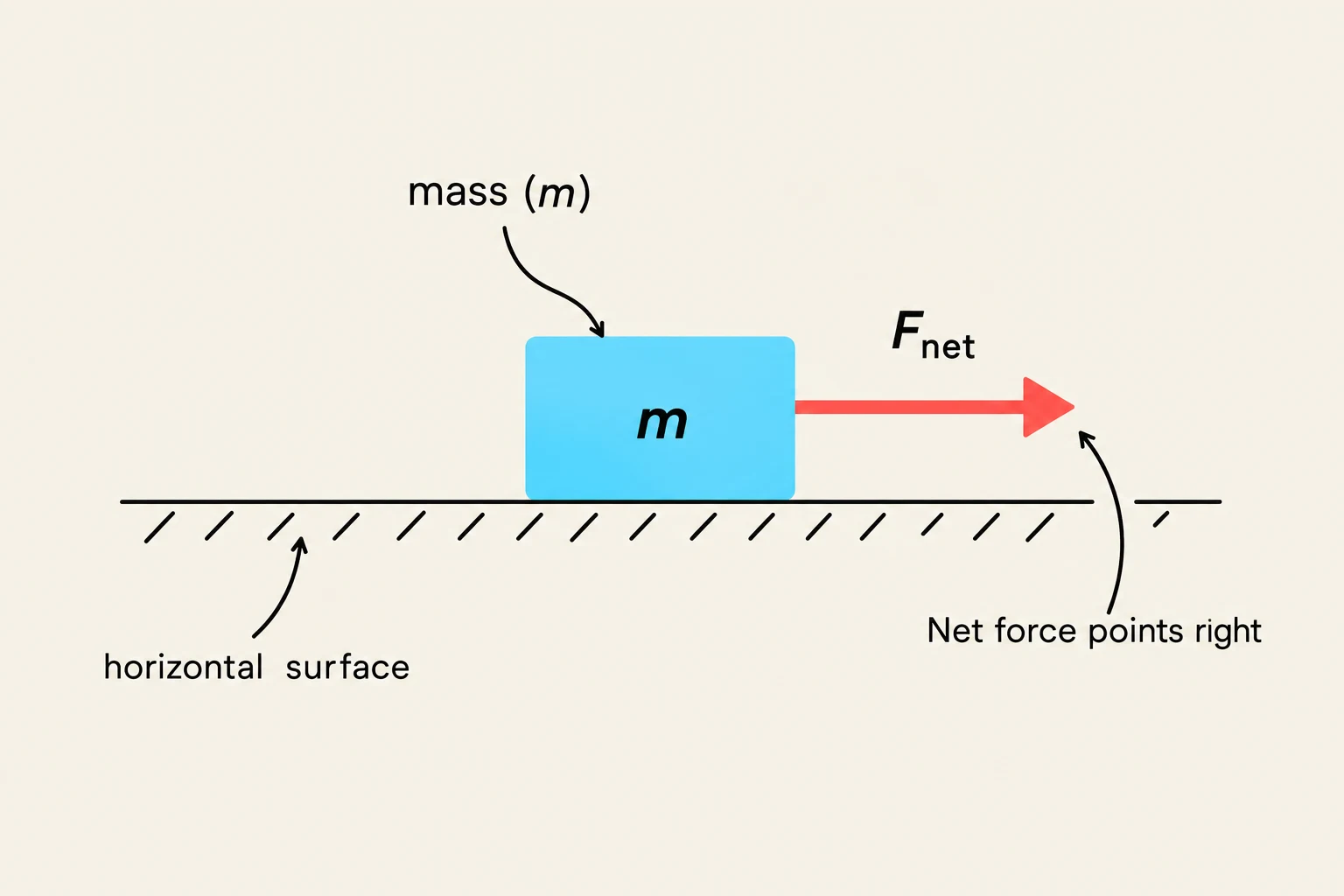
Newton's second law provides the mathematical framework for analyzing why objects accelerate. While the third law looks at interactions between pairs, the second law focuses on a single object to determine how the forces acting upon it will change its state of motion.
The core of this law is the relationship between force, mass, and acceleration. When multiple forces act on an object, we look at the "net force" (), which is the sum of all forces acting on that specific body. The relationship is expressed by the famous formula:
In this equation, represents the net force, is the mass of the object, and is the acceleration. This law is practically used to identify which specific force is responsible for an object's movement and to predict how much force is required to achieve a certain acceleration.
Newton's Third Law: Action and Reaction
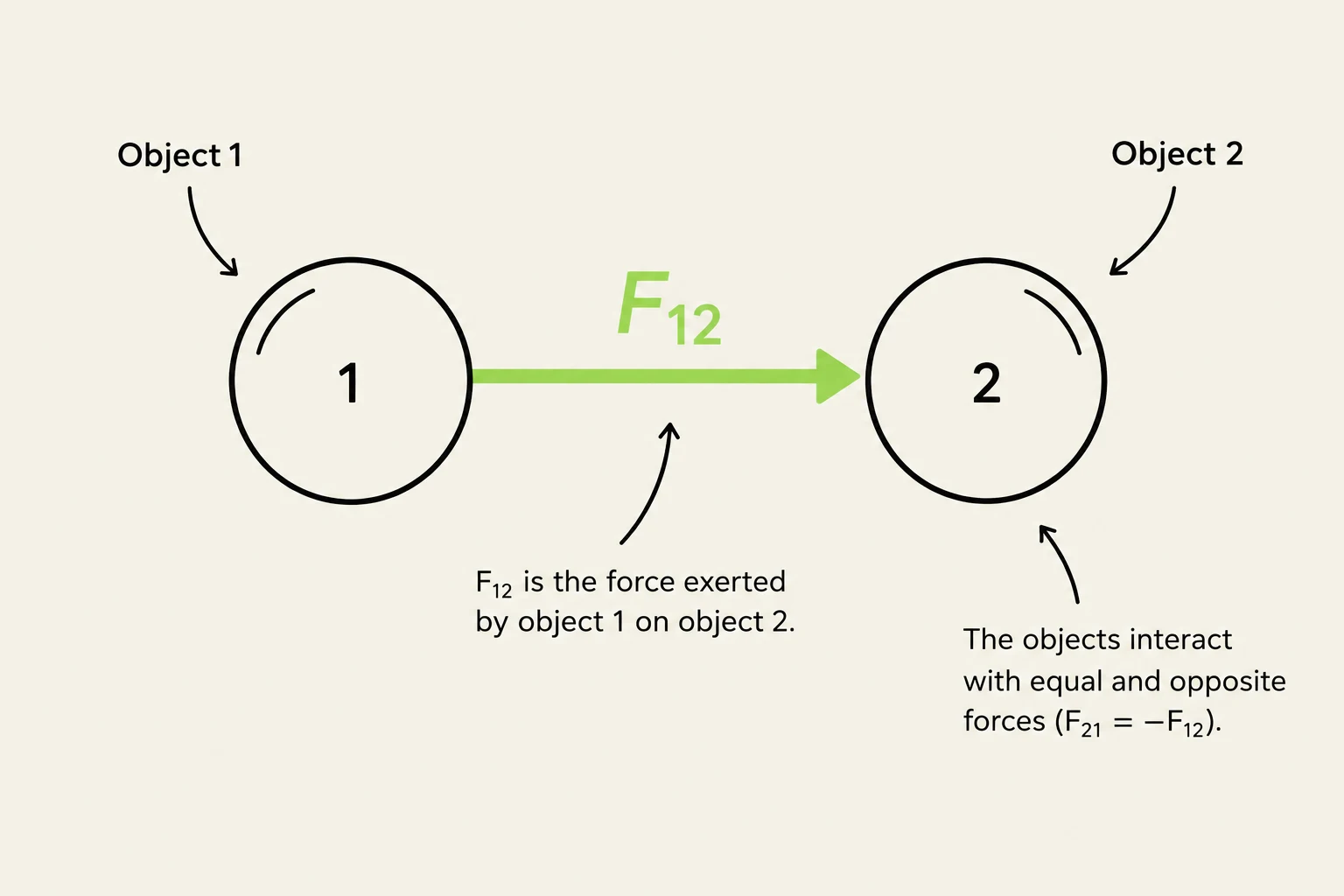
While the second law looks at one object, Newton's third law describes the symmetry of interactions between two objects. The law states that whenever one object exerts a force on a second object, the second object exerts a force that is equal in magnitude and opposite in direction back on the first one.
Keep reading for free.
Create an account to finish this reading and make it part of your study routine.
Continue reading freeAlready have an account? Log in
Updated