


Neurological health is often a delicate balance of pressure, blood flow, and electrical signaling. When these systems are disrupted—whether by the dilation of cerebral vessels, the presence of a space-occupying mass, or the abnormal firing of neurons—the clinical manifestations can range from debilitating headaches to life-threatening emergencies. Understanding the distinction between primary headache disorders, such as migraines and cluster headaches, and secondary issues like brain tumors is essential for effective clinical management and patient safety.
Migraine and Cluster Headaches
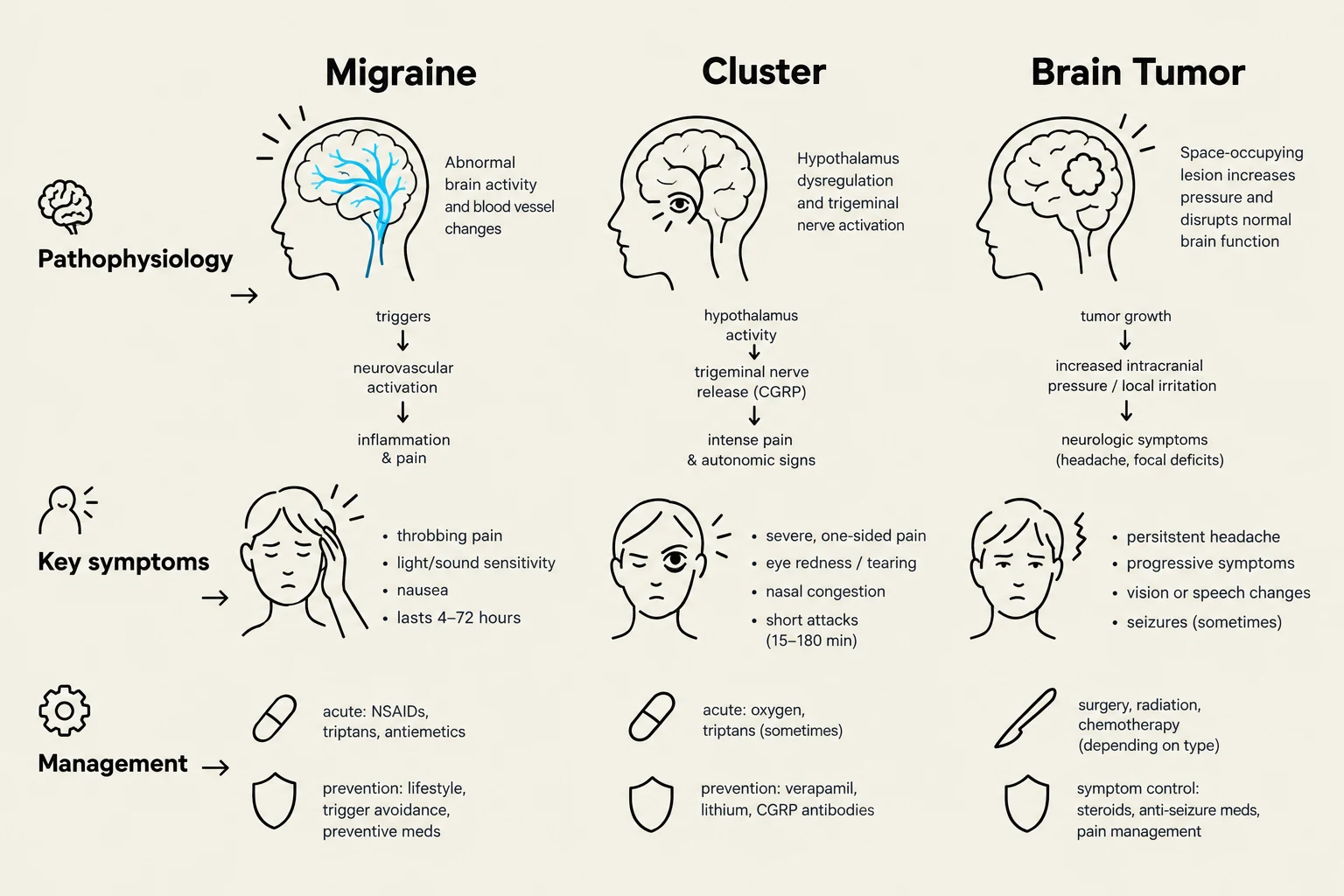
Headaches are frequently categorized by their underlying pathophysiology. While tension headaches are caused by the tightening of muscles in the head and neck due to stress or eyestrain, migraines and cluster headaches are vascular in nature, involving the dilation and constriction of intracranial arteries.
Migraine Headache
Migraines are more common in women and are often linked to hormonal changes. The pathophysiology involves the dilation of cerebral vessels, which triggers pain pathways. Patients often experience an "aura"—visual disturbances like flashing lights or floaters—followed by intense, throbbing, unilateral (one-sided) pain, nausea, and photophobia.
A critical aspect of migraine management is identifying triggers. Dietary triggers are common, particularly tyramine-rich foods. Patients should be educated to avoid:
- Aged cheeses (Cheddar, Parmesan, Swiss)
- Cured meats (Salami, pepperoni, bacon)
- Smoked fish and sauerkraut
- Certain beverages like beer and wine


Keep reading for free.
Create an account to finish this reading and make it part of your study routine.
Continue reading freeAlready have an account? Log in
Updated