An overview of neurological health, including the limbic system, neurotransmitter pathways, the effects of stroke and dementia, and environmental risk factors like lead poisoning and osteoporosis.
Understanding neurological health requires a multi-faceted approach that connects brain anatomy, chemical signaling, and the external factors that can disrupt these delicate systems. From the emotional regulation of the limbic system to the complex pathways of neurotransmitter production, the brain operates through highly localized processes. When these processes are interrupted—whether by disease, injury, or environmental toxins—the clinical manifestations can range from subtle cognitive shifts to profound motor impairments.
The Limbic System: The Emotional and Physiological Hub
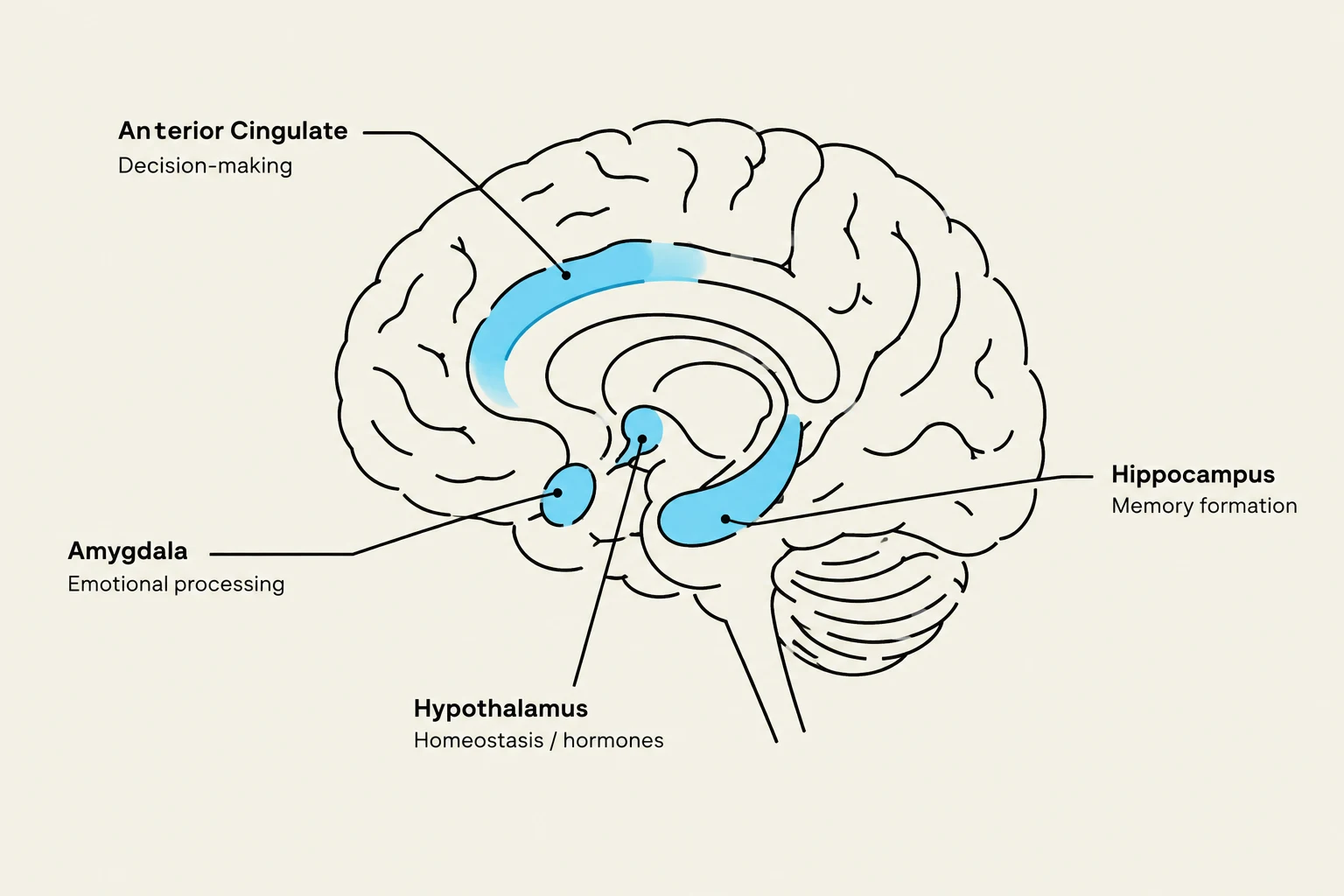
This diagram illustrates key areas of the human brain and their primary functions, including the Anterior Cingulate for decision-making, Amygdala for emotional processing, Hypothalamus for homeostasis and hormones, and Hippocampus for memory formation.
The limbic system is a collection of brain structures essential for regulating emotions, memory, and fundamental survival instincts. Several key components work in concert to maintain psychological and physiological homeostasis:
Amygdala: This structure is central to emotional processing. Specifically, the stimulation of the amygdala is associated with augmented aggressive behavior and the management of fear and anxiety.
Hypothalamus: Acting as a control center, the hypothalamus regulates vital functions including hunger, thirst, circadian rhythms, and hormonal regulation.
Hippocampus: This region is indispensable for the formation of new memories and the process of learning.
Anterior Cingulate: This area facilitates higher-order functions such as decision-making and impulse control.
Exam Tip: In cases of Major Depressive Disorder (MDD), MRI scans may reveal structural changes such as an enlarged amygdala or a reduced size in the hippocampus and thalamus.
Neurotransmitter Production and Pathways
Diagram illustrating the major dopamine pathways in the human brain, including the mesocortical, mesolimbic, nigrostriatal, and tuberoinfundibular pathways, and their associated brain regions and functions.
Neurological function is heavily dependent on the precise production and regulation of neurotransmitters. These chemical messengers are synthesized in specific brain regions and travel through distinct pathways to influence behavior and movement.
Key Neurotransmitters and Their Sites of Origin
Norepinephrine: Produced in the Locus coeruleus and the Medullary reticular formation within the brainstem. It is often associated with nightmares.
Serotonin: Synthesized in the Raphe nuclei of the brainstem. It is a primary player in mood regulation.
Dopamine: Produced in the Substantia nigra (crucial for motor movement), the Nucleus accumbens, and the Ventral tegmental area (VTA).
Acetylcholine: Synthesized by the Basal nucleus of Meynert.
Clinical Implications of Dopamine Pathways
The movement of dopamine through different pathways determines various clinical outcomes:
Mesolimbic Pathway: Involved in reward and motivation. Overactivity here is linked to "positive" symptoms of schizophrenia, such as hallucinations.
Mesocortical Pathway: Involved in higher cognitive functions. Decreased activity here contributes to "negative" symptoms like flat affect.
Nigrostriatal Pathway: Essential for motor control. Blockade of dopamine in this pathway (often by antipsychotics) can lead to extrapyramidal side effects (EPS) such as tremors, muscle stiffness, and parkinsonism.
Tuberoinfundibular Pathway: Regulates prolactin. Blockade here can cause increased prolactin levels, leading to sexual dysfunction or milk production.
Neurological Dysfunction: Stroke and Dementia
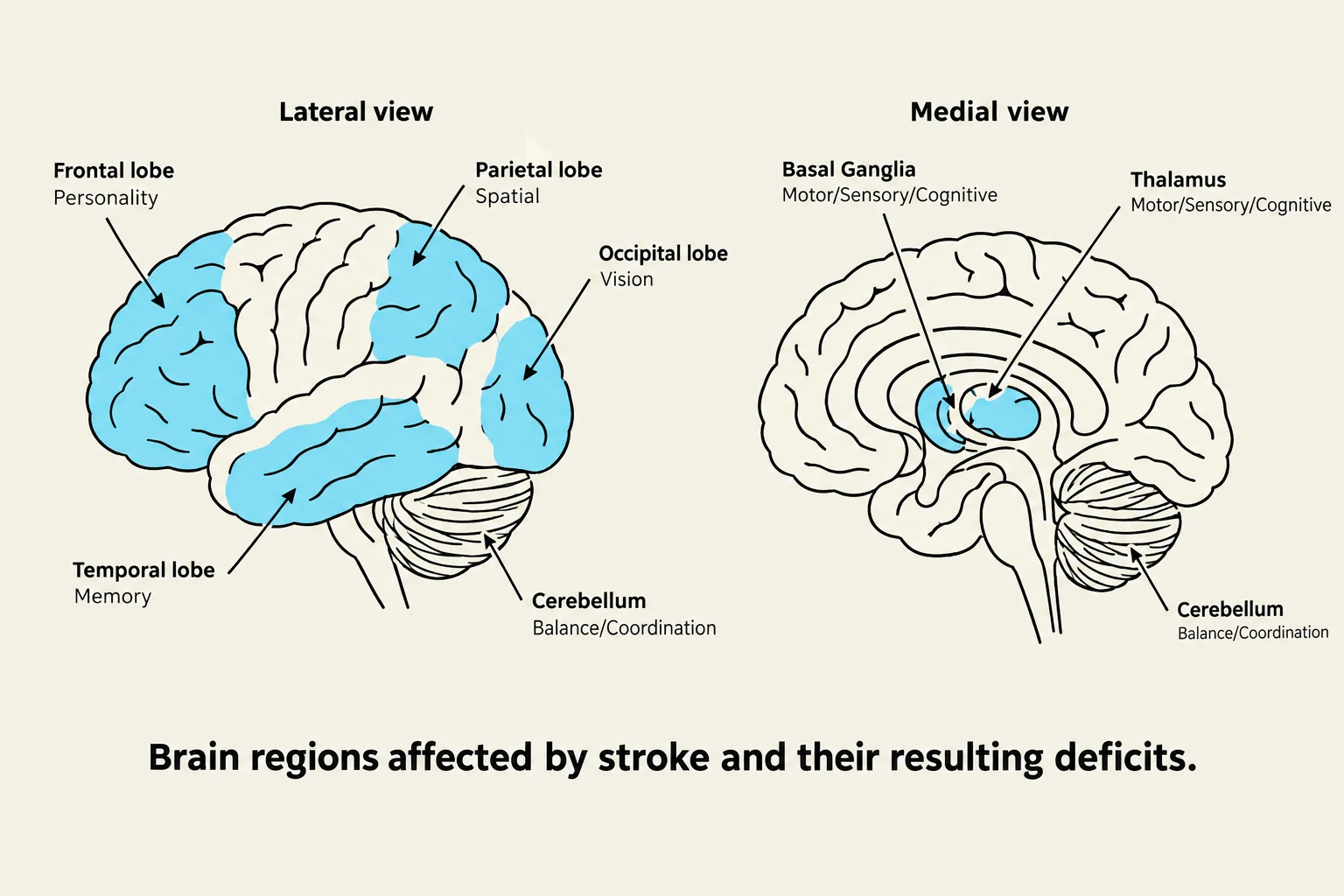
Diagrams illustrating brain regions affected by stroke and their resulting deficits, shown from lateral and medial views.
Neurological integrity can be compromised by acute events like a Cerebrovascular Accident (CVA) or progressive neurodegenerative diseases.
Cerebrovascular Accident (CVA)
A stroke can impact various regions of the brain, leading to diverse deficits:
Cerebellum: Damage here typically impacts balance and coordination.
Lobes: Depending on whether the frontal, temporal, parietal, or occipital lobes are affected, a patient may experience changes in personality, memory, spatial processing, or vision.
Deep Structures: The brainstem, basal ganglia, and thalamus are critical; damage to these areas can result in profound motor, sensory, and cognitive impairments.
Parkinson’s Disease Dementia (PDD)
PDD is a complex condition involving cognitive decline that often presents with memory loss, anxiety, and hallucinations.
Clinical Note: When treating cognitive decline associated with Parkinsonian symptoms, Cholinesterase inhibitors (such as Donepezil or Rivastigmine) are utilized. However, clinicians must avoid Haloperidol, as it can significantly exacerbate motor symptoms.
Environmental and Lifestyle Risk Factors
Neurological and physiological health are not solely determined by internal biology; external factors play a massive role in long-term outcomes.
Lead Poisoning and Pica
Exposure to lead is a significant environmental neurotoxin. It often presents with developmental delays, irritability, and fatigue. A hallmark sign of lead poisoning is Pica, which is the compulsive ingestion of non-food items.
Osteoporosis and Bone Health
While often viewed as a skeletal issue, bone density is closely linked to systemic health. Factors that increase the risk of Osteoporosis include:
Lifestyle Choices: Smoking and excessive alcohol consumption.
Physical Activity: A lack of weight-bearing exercise.
Nutritional Deficiencies: Diets lacking in Calcium and Vitamin D.
Keep reading for free.
Create an account to finish this reading and make it part of your study routine.