Neurobiological and Endocrine Pathophysiology Review
This document examines neurobiological alterations, neurotransmitter imbalances, and endocrine dysfunctions associated with psychiatric and metabolic disorders.
Understanding the intersection of neurobiology and endocrinology is essential for mastering advanced pathophysiology. Many psychiatric conditions are not merely "chemical imbalances" but are deeply rooted in complex feedback loops involving the brain's structural integrity and the body's hormonal regulation. This review examines the mechanisms driving major psychiatric disorders and the endocrine dysfunctions that impact metabolic and systemic health.
Neurobiological Pathophysiology of Psychiatric Disorders
Psychiatric disorders often stem from dysregulation in neurotransmitter systems and the structural changes caused by chronic physiological stress.
Major Depressive Disorder (MDD) and the HPA Axis
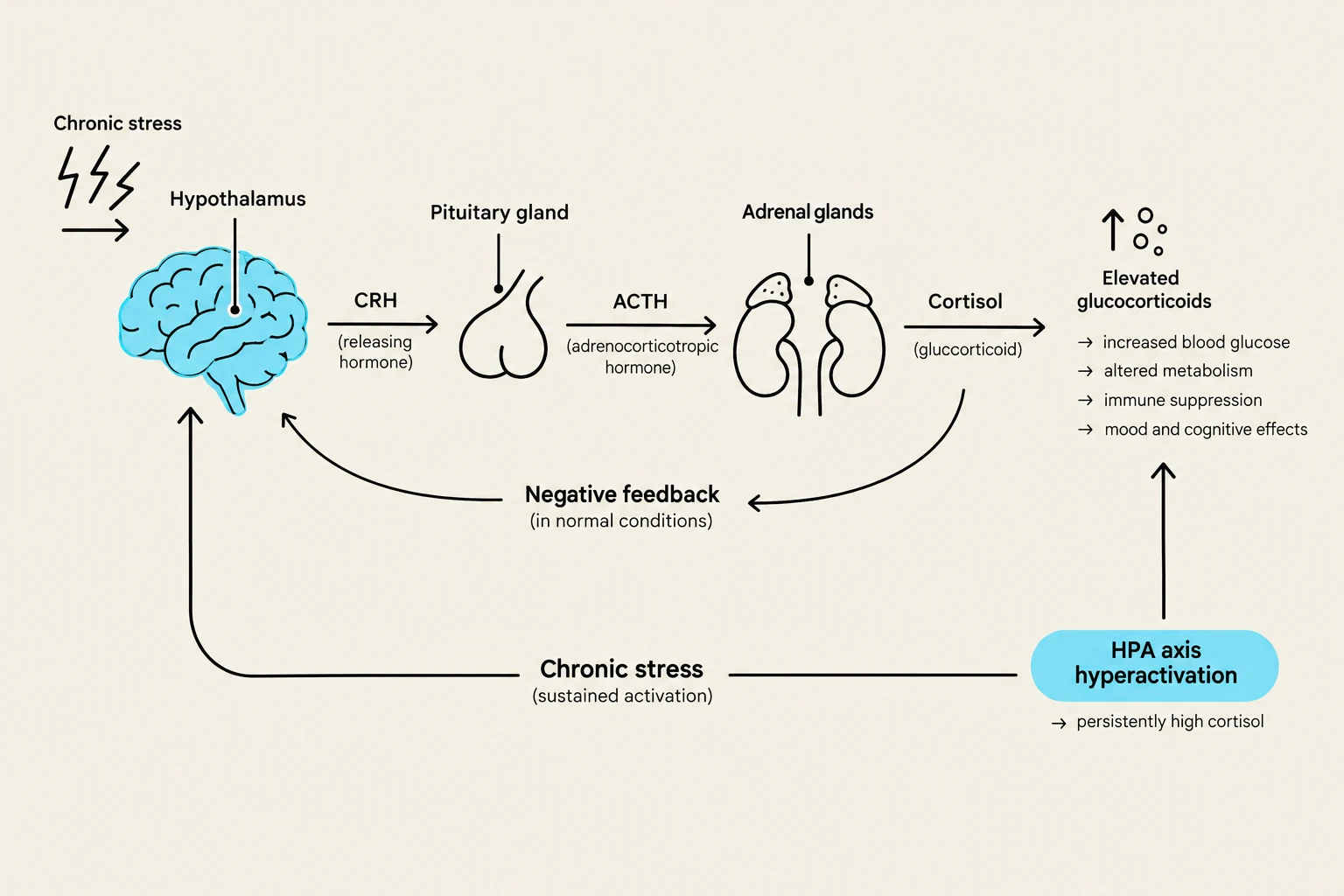
Major Depressive Disorder is characterized by more than just low mood; it involves a profound disruption of the hypothalamic-pituitary-adrenal (HPA) axis. In a healthy system, the HPA axis manages the body's response to stress via a negative feedback loop. However, in MDD, chronic hyperactivation of this axis leads to elevated glucocorticoid levels.
Over time, this hormonal excess can lead to structural neurobiological alterations, most notably a reduction in hippocampal volume. This structural atrophy is linked to impaired neurogenesis and contributes to the cognitive and emotional symptoms of depression. Furthermore, a deficiency in dopamine is a key neurochemical driver of anhedonia (the inability to feel pleasure) and decreased motivation.
Exam Tip: If a patient presents with treatment-resistant depression, remember that Electroconvulsive Therapy (ECT) is a highly effective nonpharmacologic option because it directly modulates neurocircuitry.
This diagram illustrates the hypothalamic-pituitary-adrenal (HPA) axis response to chronic stress, detailing the hormonal cascade involving CRH, ACTH, and cortisol, and its effects including elevated glucocorticoids and potential HPA axis hyperactivation.
Anxiety and Schizophrenia
Anxiety disorders, such as Generalized Anxiety Disorder (GAD), are associated with serotonin dysregulation and reduced alpha-adrenergic receptor binding. Pharmacological interventions like Serotonin-Norepinephrine Reuptake Inhibitors (SNRIs) are effective because they increase both neurotransmitters to stabilize these dysregulated stress pathways. It is also important to note that agoraphobia—the fear of being in places where escape might be difficult—often develops as a clinical complication of panic disorder.
Schizophrenia presents with two distinct symptomatic dimensions:
Positive Symptoms: Hallucinations and delusions are driven by an excess of dopamine in the mesolimbic pathway. These are typically treated using dopamine D2 receptor antagonists.
Negative Symptoms: These include "flat affect" (lack of emotional expression) and avolition (lack of motivation).
Bipolar Disorder and Mania
Bipolar disorder involves shifts between depressive and manic states. Mania is characterized by increased activity of both dopamine and norepinephrine. Lithium remains a first-line mood stabilizer for managing these episodes.
Clinical Warning: When treating a patient with bipolar disorder, clinicians must be cautious when prescribing Selective Serotonin Reuptake Inhibitors (SSRIs). If administered without a concurrent mood stabilizer, SSRIs can precipitate or induce a manic episode.
Neurochemical Interactions: Serotonin Syndrome
A critical concept in neurobiology is the danger of drug-drug interactions involving neurotransmitter accumulation. For example, combining an SSRI with a Monoamine Oxidase Inhibitor (MAOI)—such as the antibiotic linezolid—can lead to serotonin syndrome. This condition results from an excessive accumulation of serotonin, manifesting as agitation, hyperreflexia, diaphoresis, and tachycardia.
Endocrine Pathophysiology
Endocrine disorders often involve the failure of a gland (primary) or the failure of the signaling hormones from the pituitary or hypothalamus (secondary/tertiary).
Thyroid Dysfunction
Thyroid health is regulated by the relationship between Thyroid Stimulating Hormone (TSH) and thyroid hormones (T3 and T4).
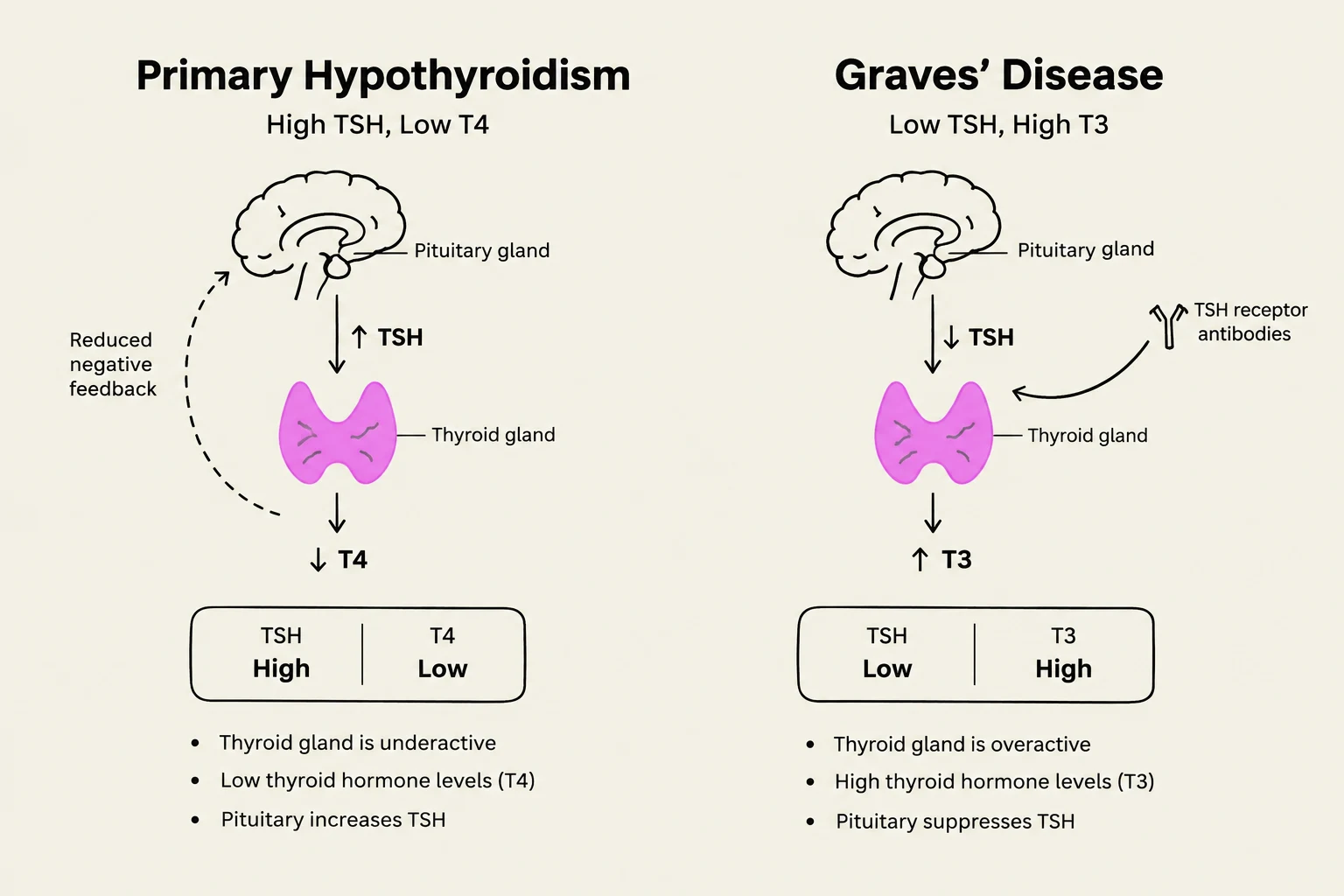
Primary Hypothyroidism: Often caused by Hashimoto's thyroiditis, an autoimmune destruction of thyroid tissue. This results in a lab pattern of elevated TSH and low free T4. Clinically, this presents as decreased metabolic demand, leading to symptoms like bradycardia, fatigue, and weight gain.
Hyperthyroidism (Graves' Disease): This is caused by thyroid-stimulating immunoglobulins (TSI) that activate TSH receptors. This results in suppressed TSH and elevated T3/T4. A hallmark sign is exophthalmos (bulging eyes) caused by autoantibodies stimulating orbital fibroblasts.
This diagram illustrates the hormonal differences between Primary Hypothyroidism and Graves' Disease, focusing on TSH, T4, and T3 levels and their effects on the thyroid gland and pituitary gland.
Diabetes Mellitus
Diabetes is categorized by the underlying mechanism of insulin dysfunction:
Type 1 Diabetes Mellitus: An autoimmune process where the body destroys pancreatic beta cells. This leads to absolute insulin deficiency, which can be identified by low C-peptide levels.
Type 2 Diabetes Mellitus: Defined by peripheral insulin resistance. In this state, tissues fail to respond effectively to insulin, even though insulin levels may be adequate or even elevated.
Adrenal Function and Hypercortisolism
The adrenal glands produce cortisol, which is vital for stress response. However, excess cortisol leads to various pathologies. ACTH-dependent hypercortisolism (often due to a pituitary adenoma) presents with classic signs such as truncal obesity, "moon face," hypertension, and hyperglycemia.
If the excess cortisol originates in the adrenal gland itself (ACTH-independent), the high cortisol levels will provide negative feedback to the pituitary, resulting in:
High Cortisol+Low ACTH
Diagram illustrating the process of Type 1 Diabetes, starting with an autoimmune response targeting pancreatic beta cells, leading to their destruction, reduced insulin production, and consequently, poor glucose uptake by cells, resulting in low insulin and high blood glucose (hyperglycemia).
Keep reading for free.
Create an account to finish this reading and make it part of your study routine.